

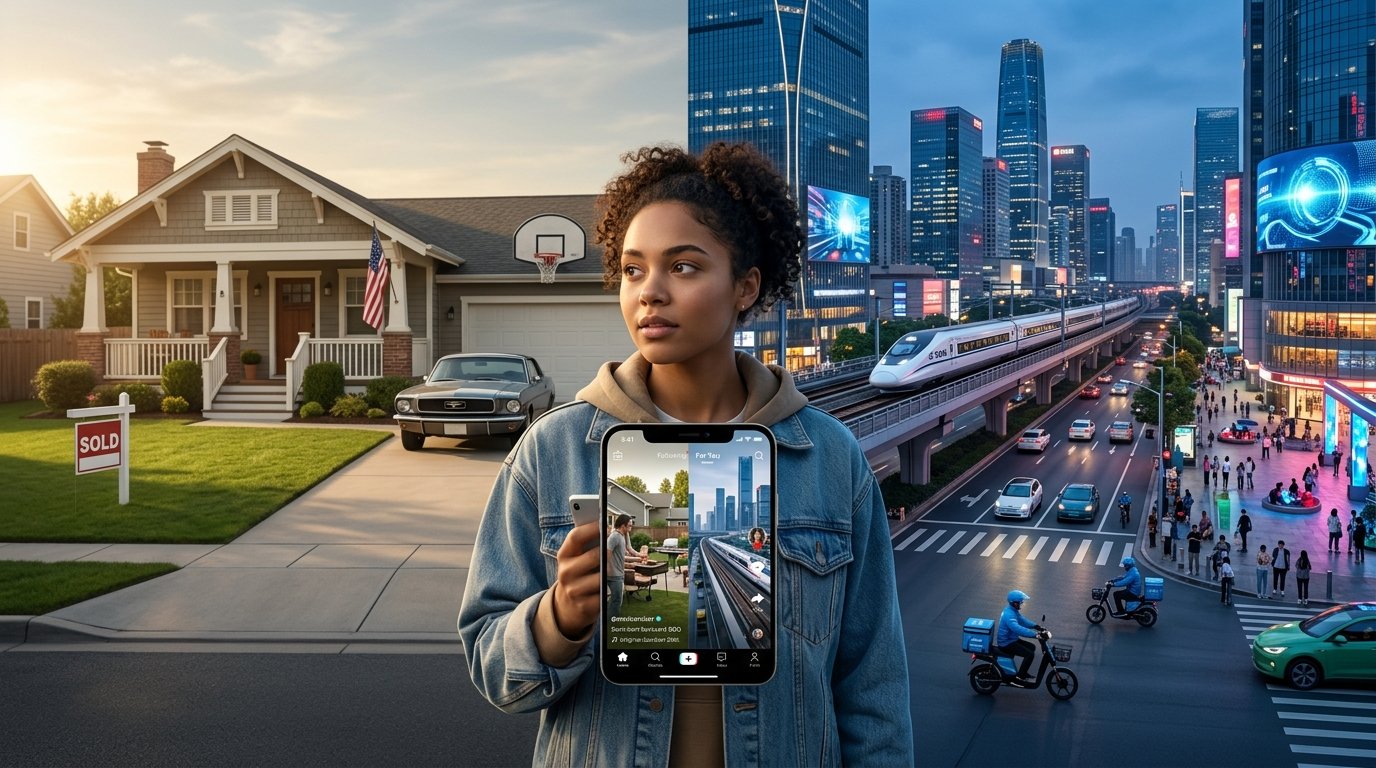
For generations, the American Dream was built around a relatively simple promise: work hard, build a career, buy a home, raise a family and eventually achieve financial security.
That formula is looking increasingly difficult for younger Americans to follow.
At the same time, something unexpected is happening online. A growing number of young Westerners are becoming fascinated with everyday life in China, from high-speed rail and futuristic cities to food, technology, shopping, wellness and travel. The internet has given this curiosity a name: China Maxxing, more commonly written as “Chinamaxxing.”
The two developments may appear unrelated. One is about economic anxiety in the United States. The other is an internet trend involving curiosity about China.
But together, they reveal something important about how a younger generation is redefining what a good life looks like.
So, is the American Dream dead?
Not exactly.
But the old version of it is being questioned more seriously than it has been in decades.
What Does the American Dream Mean Today?
The American Dream has never had one official definition.
For one generation, it meant owning a suburban house. For another, it meant getting a college degree, finding a stable career and providing a better life for the next generation.
Homeownership became especially important because a house represented more than somewhere to live. It could provide stability, independence and an opportunity to build wealth.
That idea remains surprisingly powerful.
A 2025 Bankrate survey found that 82% of U.S. adults still considered owning a home part of the American Dream.
The problem is that believing in the dream and being able to afford it are two very different things.
Realtor.com research found that 82% of surveyed Gen Z adults who own or hope to own a home said buying a home is harder for their generation than for previous generations. Yet 67% still viewed homeownership as an important lifetime goal, and 51% still considered it part of the American Dream.
That contradiction is at the heart of today’s debate.
Young Americans have not necessarily stopped wanting the dream.
They increasingly question whether the traditional route can still get them there.
Is the American Dream Dead?
The phrase “American Dream is dead” is deliberately provocative, but it captures a real economic and cultural question.
If the traditional American Dream means getting a job, saving money, buying a house and steadily building wealth, then that pathway has become much harder for many younger Americans. Pew Research Center found that 87% of Americans say buying a home is harder for young adults today than it was for their parents’ generation.
Housing is one of the clearest examples.
A recent analysis of young Americans found that high home prices, mortgage rates and the difficulty of saving for a down payment are pushing more people toward long-term renting.
Another 2026 analysis found that only 39% of 28-year-old Americans currently own their homes, compared with higher ownership rates among earlier generations when they were the same age.
That does not mean every young American is struggling.
It does mean that the old sequence of milestones is no longer guaranteed.
The difference matters.
The Traditional American Dream
The old model looked something like this:
Education → Career → Marriage → House → Family → Wealth → Retirement
The modern version may look more like:
Education or skills → Career experimentation → Renting → Travel → Investing → Entrepreneurship → Flexible lifestyle → Homeownership later, perhaps
For some people, the house remains the ultimate goal.
For others, flexibility, experiences, financial independence or geographic freedom have become equally important.
The dream has not disappeared.
It is changing shape.
Why Homeownership Became the Symbol of the Problem
Few things demonstrate the tension better than housing.
The idea of homeownership remains deeply embedded in American culture, but affordability has become a major obstacle.
For a broader look at current home prices, mortgage rates, inventory and housing affordability, see our U.S. housing market guide.
A 2025 Realtor.com survey found that housing affordability was one of Gen Z’s leading concerns, while 69% of respondents still viewed real estate as an opportunity to build wealth.
That creates an unusual situation.
Young Americans can understand perfectly well why owning property matters while simultaneously believing that the market is moving beyond their reach.
For many, the issue is not simply the price of a house.
For younger Americans who are still trying to make homeownership possible, our first-time home buyer guide explains the major steps involved, from determining affordability and saving for a down payment to comparing mortgages and understanding closing costs.
It is the entire financial equation.
Higher housing costs can mean:
- Larger down-payment requirements
- Bigger monthly mortgage payments
- More expensive insurance and property taxes
- Less disposable income
- Delayed marriage or family plans
- Less ability to invest elsewhere
- Longer periods of renting
Mortgage rates are another major part of the affordability equation. Our 2026 mortgage rate forecast examines where rates could go and what current borrowing costs mean for homebuyers.
This is why American Dream homeownership has become such an important search and discussion topic.
The dream still exists.
The question is whether the economic system makes it accessible.

Gen Z Is Not Necessarily Giving Up
It would be a mistake to describe younger Americans as simply pessimistic.
The evidence is more complicated.
Realtor.com found that two-thirds of surveyed Gen Z respondents considered homeownership an important lifetime goal, even while acknowledging the affordability challenge.
A 2026 financial-literacy survey similarly found that a majority of respondents still viewed the traditional American Dream as at least somewhat realistic, although a substantial minority considered it unrealistic.
That suggests something more interesting than the death of the American Dream.
Young Americans may be rejecting the old timetable, rather than rejecting the dream itself.
They may want the house.
They simply do not believe they should have to sacrifice everything else to get it.
Enter China Maxxing
This is where China Maxxing becomes fascinating.
The term combines “China” with the internet slang suffix “maxxing,” which generally means going all-in on or optimizing around a particular thing.
In the case of Chinamaxxing, the trend can involve adopting or exploring aspects of Chinese everyday life.
That can include everything from drinking hot water and wearing slippers at home to exploring Chinese food, skincare, wellness practices, entertainment, technology and travel.
NPR reported in March 2026 that some young Americans had embraced the term while becoming increasingly curious about Chinese culture and everyday life.
The trend has also attracted substantial attention online.
A recent report from CGTN said related Chinamaxxing hashtags had accumulated more than 4 billion social-media views.
That does not mean billions of people have adopted Chinese lifestyles.
It means the subject has become highly visible online.
And visibility matters.
What Is Chinamaxxing?
Chinamaxxing is an internet trend describing increased enthusiasm for Chinese culture, lifestyle, products, travel and everyday practices.
There is no single checklist.
Someone might encounter Chinamaxxing through videos about Chinese cities.
Another person might discover it through Chinese food.
Someone else might become interested after seeing high-speed trains, electric vehicles, shopping platforms, robotics, digital payments or Chinese social media.
For some creators, it is clearly humorous.
For others, it represents genuine curiosity.
And for some young Americans, it appears to be part of a broader search for alternatives to familiar assumptions about how life should work.
That last point is where the trend becomes more interesting than a meme.
Why Are Young Americans Curious About China?
One major reason is simple:
They can now see ordinary life in China directly through social media.
For decades, Americans primarily encountered China through traditional news coverage, geopolitics, economics and international relations.
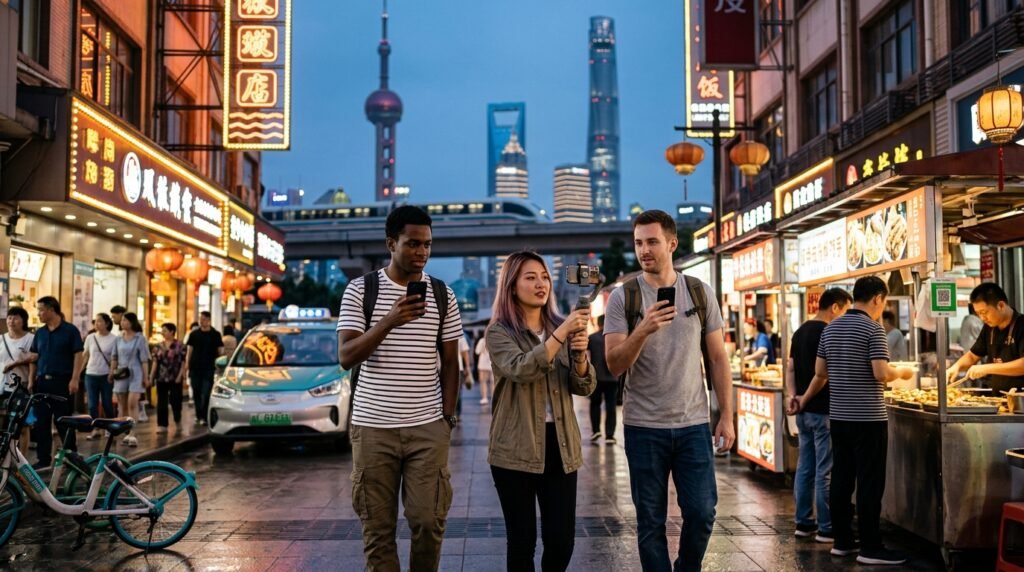
Today’s young internet users can instead watch creators walking through Shanghai, riding trains in Beijing, exploring Chongqing at night or shopping in Chinese cities.
The difference is enormous.
A political headline tells you what governments are doing.
A creator walking through a supermarket shows you how people live.
Neither view tells the entire story.
But together they produce a much more complicated picture.
NPR’s reporting on Chinamaxxing noted that livestreamers and online creators helped expose millions of viewers to Chinese cities and everyday experiences.
Social Media Changed the China Conversation
TikTok, Instagram, YouTube and other platforms have made international cultural comparison almost unavoidable.
A young American can watch:
- A New York apartment tour
- A Shanghai apartment tour
- A U.S. grocery-shopping video
- A Chinese grocery-shopping video
- A U.S. commute
- A Chinese high-speed rail journey
All within minutes.
That creates a new kind of comparison.
It is not necessarily:
America vs. China
It can be:
Which parts of life work better where?
That is a much more nuanced question.
It also explains why Chinamaxxing should not automatically be interpreted as anti-American.
Someone can love America and still admire Chinese trains.
Someone can criticize American housing costs and still prefer living in the United States.
Someone can enjoy Chinese food, technology or travel without adopting Chinese political values.
Cultural curiosity is not the same thing as political allegiance.

The Housing Question Is Especially Important
Housing provides one of the clearest connections between the two trends.
Imagine a young American who has grown up hearing that financial success means buying a house.
Then that person enters adulthood and discovers:
- Home prices are high.
- Mortgage payments are expensive.
- Saving a down payment can take years.
- Rent consumes a large portion of income.
- Student or consumer debt can slow wealth building.
- Entry-level career paths are becoming less predictable.
That person may start questioning the entire formula.
Not necessarily America.
The formula.
This distinction is important.
Why “China Maxxing” Is Bigger Than Travel
Travel is certainly part of the phenomenon.
Semrush data also shows strong search interest around Americans traveling to China, including queries such as “do Americans need a visa for China,” “visiting China,” “US travel to China” and related questions.
But Chinamaxxing is broader.
It is about curiosity.
A traveler might visit China for ten days.
A Chinamaxxing creator might spend months exploring Chinese food, language, wellness, products, technology and online culture without ever moving there.
The internet has effectively turned the country into a giant cultural comparison point.
Are Americans Actually Moving to China?
This is where headlines can become misleading.
A viral trend does not mean a mass migration is underway.
The available evidence supports growing curiosity, increased travel interest and changing perceptions among some young people. It does not establish that large numbers of Americans are abandoning the United States for China.
That distinction is essential.
Searches for Americans traveling to China may rise because people are curious.
People may want to visit.
They may want to learn.
They may want to see whether the reality matches what they see online.
Travel itself can become a way of testing an assumption.
The “American Dream Is Dead” Narrative Has a Problem
There is another side to the debate.
America remains one of the world’s largest economies, with enormous opportunities in technology, finance, entrepreneurship, entertainment, education and other industries.
Millions of people still move to the United States precisely because they believe the country offers opportunities they cannot find elsewhere.
So saying “the American Dream is dead” as an absolute fact would be misleading.
The stronger argument is this:
The traditional American Dream has become harder to achieve, and younger generations are increasingly willing to question whether it should remain the definition of success.
That is a much more defensible claim.
The American Dream May Be Becoming Global
One of the most interesting developments is that young workers increasingly think globally.
A 2026 study reported that 54% of U.S. Gen Z respondents believed achieving the American Dream no longer required staying in the United States, while 82% described themselves as global employees.
That is a remarkable shift in mindset.
Previous generations often asked:
How can I succeed in America?
A younger generation may increasingly ask:
Where can I build the life I want?
That is a completely different question.
Remote work, international travel, global companies and social media have made it easier to ask.
The New Dream May Be About Quality of Life
For much of the 20th century, financial success was often measured through possessions:
House.
Car.
Job title.
Retirement account.
Bigger house.
Another car.
But younger consumers are increasingly exposed to different definitions of prosperity.
Maybe success means:
- Having affordable housing
- Working remotely
- Traveling internationally
- Having free time
- Living in a walkable city
- Using efficient public transportation
- Starting a business
- Building online income
- Spending more time with family
- Having access to technology
- Maintaining financial flexibility
These goals do not belong exclusively to America or China.
They are global.
And that may be the most important lesson from the Chinamaxxing phenomenon.
China Looks Different Through a Smartphone
There is an obvious limitation to social media.
It shows selected moments.
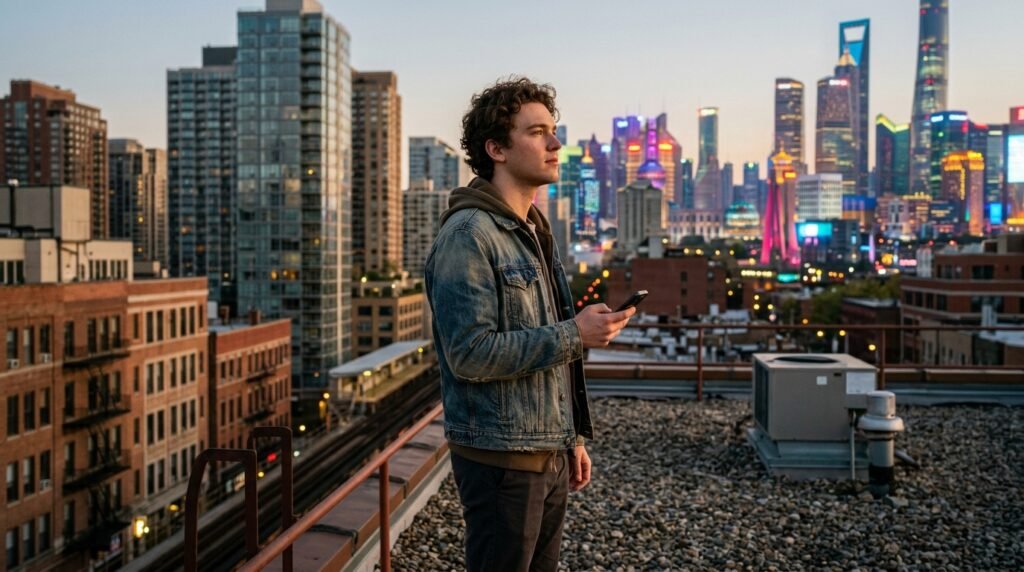
A spectacular Shanghai skyline does not tell you everything about living in Shanghai.
A beautiful American suburb does not tell you everything about living in America.
A viral video about Chinese infrastructure cannot explain every economic or social issue inside China.
The same applies in reverse.
The danger is replacing one simplified narrative with another.
The smarter response is curiosity.
Look at the evidence.
Travel if possible.
Talk to people.
Compare costs.
Research policies.
Understand cultural differences.
Then form an opinion.
What Chinamaxxing Says About America
Perhaps the most revealing part of Chinamaxxing is not what it says about China.
It is what it says about the American audience watching.
When young Americans see something abroad that appears attractive, they naturally compare it with their own experience.
If they see affordable-looking food, impressive transportation, futuristic cities or different lifestyle habits, they may ask why similar things are not available to them.
That question can create frustration.
It can also create inspiration.
Instead of asking:
Why is China doing this?
The more productive question may be:
Why can’t Americans have the things they admire wherever those things make sense?
That is not anti-American.
It is comparative thinking.
Is the American Dream Being Replaced?
Probably not.
It is being rewritten.
The white-picket-fence version of the American Dream is still alive. Surveys continue to show that homeownership matters deeply to Americans, including younger generations.
But it is no longer the only version.
For one person, the dream might be buying a $500,000 house.
For another, it might be renting a smaller apartment and traveling internationally every year.
For another, it might be building a technology company.
For someone else, it might be financial independence without ever owning a house.
There is no single answer.
What Happens Next?
The next decade could produce an interesting transformation.
If housing becomes more affordable, homeownership may regain some of its traditional importance.
If remote work continues expanding, young workers may become even more geographically flexible.
If international travel becomes easier, cultural comparison will accelerate.
If American cities invest heavily in housing, transportation and infrastructure, some of today’s frustrations could diminish.
And now they are watching artificial intelligence reshape the workplace and change how people think about careers, productivity and economic opportunity. For readers who want to understand the technology behind this transformation, our complete beginner’s guide to artificial intelligence explains how AI works and where it is already being used.
And if China continues producing globally influential technology, entertainment, products and online culture, Western interest in Chinese society could continue growing.
The result may not be an American Dream versus a Chinese Dream.
It could be a generation building a global version of the dream.
The Real Question Isn’t Whether the American Dream Is Dead
The more interesting question is:
What should the American Dream mean in 2026?
If it means that every person who works hard is guaranteed a house, wealth and financial security, reality has made that promise increasingly difficult to defend.
If it means having the freedom to pursue a better life, then the dream is still very much alive.
But freedom can mean different things to different generations.
For today’s young Americans, it may include the freedom to live somewhere affordable, work internationally, travel, build an online business, rent without shame, own property eventually or simply define success for themselves.
That may explain why China Maxxing has become such a fascinating cultural phenomenon.
It is not necessarily a rejection of America.
It may be a symptom of a generation realizing that there is more than one way to imagine a good life.
And perhaps that is the biggest change of all.
The American Dream may not be dead.
The monopoly it once had on the imagination of young people might be.
Frequently Asked Questions
What is Chinamaxxing?
Chinamaxxing is an internet trend involving increased interest in Chinese culture, lifestyle, products, travel, technology and everyday habits. The term combines “China” with the internet slang “maxxing,” meaning to go all-in on or optimize around something.
Is the American Dream dead?
The American Dream is not literally dead, but its traditional path has become harder for many younger Americans. Housing affordability, debt and changing economic conditions have caused many people to rethink the traditional sequence of career, homeownership, family and wealth.
Why are Gen Z Americans interested in China?
Social media has given Gen Z direct exposure to Chinese cities, technology, food, culture and everyday life. Viral videos and travel content have helped increase curiosity about what life in China actually looks like.
Is homeownership still part of the American Dream?
Yes. Surveys continue to show that homeownership remains an important part of the American Dream. Bankrate reported that 82% of U.S. adults considered owning a home part of the American Dream, while Realtor.com found that 51% of surveyed Gen Z adults shared that view.
Are Americans traveling to China more?
Interest in traveling to China has become increasingly visible online, and China’s inbound tourism has also grown. However, increased curiosity and travel interest should not be confused with evidence of a mass migration of Americans to China.
Is Chinamaxxing anti-American?
Not necessarily. The trend can represent cultural curiosity rather than political support. Someone can admire Chinese technology, food, transportation or cities while still preferring to live in the United States.
Why is housing so important to the American Dream?
Homeownership has historically represented stability, independence and wealth building. When housing becomes difficult to afford, it affects not only where people live but also how they think about careers, family, savings and their future.
What could the American Dream look like in the future?
The future American Dream may be less focused on one specific lifestyle and more focused on freedom, financial security, flexibility, meaningful work, travel, homeownership and quality of life. Younger generations may increasingly define success according to their own priorities rather than following one traditional formula.
Final Takeaway
The debate over whether the American Dream is dead is really a debate about what Americans expect from life.
For decades, the answer was relatively predictable.
Work hard.
Buy a home.
Build wealth.
Raise a family.
Retire comfortably.
Today, that path is still possible, but it is no longer equally accessible to everyone.
At the same time, the rise of China Maxxing shows that young Americans are increasingly willing to look outside their own borders for ideas about technology, lifestyle, transportation, culture and even quality of life.
That does not mean America has lost its appeal.
It means the internet has made comparison unavoidable.
The next version of the American Dream may therefore be less about proving that one country has the perfect way to live and more about taking the best ideas people discover around the world and asking how they can create a better life at home.
The dream isn’t necessarily dying. It may simply be getting a rewrite.






Leave a Reply