

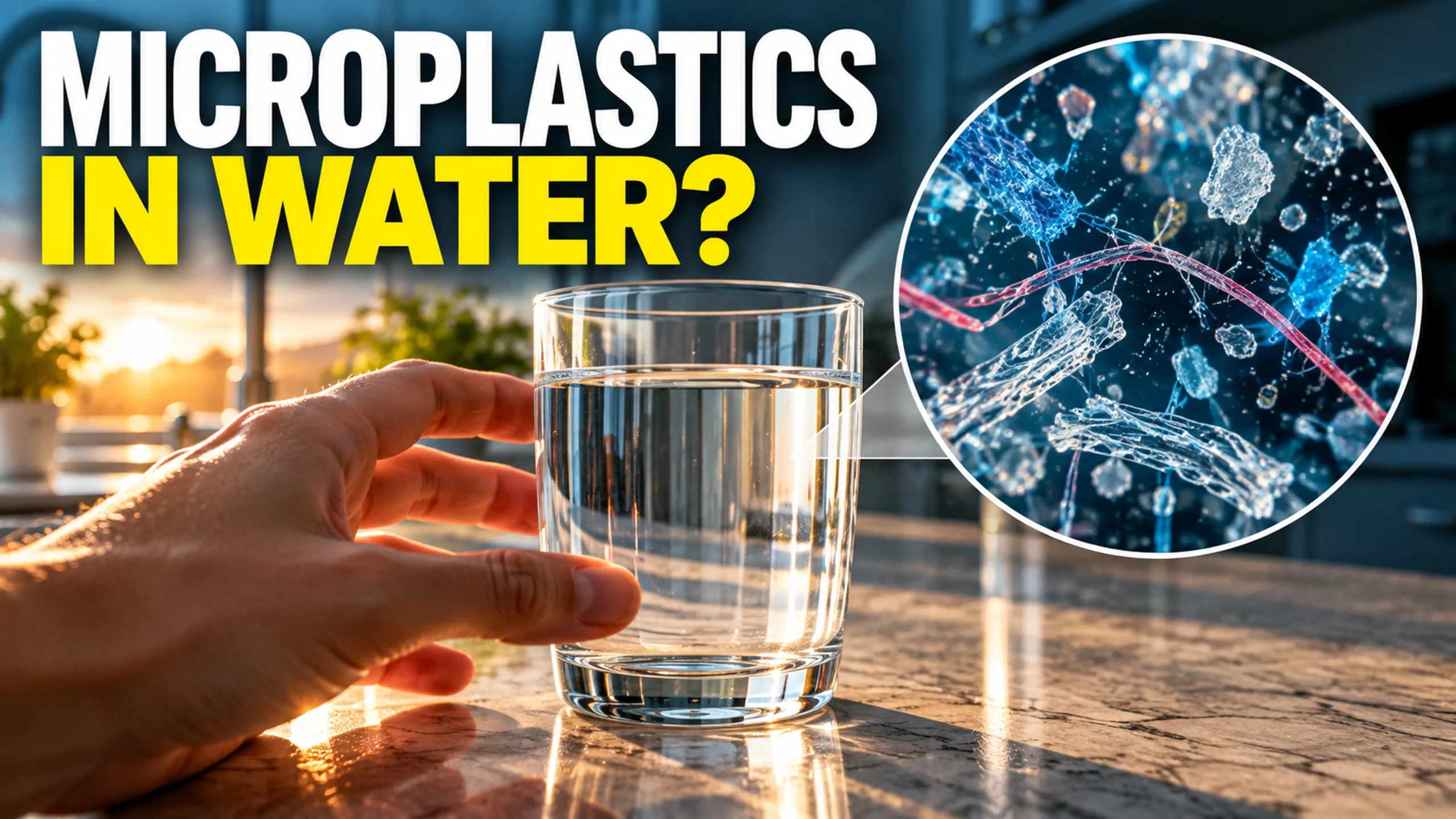
You fill a glass from the kitchen tap. The water looks clear, tastes normal, and has no unusual smell.
Then you come across a study about tiny plastic particles in drinking water.
Suddenly, the glass sitting on your kitchen counter doesn’t seem quite so simple.
Should you switch to bottled water? Buy an expensive filtration system? Boil every glass before drinking it?
Or are some of the products promising cleaner water doing little more than improving the taste?
If you want to know how to remove microplastics from drinking water, the important thing is understanding which methods can actually reduce plastic particles, which have limitations, and how to check whether a water filter does what its packaging promises.
There are practical options, but the evidence deserves a closer look.
How to Remove Microplastics From Drinking Water: Quick Answer
Microplastics in drinking water can be reduced using appropriate water filtration technologies, including reverse osmosis and filters independently certified for microplastics reduction.
Boiling followed by separation of mineral deposits may also reduce plastic particles, particularly in hard water, although its effectiveness varies and it is not a substitute for a verified filtration system.
The most useful first step is to check a filter’s specific contaminant-reduction certification, rather than relying on its brand name or a general promise of purified water.
According to NSF’s water filtration guidance, water filters certified under NSF/ANSI 401 for microplastics reduction can help reduce these contaminants.
No ordinary household method should be assumed to remove every plastic particle, particularly extremely small nanoplastics.
What Are Microplastics, and Why Are They Found in Drinking Water?
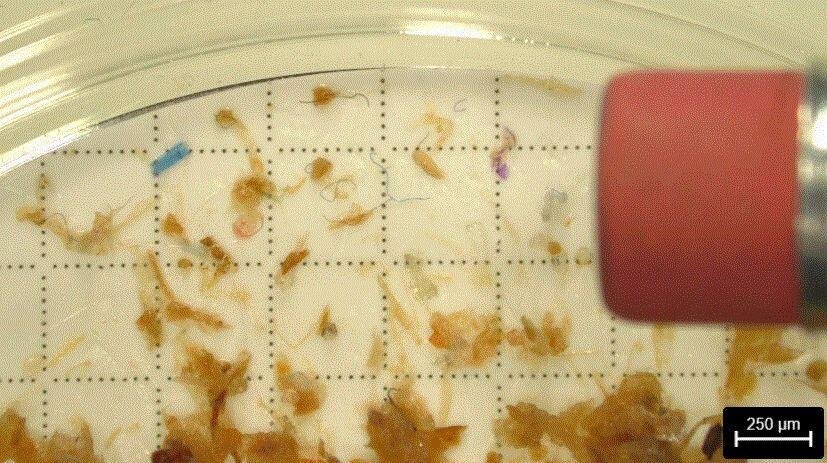
Microplastics are tiny plastic particles, generally defined as measuring less than 5 millimeters.
Some are manufactured at very small sizes. Others form when larger plastic products break into smaller fragments through sunlight, friction, weathering, and other environmental processes.
They can originate from clothing fibers, packaging, industrial materials, tires, and discarded plastic products.
Once released into the environment, these particles can move through rivers, lakes, soil, wastewater systems, and eventually drinking-water sources.
The problem is not limited to one country or one type of water supply.
Plastic pollution has become a global environmental issue because particles can travel through ecosystems and remain difficult to collect after dispersal.
Microplastics vs. Nanoplastics: What’s the Difference?
Size is one of the most important differences.
Microplastics are usually discussed as particles smaller than 5 millimeters, while nanoplastics refer to even smaller particles, often below 1 micrometer. Scientific definitions and measurement thresholds can vary.
To put that into perspective, one micrometer is one-thousandth of a millimeter.
Some household filters can capture larger particles effectively but may allow much smaller particles to pass through.
That is why a claim such as “removes microplastics” does not automatically establish that a product removes all nanoplastics.
The distinction also matters when comparing scientific studies.
A laboratory measuring relatively large plastic fragments may report very different particle counts from another laboratory using technology capable of detecting much smaller particles.
Are Microplastics Really Present in Tap Water and Bottled Water?
Yes. Researchers have detected microplastics in both treated tap water and commercially bottled drinking water.
However, the quantities vary depending on the water source, packaging, treatment process, sampling method, and particle sizes researchers can detect.
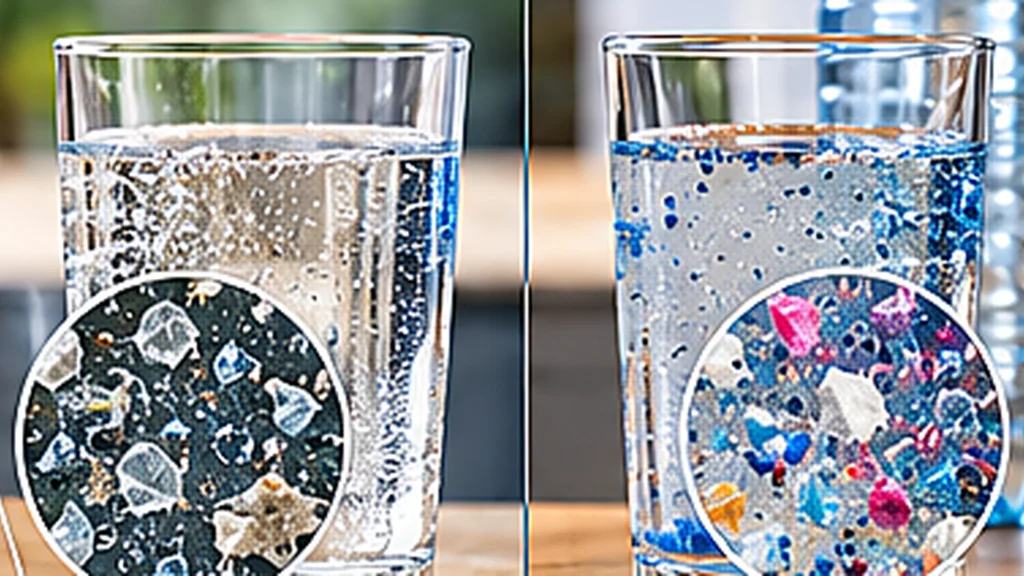
A 2026 study published in Science of the Total Environment compared microplastics and nanoplastics in bottled water and treated drinking water.
Researchers examined samples from six bottled-water brands and four drinking-water treatment plants. They found higher microplastic and nanoplastic particle concentrations in the bottled-water samples. More than half of the detected particles in both water categories were nanoplastics. However, the difference in plastic mass concentrations between the water types was not statistically significant.
These findings are important, but they do not prove that every bottled-water brand contains more plastic particles than every public drinking-water supply.
Water quality is local, and scientific results should not be stretched beyond the samples investigated.
Why Bottled Water Isn’t Automatically the Safer Choice
Buying bottled water can feel like an easy way to avoid contaminants.
But water can encounter plastic during production, packaging, storage, and handling.
The bottle itself is another potential source of particles.
That doesn’t mean bottled water is always unsafe or that everyone should stop buying it.
In places where tap water is contaminated with dangerous microorganisms or chemicals, properly treated bottled water may be the safer immediate option.
For households with a reliable, safe public water supply, however, switching to disposable plastic bottles simply to avoid microplastics may not accomplish what they expect.
The better question is whether the water is safe for drinking and whether the chosen filtration method addresses the contaminants that matter.
Do Water Filters Remove Microplastics?
Yes, some water filters can remove or reduce microplastics, but performance depends on the technology, filter design, particle size, and verified reduction claims.
A basic activated-carbon pitcher may improve chlorine taste and odor without necessarily having a certified microplastics-reduction claim.
Meanwhile, an appropriately designed membrane filter can physically separate particles from water.
The difference is not always obvious from the product’s appearance or price.
Here is how the main household options compare.
| Water treatment method | Microplastics reduction | Important limitation |
|---|---|---|
| Reverse osmosis | Strong potential to reduce very small particles | Performance depends on system integrity, maintenance, and verification |
| NSF/ANSI 401-certified filter with microplastics claim | Verified reduction under the specified testing conditions | Does not guarantee removal of every particle size |
| Ultrafiltration | Can capture particles larger than the membrane’s effective pores | Smaller particles may pass through |
| Standard carbon pitcher | Depends on the specific model and filtration design | Carbon alone does not establish a microplastics claim |
| Boiling followed by separation | Can reduce particles under certain conditions | Results depend heavily on water chemistry |
| UV treatment alone | Not an established physical particle-removal method | It does not filter plastic fragments from water |
| Conventional water softener | Not designed primarily for microplastic removal | Softening water is different from filtering particles |
The practical lesson is simple: choosing the appropriate technology is more useful than choosing the most expensive-looking device.
Reverse Osmosis: Can It Remove Microplastics and Nanoplastics?
Reverse osmosis, commonly called RO, is an established water treatment process that uses pressure to push water through a selective membrane.
Unlike a basic taste-improving filter, an RO system separates many dissolved substances and suspended particles from the treated water.
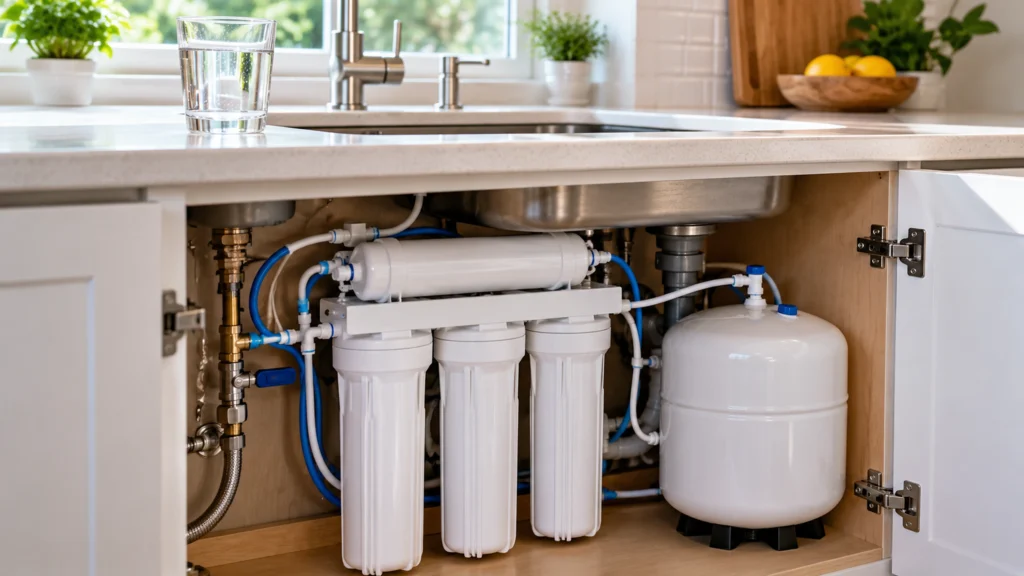
This gives properly functioning reverse osmosis systems strong potential to reduce microplastics, including particles small enough to escape coarser filters.
However, real-world performance depends on the membrane, installation, seals, water conditions, and maintenance.
No buyer should assume that every system achieves identical results against every category of nanoplastics.
What Are the Disadvantages of Reverse Osmosis?
There are a few practical tradeoffs.
RO systems can cost more to purchase and install than basic water pitchers.
They require periodic replacement of cartridges and sometimes membranes.
Some also remove minerals such as calcium and magnesium.
Another concern is wastewater. Reverse osmosis creates a treated-water stream and a separate reject-water stream.
The amount of water discharged depends on system efficiency.
For environmentally conscious households, comparing the system’s water efficiency is just as sensible as comparing its filtration performance.
What Does NSF 401 Mean for Microplastics?
When comparing filters, one detail deserves more attention than an impressive product description: independent certification.
NSF/ANSI 401 is a standard covering the reduction of certain emerging contaminants in drinking water.
NSF specifically identifies filters certified under this standard with a microplastics-reduction claim as an option for reducing these particles.
But there is a distinction worth understanding.
A filter displaying NSF/ANSI 401 certification is not automatically certified to reduce every contaminant covered by that standard.
The exact model must have the relevant microplastics-reduction claim.
How to Check Whether a Water Filter Is Certified
Before purchasing a filter:
- Find its exact manufacturer and model number.
- Open its official performance data sheet.
- Look for a specific microplastics-reduction claim.
- Verify the claim in the relevant independent certification body’s product directory.
- Review the cartridge replacement schedule and operating conditions.
You can start with NSF’s official certified-product listings.
Certification provides useful evidence of performance under specified test conditions. It does not promise that your water will contain zero particles after filtration.
Does Boiling Water Remove Microplastics?
Boiling water may help reduce microplastics, particularly when mineral-rich water forms calcium carbonate deposits that trap some of the particles.
But there is an important catch.
Heat does not simply make plastic disappear.
In a 2024 study published in Environmental Science & Technology Letters, researchers investigated how boiling could encourage plastic particles to become trapped in mineral deposits.
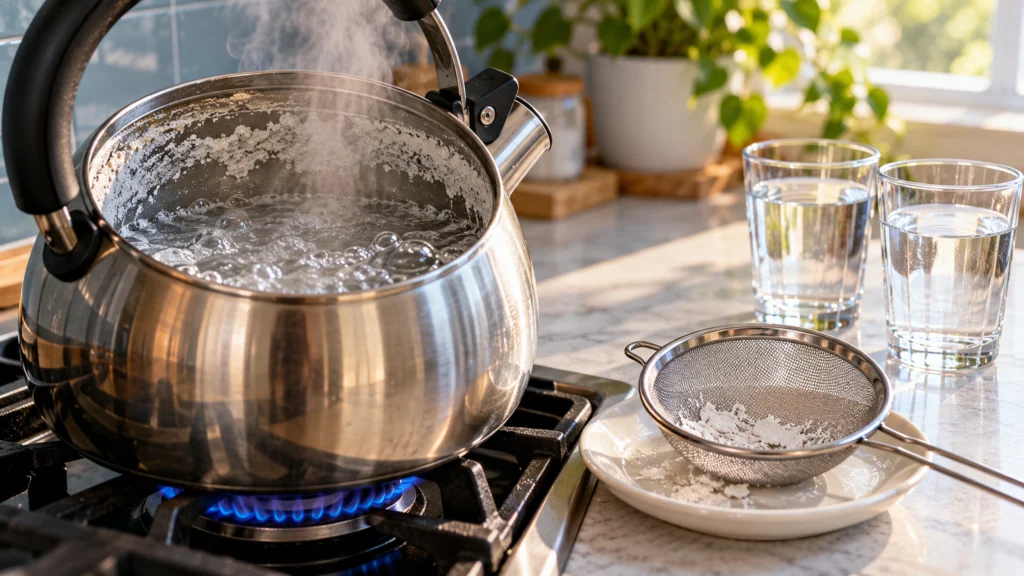
Under favorable hard-water conditions, the process achieved substantial reductions. In softer water, results were considerably weaker.
A separate 2026 study of drinking-water sources in Bangladesh also observed that boiling reduced measured microplastics, with performance associated with water hardness.
These findings are promising, particularly for communities seeking inexpensive approaches.
They are not evidence that boiling every type of drinking water will deliver the same result.
Why Hard Water Matters
Hard water contains relatively high concentrations of dissolved minerals, particularly calcium and magnesium.
When heated, minerals can form deposits commonly seen as limescale inside kettles.
Under certain conditions, plastic particles can become trapped in these deposits.
Separating the deposits from the water is part of the process investigated by researchers.
Simply boiling water and drinking everything left in the container should not be treated as equivalent to the tested removal process.
Boiling is also not an all-purpose solution for chemical contamination.
If your drinking water contains lead, PFAS, or other chemicals, you need treatment appropriate to those substances. Boiling alone does not reliably remove them.
Can Brita or Other Pitcher Filters Remove Microplastics?
Some pitcher-style water filters have verified microplastics-reduction capabilities.
Others primarily address taste, odor, chlorine, or particular chemical contaminants.
This is why asking whether a brand removes microplastics can be misleading.
A manufacturer may offer several cartridges with different technologies and certifications.
One product could have a verified reduction claim while another product sold under the same brand does not.
Before relying on a Brita, PUR, ZeroWater, or another brand’s filter for microplastics reduction, check the exact cartridge and its currently documented performance.
Avoid assuming a filter is effective simply because its advertisements describe clean or purified water.
Can a 1-Micron Water Filter Remove Microplastics?
A filter’s pore-size rating can help explain what it may capture.
For example, a filter rated at an absolute pore size of 1 micron is designed to prevent particles larger than that opening from passing through the filtration barrier.
However, particles smaller than the rated opening may still pass.
There is also a difference between absolute and nominal filtration ratings.
An absolute rating sets a stricter pore-size specification, while a nominal rating does not establish that every opening is below the stated size.
The CDC’s guidance on choosing home water filters explains why pore size and contaminant-specific claims both matter.
For microplastics, this becomes especially relevant because particle sizes vary enormously.
A filter suitable for larger fragments may not capture nanoplastics effectively.
How to Test for Microplastics in Drinking Water
Many people would prefer to test their water before spending money on treatment.
That is understandable.
Unfortunately, identifying microplastics is more complicated than testing pH, chlorine, or water hardness.
A small particle caught in a household filter could be plastic, but it could also be a mineral, natural fiber, or another material.
Researchers use specialized analytical methods, including infrared and Raman spectroscopy, to identify plastic polymers.
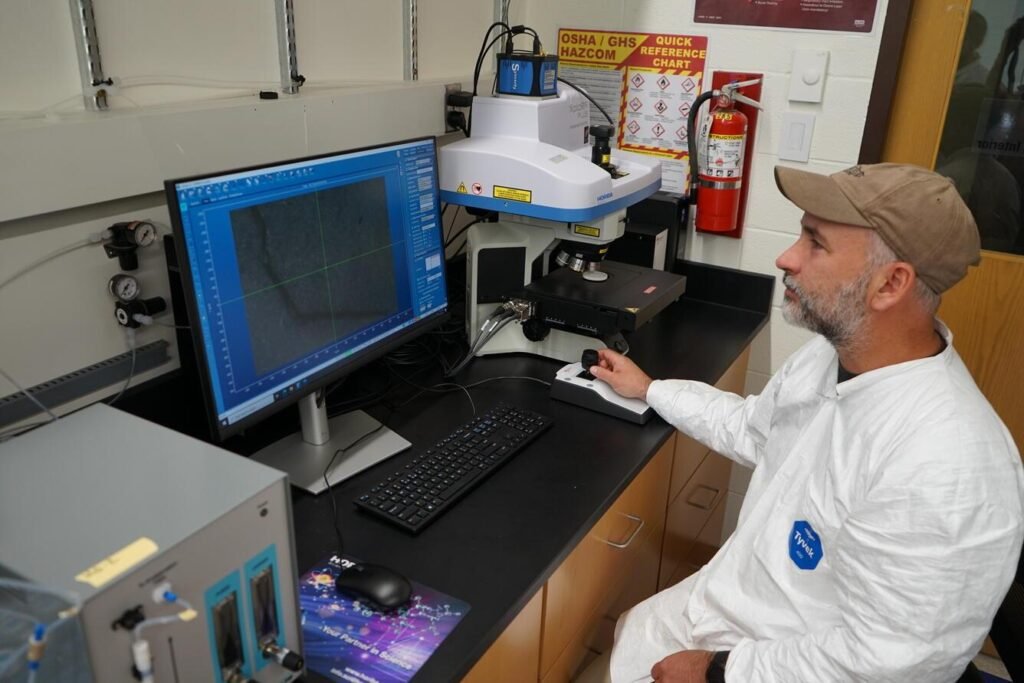
A 2026 scientific review of microplastics measurement highlighted continuing challenges in comparing results between laboratories.
If you are considering a commercial laboratory test, ask which particle sizes the method detects, which plastic types it identifies, and what quality-control procedures are used.
A simple photograph of particles trapped on a filter is not proof that those particles are plastic.
What About Your Local Water Quality Report?
In the United States, public water utilities provide annual Consumer Confidence Reports covering regulated drinking-water contaminants.
These reports are a useful starting point for understanding your local supply.
But they should not be mistaken for a comprehensive microplastics test.
As of October 2026, microplastics are included in the EPA’s draft Sixth Contaminant Candidate List, a step toward further evaluation, not an enforceable nationwide drinking-water limit.
For the latest regulatory information, see the EPA’s draft CCL 6 page.
If you rely on a private well, consult your local health department about appropriate testing for known microbiological and chemical hazards.
EEZYPOST’s 60-Second Water Filter Claim Check
Before buying another water filter, answer these five questions.
| Question | What to look for |
|---|---|
| Does the exact model claim microplastics reduction? | An explicit contaminant-specific claim |
| Is that claim independently certified? | A current listing from a recognized certification body |
| What particle sizes does the performance evidence cover? | A documented testing range or filtration specification |
| What does one year of ownership cost? | Purchase price, cartridges, installation, and servicing |
| Will the system address other contaminants in your water? | Separate verified claims for each relevant contaminant |
If a company cannot provide meaningful answers, consider another product before spending your money.
A glossy product photograph does not replace performance evidence.
Calculate the Real First-Year Cost
Suppose you’re comparing two filters.
One has a lower purchase price but requires frequent cartridges. Another costs more upfront but has longer replacement intervals.
The more useful calculation is:
First-year cost = purchase price + installation + replacement cartridges + expected maintenance
For example, a hypothetical system costing $150 upfront with $60 in yearly replacement cartridges would cost $210 in its first year before any additional maintenance or water expenses.
The lowest sticker price isn’t always the lowest cost of ownership.
How to Remove Microplastics From Drinking Water at Home: 4 Steps
Four practical steps can help you choose an appropriate treatment method:
- Check your water source. Review your utility’s water-quality report or arrange appropriate testing if you use a private well. Most routine reports do not measure microplastics.
- Choose verified filtration. Look for a filter with a specific microplastics-reduction claim, or compare reverse osmosis systems with documented performance.
- Maintain the system. Replace cartridges and membranes according to the manufacturer’s instructions. Poor maintenance can compromise filtration performance.
- Consider cost and limitations. Compare replacement expenses, water efficiency, and the particle sizes covered by the available testing evidence.
If You Already Have Safe Municipal Tap Water
Start by reviewing your water utility’s report.
If your primary concern is reducing plastic particles, compare filters with independently verified microplastics-reduction claims.
A suitable pitcher or under-sink option may meet your needs without requiring a large whole-house installation.
If You’re Concerned About Multiple Contaminants
Microplastics may not be the only issue.
Some households are also concerned about lead, arsenic, PFAS, or other substances.
A treatment system should be selected based on those specific risks.
Reverse osmosis can address several categories of contaminants, but always verify the exact model’s claims.
If Your Budget Is Limited
Begin with what you already know about your water.
Avoid purchasing expensive equipment based entirely on frightening social media posts.
Consider whether a certified, replaceable filter offers sufficient performance for your situation.
Boiling and separating mineral deposits is an area of continuing research, but it should not replace essential drinking-water treatment where unsafe contaminants are present.
The Environmental Cost of Cleaner Drinking Water
Removing microplastics from household water is only one part of a much larger problem.
Plastic particles don’t begin their journey at the kitchen faucet.
They originate from products, manufacturing processes, waste, and environmental breakdown.
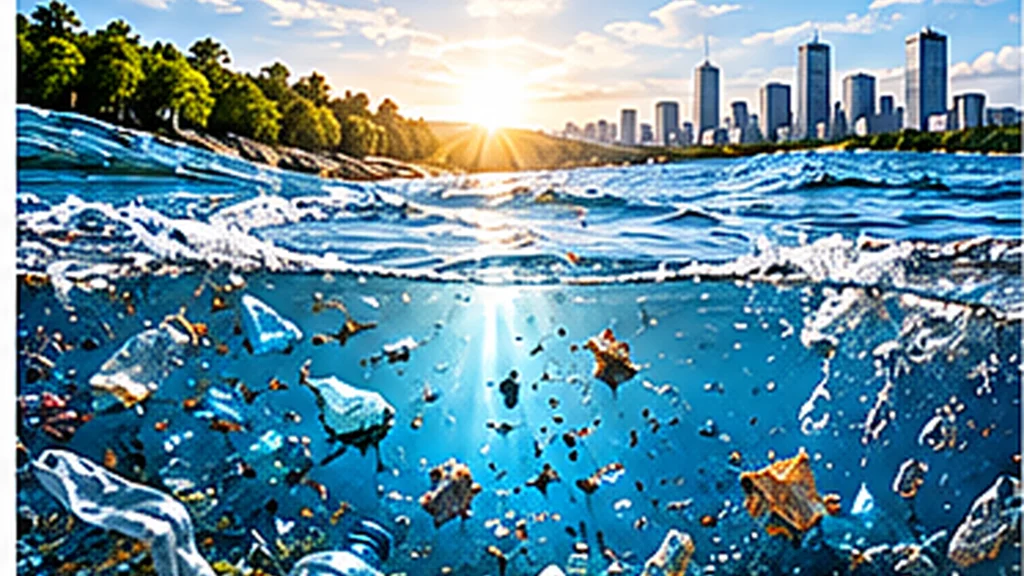
Once plastics enter waterways, some can travel through treatment systems and return to human environments.
Better household filtration may reduce personal exposure, but it does not remove the pollution already circulating through rivers, lakes, and oceans.
Waste prevention, improved treatment infrastructure, and responsible materials management remain important.
Water conservation matters too.
Our earlier EEZYPOST report on how much drinkable water is available on Earth explains why accessible freshwater is a much smaller resource than the planet’s oceans might suggest.
A water-treatment solution should ideally protect drinking-water quality without creating unnecessary waste.
Are Microplastics in Drinking Water Dangerous to Human Health?
Scientists are investigating possible effects of microplastic and nanoplastic exposure.
Laboratory and animal research has raised questions about inflammation, cellular responses, and other biological processes.
However, detecting plastic particles is not the same as proving that a particular concentration in drinking water causes a specific disease in humans.
The World Health Organization’s assessment of microplastics in drinking water identified important research gaps concerning exposure and potential health effects.
Research continues to develop, including work on smaller particles and improved laboratory detection.
For consumers, this uncertainty supports a balanced response.
Reducing unnecessary plastic exposure can be reasonable without assuming that every glass of water poses an immediate health emergency.
It is also important not to ignore well-established drinking-water hazards while concentrating exclusively on an emerging contaminant.
How EEZYPOST Researched This Guide
This guide draws on peer-reviewed research published in 2024 and 2026, drinking-water guidance from the CDC and EPA, NSF filtration certification information, and the World Health Organization’s assessment of microplastics. The comparisons explain published findings and documented filtration claims. No independent laboratory testing of household filters is presented in this article.
Frequently Asked Questions
What is the most effective way to remove microplastics from drinking water?
A properly functioning reverse osmosis system offers strong particle-reduction potential. Filters independently certified under NSF/ANSI 401 for microplastics reduction are also useful options. Check the exact model’s claims rather than assuming all systems perform equally.
Does boiling tap water destroy microplastics?
No. Boiling does not simply destroy plastic particles. Studies suggest boiling can promote mineral deposits that trap particles, which may then be separated from the water. The results vary with water conditions.
Can a regular water filter remove microplastics?
Some can, but others are primarily designed to improve taste and odor. The filter’s particle-removal capability and verified contaminant claims determine whether it is appropriate.
Are microplastics more common in bottled water than tap water?
Some comparative studies, including research published in 2026, have found higher concentrations in tested bottled-water samples. Results vary, and individual studies should not be treated as universal comparisons of all bottled and tap water.
Do carbon filters remove nanoplastics?
Activated carbon alone does not guarantee nanoplastics removal. Performance depends on the complete filter design, pore structure, and testing evidence. Look for a specific verified claim rather than relying on carbon filtration as a blanket solution.
Can you see microplastics in drinking water?
Some larger plastic fragments may be visible, but many microplastics and nanoplastics are too small to see with the naked eye. Clear-looking water does not establish that these particles are absent.
Can microplastics be completely removed from water?
Appropriate filtration can achieve substantial particle reduction, but a claim of complete removal across all particle sizes would require strong supporting evidence. No ordinary household system should be assumed to deliver zero microplastics and nanoplastics under every condition.
Does bottled water solve the microplastics problem?
Not necessarily. Studies have detected plastic particles in bottled water, and packaging can contribute to contamination. The safest choice depends on the quality of the available water and the contaminants present.
The Bottom Line
Learning how to remove microplastics from drinking water begins with one important distinction: cleaner-looking water and independently verified particle reduction are not the same thing.
Reverse osmosis, suitable membrane filtration, and products with specific microplastics-reduction certifications offer practical ways to reduce exposure.
Boiling may also help under particular conditions, but it is not a universal solution.
Before purchasing a filter, check what is known about your water supply, look for credible performance evidence, and consider the long-term cost of maintaining the system.
You don’t need to buy the most expensive device or replace every water bottle in your home overnight.
You need to understand what you’re trying to remove, choose a method supported by evidence, and avoid paying for promises a product cannot demonstrate.
That’s a more useful starting point than fear.




Leave a Reply