


Mortgage rates have remained one of the biggest obstacles for U.S. homebuyers in 2026. After years of unusually low borrowing costs, today’s buyers are still dealing with mortgage rates in the mid-6% range, making even a small change in the interest rate meaningful for monthly payments and long-term housing costs.
So where are mortgage rates headed for the rest of 2026?
The most reasonable outlook is for mortgage rates to remain relatively elevated but potentially move modestly lower if inflation continues to cool, economic growth slows, and financial-market conditions become more favorable. A return to the ultra-low mortgage rates seen during 2020 and 2021 does not appear to be the most likely near-term scenario.
The latest Freddie Mac data available for this analysis showed the average 30-year fixed mortgage rate at 6.58% on July 23, 2026, while the 15-year fixed rate averaged 5.96%. Mortgage rates can change every week, however, so borrowers should treat national averages as a market benchmark rather than a personal rate quote.
Rates shown in this article are national benchmarks and not personalized mortgage offers.
This mortgage rate forecast for 2026 examines where rates could go, what is driving them, whether rates are likely to fall, and what homebuyers and homeowners should consider if rates remain above 6%.
Data note:
Mortgage-rate figures in this article are based on Freddie Mac’s July 23, 2026 weekly data and forecasts available at the time of publication. Mortgage rates and economic forecasts can change.
Mortgage Rate Forecast 2026 at a Glance
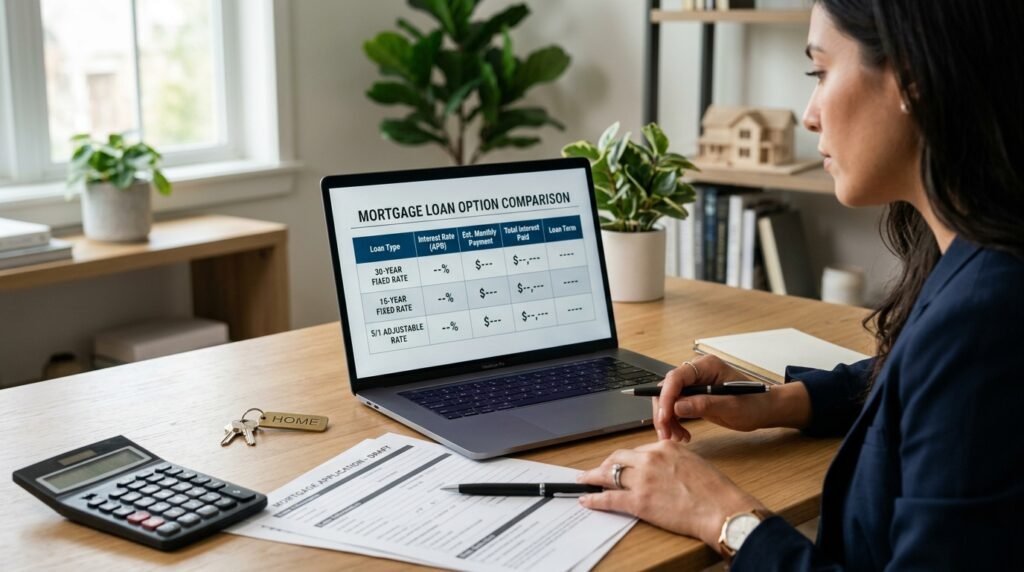
The 2026 mortgage-rate outlook points toward gradual improvement rather than a dramatic decline.
The latest available Freddie Mac weekly data placed the 30-year fixed mortgage rate at 6.58% on July 23, 2026. The 15-year fixed rate was 5.96%.
Several housing-market forecasts have pointed toward mortgage rates remaining around the low-6% range during 2026, although forecasts vary and can change as economic conditions change.
Our base-case assessment for this article is that mortgage rates are more likely to move sideways or gradually lower than to experience a rapid return to 4% or 5%.
Here is how the major scenarios look:
| Scenario | What could cause it | Likely direction for mortgage rates | What it means for buyers |
|---|---|---|---|
| Lower-rate scenario | Cooling inflation, weaker growth and lower bond yields | Rates move meaningfully lower | Affordability improves |
| Base case | Gradual economic normalization | Rates remain around the low-to-mid 6% range with periods of volatility | Buyers continue shopping and negotiating |
| Higher-rate scenario | Sticky inflation, stronger growth or higher Treasury yields | Rates remain elevated or rise | Monthly payments remain expensive |
The important point is that a mortgage rate forecast is not a promise about where rates will finish the year. Mortgage rates respond to financial markets, inflation expectations, economic data and investor demand, all of which can change quickly.
What Are Mortgage Rates Right Now?
The latest Freddie Mac Primary Mortgage Market Survey available for this analysis showed the average 30-year fixed mortgage rate at 6.58% on July 23, 2026.
The 15-year fixed mortgage rate averaged 5.96% during the same week.
That compares with a 30-year rate of 6.49% on July 9 and 6.55% on July 16, showing how quickly the weekly average can move even when the broader market appears relatively stable.
It is also important to understand what these numbers represent.
Freddie Mac’s Primary Mortgage Market Survey uses mortgage application data submitted through its Loan Product Advisor system to produce a national benchmark for mortgage rates. It represents a national average and does not mean every borrower will receive that exact rate.
Your actual mortgage rate can be higher or lower depending on factors such as:
- Credit score
- Down payment
- Loan-to-value ratio
- Loan type
- Property type
- Loan amount
- Occupancy
- Debt-to-income ratio
- Lender pricing
- Whether you pay discount points
A borrower with excellent credit and a large down payment can receive a very different offer from a borrower with weaker credit or a smaller down payment.
Our Mortgage Rate Forecast for 2026
The strongest case for the rest of 2026 is not a dramatic collapse in mortgage rates. Instead, the evidence points toward a market in which rates could gradually ease if inflation and economic growth continue moving in a direction that allows investors to demand lower long-term yields.
That distinction matters.
Mortgage rates are already well below their historical record high of 18.63%, reached in 1981. But they remain much higher than the exceptionally low rates available during the pandemic.
The 2026 mortgage rate forecast therefore needs to be viewed through three possible paths.
Base-case scenario
Our base case is for mortgage rates to remain in a relatively narrow range around the low-to-mid 6% area, with periods of movement in both directions.
That would be consistent with the broad direction of several housing-market forecasts that anticipate modest improvement rather than a dramatic rate decline.
Under this scenario, borrowers should not assume that waiting several months will automatically produce a much cheaper mortgage.
Rates could fall somewhat, but they could also move higher temporarily.
Lower-rate scenario
Mortgage rates could fall more than expected if inflation cools faster, economic growth weakens, Treasury yields decline and investors become more comfortable holding mortgage-backed securities.
A meaningful decline in long-term bond yields would provide an important tailwind for mortgage rates.
In this scenario, 30-year mortgage rates could move closer to the upper-5% or low-6% range.
However, even this outcome would not guarantee a return to the 3% or 4% mortgage rates that became common during the pandemic.
Higher-rate scenario
Mortgage rates could remain higher for longer if inflation proves difficult to control, economic growth stays strong or long-term Treasury yields rise.
Geopolitical uncertainty, government borrowing needs and changes in inflation expectations can also affect bond yields and mortgage pricing.
Under this scenario, the 30-year fixed rate could remain around the mid-6% range or temporarily move higher.
This is why buyers should avoid building a home purchase around a single mortgage rate forecast.
Are Mortgage Rates Expected to Drop in 2026?
Mortgage rates could decline in 2026, but a large decline is far from guaranteed.
Some earlier forecasts called for mortgage rates to move toward the 5.9% to 6.0% range by the end of 2026. For example, Fannie Mae’s September 2025 Economic and Housing Outlook projected an end-2026 mortgage rate of about 5.9%. Forecasts can change as economic conditions and financial markets evolve.
Other forecasts have been more conservative and have kept rates around the low-6% range.
The common theme is important: most forecasts do not assume a rapid return to the extremely low rates seen during the pandemic.
For buyers, that means the more realistic question may not be:
“Will mortgage rates collapse?”
Instead, it may be:
“Can I afford the home I want at today’s rate, and would refinancing later make sense if rates decline?”
That is a much more useful way to approach the housing market.
Why Don’t Mortgage Rates Simply Follow the Federal Reserve?
One of the biggest misconceptions about mortgage rates is that the Federal Reserve directly sets the 30-year mortgage rate.
It does not.
The Federal Reserve controls the federal funds target rate, which primarily affects short-term borrowing conditions.
Long-term mortgage rates are influenced much more heavily by the bond market, particularly expectations surrounding inflation, economic growth and long-term Treasury yields.
Freddie Mac research has found a strong historical relationship between the 30-year fixed mortgage rate and the 10-year Treasury yield.
That means the Fed can influence the broader interest-rate environment without automatically causing 30-year mortgage rates to move by the same amount.
For example, a Fed rate cut could occur while mortgage rates barely move if investors believe inflation will remain elevated or long-term Treasury yields remain high.
The reverse can also happen.
Mortgage rates can fall before the Fed cuts rates if financial markets anticipate future economic weakness or lower inflation.
What Could Make Mortgage Rates Go Down?
Several factors could push mortgage rates lower during the rest of 2026.
1. Lower inflation
Inflation is one of the most important variables for long-term interest rates.
When investors believe inflation is becoming less persistent, they may accept lower yields on long-term bonds.
That can create downward pressure on mortgage rates.
2. Lower Treasury yields
Mortgage rates tend to move with long-term Treasury yields, although they do not move in perfect lockstep.
If the 10-year Treasury yield falls significantly, mortgage rates can also receive downward pressure.
3. Slower economic growth
A weaker economy can reduce expectations for future inflation and interest rates.
If economic growth slows enough, investors may move toward bonds, which can lower Treasury yields.
That could eventually help mortgage rates.
4. A more favorable mortgage-backed securities market
Mortgage rates are also affected by mortgage-backed securities.
When investors are more comfortable holding mortgage-backed securities, the spread between mortgage rates and Treasury yields can improve.
That can help mortgage rates decline even if Treasury yields do not fall dramatically.
5. Expectations for easier monetary policy
If financial markets expect the Federal Reserve to become more accommodative, long-term yields can respond before an actual policy change occurs.
But again, this relationship is indirect.
A Fed cut is not a guarantee of lower 30-year mortgage rates.
What Could Make Mortgage Rates Go Up?
The risks to the mortgage rate forecast are just as important as the potential reasons for lower rates.
Persistent inflation
If inflation remains above the Federal Reserve’s long-term goal, investors may demand higher yields to compensate for inflation risk.
That can keep mortgage rates elevated.
Strong economic growth
A stronger economy can keep demand and inflation pressures higher.
That can push long-term yields higher and make mortgages more expensive.
Higher Treasury yields
Because mortgage rates are closely linked to the broader bond market, higher long-term Treasury yields can put upward pressure on mortgage rates.
Financial-market uncertainty
Mortgage spreads can widen when investors become more concerned about risk.
Even if Treasury yields remain stable, mortgage rates may not fall as much as expected if mortgage-market spreads widen.
Will 30-Year Mortgage Rates Return to 3%?
A return to 3% mortgage rates would be a dramatic change from the current environment.
It is possible over a long enough period, but there is no strong reason for homebuyers to assume that 3% mortgage rates are coming back in 2026.
The pandemic-era mortgage rates were produced by an unusual combination of economic conditions and extraordinary monetary and financial-market support.
Today’s environment is different.
A borrower waiting specifically for a 3% mortgage rate could end up waiting for years, while home prices, rents, income and personal circumstances continue to change.
For that reason, buyers should base their decisions on affordability rather than a hope that mortgage rates return to pandemic-era levels.
15-Year vs. 30-Year Mortgage Rates in 2026
The 15-year and 30-year mortgage are two of the most common fixed-rate options.
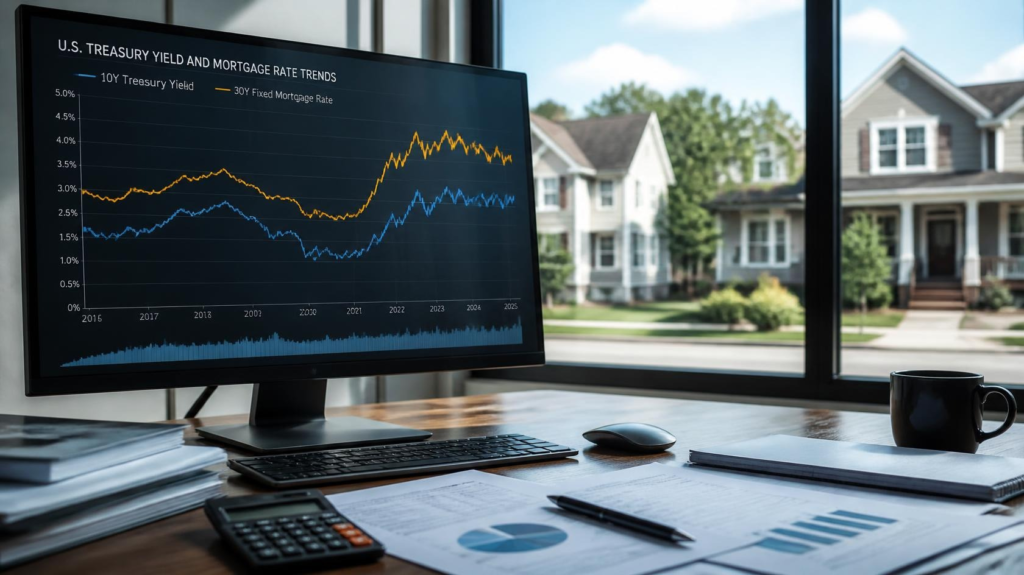
The 15-year mortgage generally carries a lower interest rate, but the shorter repayment period produces a higher monthly principal-and-interest payment.
The 30-year mortgage usually has a higher interest rate but spreads repayment over twice as many years.
Using the latest Freddie Mac weekly averages available for this analysis:
- 30-year fixed: 6.58%
- 15-year fixed: 5.96%
The difference was 0.62 percentage points.
That does not automatically mean the 15-year mortgage is the better choice.
A 15-year mortgage can make sense for borrowers who have sufficient income and want to build home equity faster.
A 30-year mortgage can provide greater monthly flexibility and may allow a household to keep more money available for emergency savings, retirement contributions or other financial goals.
The right choice depends on the borrower’s complete financial situation.
How Much Does a 30-Year Mortgage Cost?
The interest rate has a major effect on the monthly payment of a 30-year mortgage.
Consider a hypothetical $400,000 mortgage with no taxes, insurance, HOA fees or other costs included.
At approximately 6.5%, the principal-and-interest payment would be around $2,528 per month.
At 5.5%, the payment would be around $2,271 per month.
That difference is roughly $257 every month.
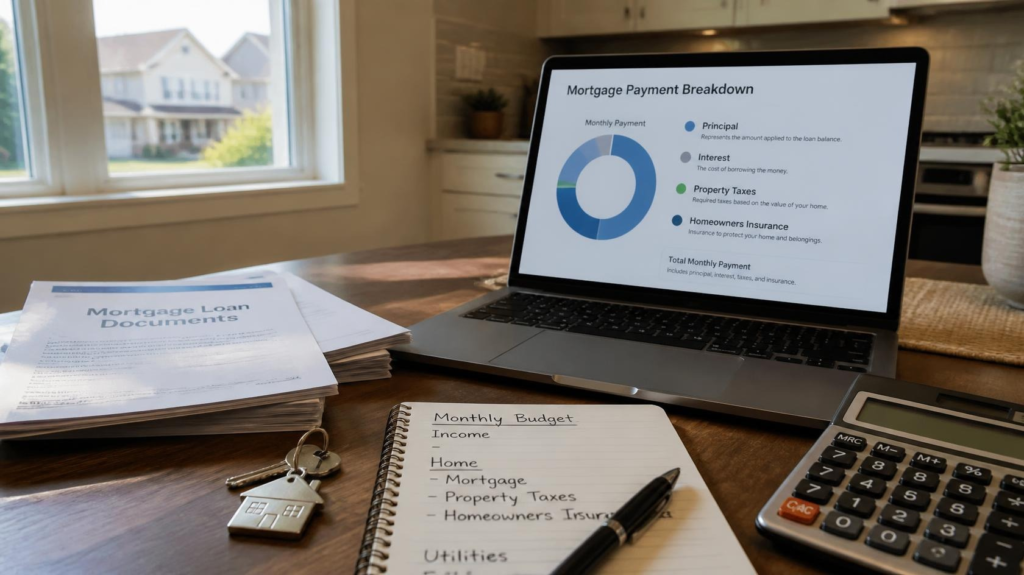
Over a long period, even a one-percentage-point difference can add up to tens of thousands of dollars in interest.
These figures are illustrations rather than mortgage quotes. Actual payments depend on the loan amount, interest rate, taxes, insurance, mortgage insurance and other costs.
The lesson is simple: a seemingly small change in the mortgage rate can materially affect affordability.
What Determines Your Mortgage Rate?

Your personal mortgage rate is influenced by both market conditions and borrower-specific factors.
Credit score
A stronger credit profile can help a borrower qualify for more favorable pricing.
Down payment
A larger down payment can reduce the loan-to-value ratio and may reduce lender risk.
Loan type
Conventional, FHA, VA and other mortgage programs can have different pricing structures and qualification requirements.
Loan term
15-year and 30-year fixed mortgages normally have different rates.
Property type
A primary residence may receive different pricing from an investment property or second home.
Loan amount
Jumbo and other nonconforming loans can have different pricing from conforming loans.
Debt-to-income ratio
Lenders consider how much of a borrower’s income is already committed to debt.
Discount points
Borrowers can sometimes pay upfront points to obtain a lower interest rate.
Because of these factors, the national average mortgage rate should never be treated as a guaranteed personal offer.
Should You Wait for Mortgage Rates to Fall?
There is no universal answer.
Waiting can make sense for someone who is not financially ready to buy and wants more time to build savings, improve credit or reduce debt.
But waiting solely because you believe rates will definitely fall can be risky.
Mortgage rates can move in either direction.
Home prices can also change.
If rates fall, more buyers may return to the market, increasing competition for available homes. Sellers may become less willing to negotiate if demand increases.
A buyer who can comfortably afford a home today should therefore compare the complete cost of buying now with the cost of waiting.
That includes:
- Mortgage payment
- Property taxes
- Homeowners insurance
- Maintenance
- Closing costs
- Down payment
- Expected time in the home
- Opportunity cost of waiting
- Potential future refinancing
What Should Homebuyers Do If Mortgage Rates Fall in 2026?
If mortgage rates fall, buyers should not automatically assume that every available home becomes affordable.
A lower mortgage rate can increase purchasing power, but rising home prices can offset some of the benefit.
Before taking on a mortgage, buyers should also make sure they have enough cash reserves to handle unexpected expenses and maintain an adequate savings cushion.
If rates fall substantially, housing demand could also increase.
For buyers who are already financially prepared, several strategies can help.
Shop multiple lenders
Do not accept the first mortgage offer.
Comparing lenders can reveal meaningful differences in interest rates, fees and closing costs.
Compare APR, not just the interest rate
A mortgage with a lower advertised interest rate can still be more expensive if it carries higher fees.
Consider a rate lock
If you have a purchase contract, ask your lender about rate-lock options and how long the lock lasts.
Don’t stretch the budget
A lower interest rate does not make an unaffordable home affordable.
Leave room in the budget for taxes, insurance, maintenance and unexpected expenses.
Consider future refinancing carefully
If rates fall significantly after you buy, refinancing could become an option.
But refinancing is not free, and the savings need to justify the closing costs.
What Should Borrowers Do If Mortgage Rates Stay High?
If mortgage rates remain elevated, preparation becomes more important.
First, strengthen your credit profile before applying.
Second, compare multiple lenders.
Third, determine the monthly payment you can comfortably afford rather than starting with the maximum amount a lender says you qualify for.
Fourth, consider whether paying discount points makes sense.
A point generally equals 1% of the loan amount. Whether buying points is worthwhile depends on the upfront cost, the reduction in the interest rate and how long you expect to keep the mortgage.
Finally, keep cash reserves.
Keeping those reserves accessible is important because homeowners may need cash for repairs, insurance deductibles or other unexpected costs.
Homeownership comes with expenses that do not appear in a mortgage payment.
A strong emergency fund can be more valuable than squeezing every possible dollar out of the purchase price.
Keeping part of that emergency fund in a competitive savings account can help your cash remain accessible while potentially earning interest before you need it.
What Does the 2026 Mortgage Rate Outlook Mean for Homebuyers?
The biggest takeaway from the mortgage rate forecast for 2026 is that buyers should prepare for a gradual market rather than wait for a dramatic reset.
Current mortgage rates are still substantially higher than the pandemic-era lows.
At the same time, the housing market is not necessarily frozen.
A buyer with stable income, good credit, adequate savings and a long-term reason to own a home can still make a purchase when the numbers work.
The key is to avoid relying on a single forecast.
Instead, build a financial plan that works if rates remain around current levels.
If rates later decline, refinancing may provide an opportunity.
If rates rise, a buyer who purchased within a comfortable budget is better positioned to absorb the higher borrowing cost.
What to Watch for the Rest of 2026
Anyone following mortgage rates should pay attention to several economic indicators.
Inflation reports
Inflation affects expectations for future interest rates and bond yields.
Federal Reserve decisions
The Fed’s policy decisions influence the broader interest-rate environment, although they do not directly set 30-year mortgage rates.
10-year Treasury yield
This is one of the most useful market indicators to watch when trying to understand the direction of long-term mortgage rates.
Employment data
A weakening labor market can increase expectations for slower economic growth and potentially lower interest rates.
A very strong labor market can have the opposite effect.
Mortgage-backed securities
Changes in mortgage-market spreads can cause mortgage rates to move differently from Treasury yields.
Housing demand
Mortgage rates affect purchasing power, which in turn affects housing demand, sales and affordability.
The Bottom Line on the Mortgage Rate Forecast for 2026
The most realistic mortgage rate forecast for 2026 is not a dramatic return to ultra-low borrowing costs.
Instead, the evidence points toward a possibility of modest improvement, with rates remaining sensitive to inflation, Treasury yields, Federal Reserve policy expectations and the overall economy.
The latest Freddie Mac data available for this analysis showed a 30-year fixed mortgage rate of 6.58% and a 15-year fixed rate of 5.96% on July 23, 2026.
Several major forecasts have pointed toward rates remaining around the low-6% range, while some forecasts have projected a move toward roughly 5.9% by the end of the year.
That leaves plenty of uncertainty.
For homebuyers, the best strategy is not to try to perfectly predict the next rate move.
Instead:
- Know what monthly payment you can afford.
- Improve your credit before applying.
- Save for the down payment and closing costs.
- Compare multiple lenders.
- Look at the APR and total borrowing costs.
- Avoid buying more house simply because rates fall.
- Consider refinancing only if the future savings justify the costs.
Mortgage rates can change quickly, but a home purchase is a long-term financial decision.
The strongest position is usually the one that remains financially comfortable even when the forecast is wrong.
Frequently Asked Questions About Mortgage Rates in 2026
Will mortgage rates go down in 2026?
They could. Several forecasts have pointed toward modest declines during 2026, but the timing and size of any decline remain uncertain. Inflation, Treasury yields, economic growth and financial-market conditions will be important.
Are mortgage rates expected to drop below 6% in 2026?
Some forecasts have projected rates approaching or moving below 6% by the end of 2026, but this is not guaranteed. Other forecasts have been more cautious and expect rates to remain around the low-6% range.
What will 30-year mortgage rates be in 2026?
There is no reliable way to know the exact rate in advance. The available forecasts generally point toward rates remaining around the low-6% range, with the possibility of modest declines if economic conditions become more favorable.
Will mortgage rates return to 3%?
There is no strong basis for assuming that 3% mortgage rates will return in 2026. Those rates were associated with an unusually low-rate environment during the pandemic.
Is it better to wait for lower mortgage rates?
Not necessarily. Waiting may make sense if you need more time to improve your finances, but trying to predict the exact bottom of the mortgage market is extremely difficult. Buyers should focus on affordability and their long-term housing needs.
Does a Federal Reserve rate cut lower mortgage rates?
Not automatically. The Federal Reserve controls the federal funds rate, while 30-year mortgage rates are heavily influenced by long-term bond yields, mortgage-backed securities and investor expectations.
What makes mortgage rates rise or fall?
Inflation expectations, Treasury yields, Federal Reserve policy expectations, economic growth, employment, mortgage-backed securities and lender pricing can all affect mortgage rates.
Is a 15-year mortgage better than a 30-year mortgage?
Not for everyone. A 15-year mortgage generally offers a lower interest rate and faster equity building but requires a higher monthly payment. A 30-year mortgage usually provides lower monthly payments and greater flexibility.
Should I buy a house if mortgage rates are high?
You can buy when rates are high if the overall purchase fits comfortably within your budget and your financial situation is strong. Do not rely on the assumption that rates will definitely fall later.
How often do mortgage rates change?
Mortgage rates can change daily in the broader lending market, while national benchmark surveys such as Freddie Mac’s Primary Mortgage Market Survey are published weekly.
What is the best way to get a lower mortgage rate?
Improve your credit, maintain a strong financial profile, compare several lenders, consider different loan structures and evaluate whether paying discount points makes financial sense.
How much can a small mortgage-rate change affect my payment?
Even a change of one percentage point can materially change a monthly payment and the total interest paid over a 30-year loan. The exact impact depends on the loan amount and term.




Leave a Reply