

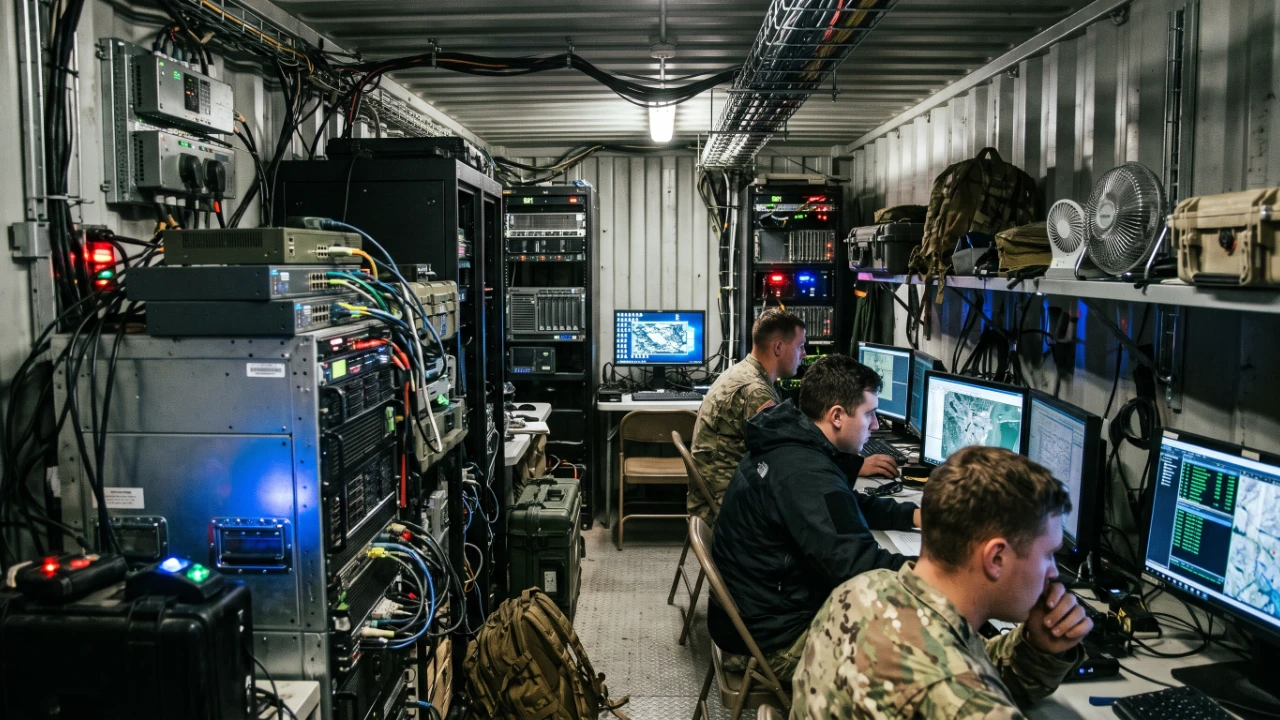
Direct Answer (Quick Summary): The ai warfare future is no longer a sci-fi prediction—it is the defining reality of modern geopolitics. Today, artificial intelligence in modern warfare has shifted global supremacy from gunpowder and tank divisions to semiconductor fabs, megawatt data centers, and self-learning combat algorithms.
Whoever dominates compute power national security now dictates the outcome of conflicts before a single infantry soldier crosses a border. In this two-part investigation, we break down why ammunition is becoming secondary to silicon—and why who controls ai controls the world in the decade ahead.
Walk into any modern military command post today and you will notice something unsettling. The loudest weapons in the room are not artillery shells—they are liquid-cooled server racks humming inside reinforced shipping containers.
For two hundred years, winning a war meant out-producing your enemy in steel, fuel, and bullets. That era is dying fast, and the ai warfare future has already replaced brute-force firepower with predictive machine intelligence.
1. Artificial Intelligence in Modern Warfare Compresses Decisions From Days to Milliseconds
In traditional conflicts, human commanders spent hours analyzing satellite photos, intercepting radio chatter, and drawing arrows on paper maps. By the time orders reached the front line, the target had already moved.
Modern artificial intelligence in modern warfare collapses that entire “kill chain” from days into fractions of a second. According to mission briefings from the U.S. Department of Defense Chief Digital and Artificial Intelligence Office (CDAO), algorithmic sensor fusion now processes live feeds from satellites, radar, and drones simultaneously.
- Instant Target Identification: Computer vision models spot camouflaged launchers through cloud cover faster than any human analyst.
- Automated Logistics Routing: Predictive algorithms reroute fuel and spare parts around damaged bridges before supply lines stall.
- Electronic Spectrum Dominance: AI radios hop frequencies thousands of times per second to defeat enemy jamming in real time.
When one military thinks at machine speed and its opponent thinks at human speed, numerical troop advantage becomes irrelevant.
| Era of Conflict | Primary Superpower Currency | Decision Speed | Limiting Bottleneck |
| 20th-Century Kinetic War | Tanks, aircraft carriers & artillery shells | Hours to days (human chain) | Steel factories & oil reserves |
| 2026 AI Compute War | Advanced GPUs, frontier models & drones | Milliseconds (autonomous loop) | 2nm chip fabs & gigawatt power |
As this shift proves, the ai warfare future rewards the nation that processes battlefield data fastest, not the nation that fires the most rounds.
2. Autonomous Drone Swarms AI Make Billion-Dollar Weapons Obsolete
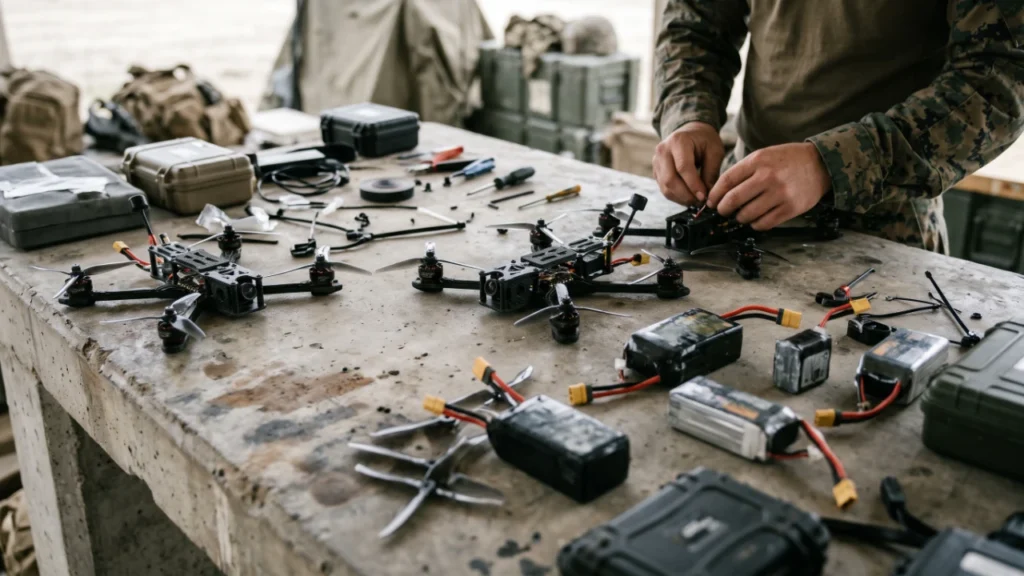
Look at the brutal economics reshaping modern battlefields. A single advanced air-defense interceptor missile can cost $3 million to $4 million per shot, while an AI-guided FPV drone costs less than $600 to assemble.
You do not need an economist to see who goes bankrupt first in that exchange. With autonomous drone swarms ai, one operator can launch fifty coordinated drones that communicate with each other mid-air without needing a live GPS or radio link back to base.
- Jam-Proof Terminal Guidance: Even when electronic warfare cuts off remote pilot signals, onboard edge-AI chips lock onto the target visually and finish the strike.
- Swarm Coordination: If air defenses shoot down five drones, the remaining forty-five instantly redistribute targets among themselves.
- Asymmetric Deterrence: Smaller nations with elite software engineers can now neutralize billion-dollar naval fleets and armored columns at a fraction of the cost.
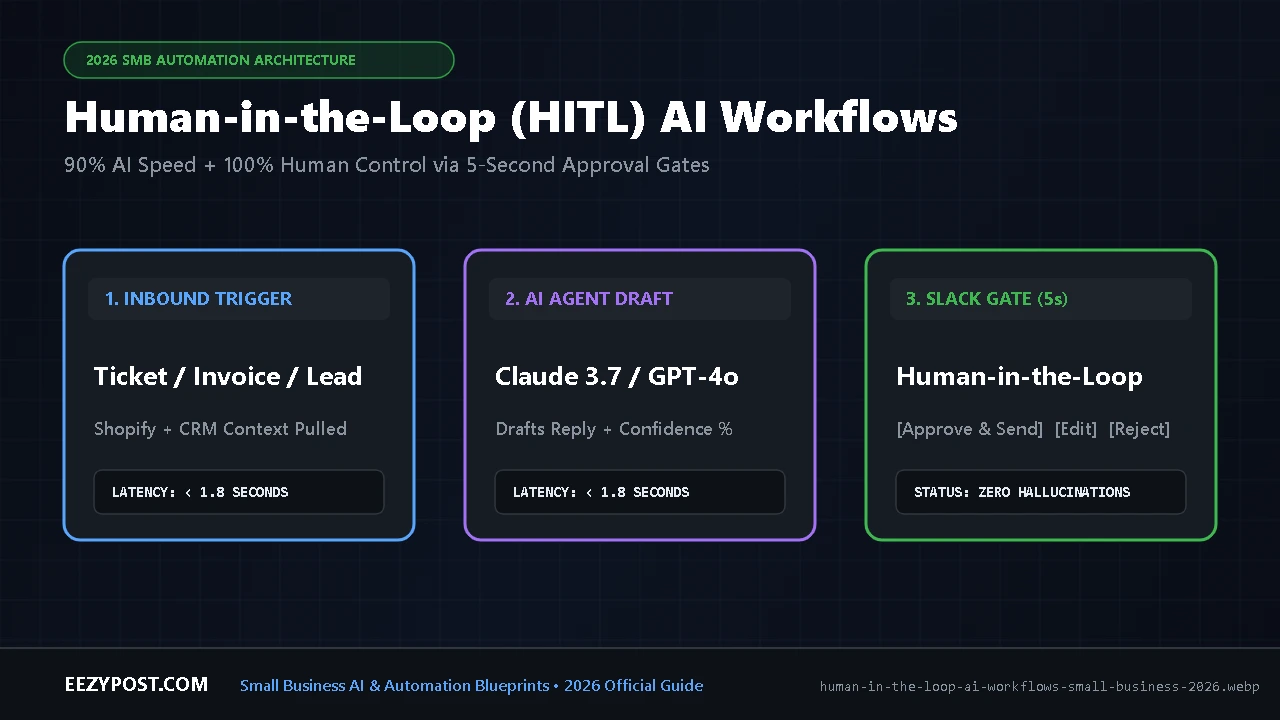
We have seen this exact shift toward human-in-the-loop automation reshape private industry—as we explored in our breakdown of Human-in-the-Loop AI Workflows for Business—and on the battlefield, autonomy moves ten times faster.
3. Compute Power National Security Is the New Nuclear Arms Race
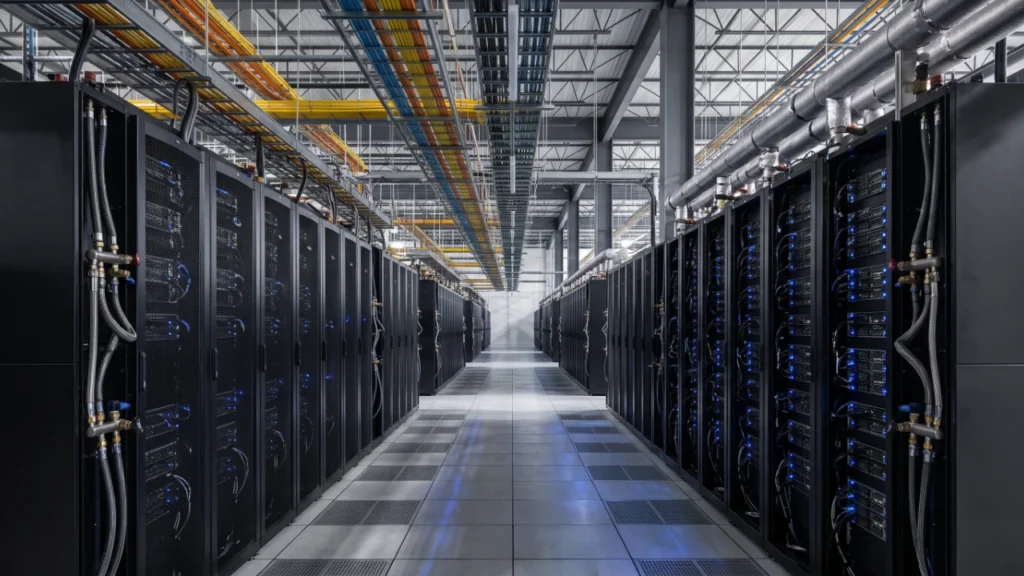
Why are global superpowers fighting ferocious trade wars over microscopic silicon wafers and lithography machines? Because compute power national security is now the single most important strategic resource on earth.
You cannot train frontier battlefield models without tens of thousands of cutting-edge GPUs, and you cannot run those GPU clusters without massive, uninterrupted electrical grids. Today, a nation’s true war chest is measured in FLOPs (floating-point operations per second) and gigawatts of dedicated power.
- Chip Chokepoints: Only a handful of facilities on earth can manufacture sub-3nm processors, making semiconductor supply chains more heavily guarded than gold reserves.
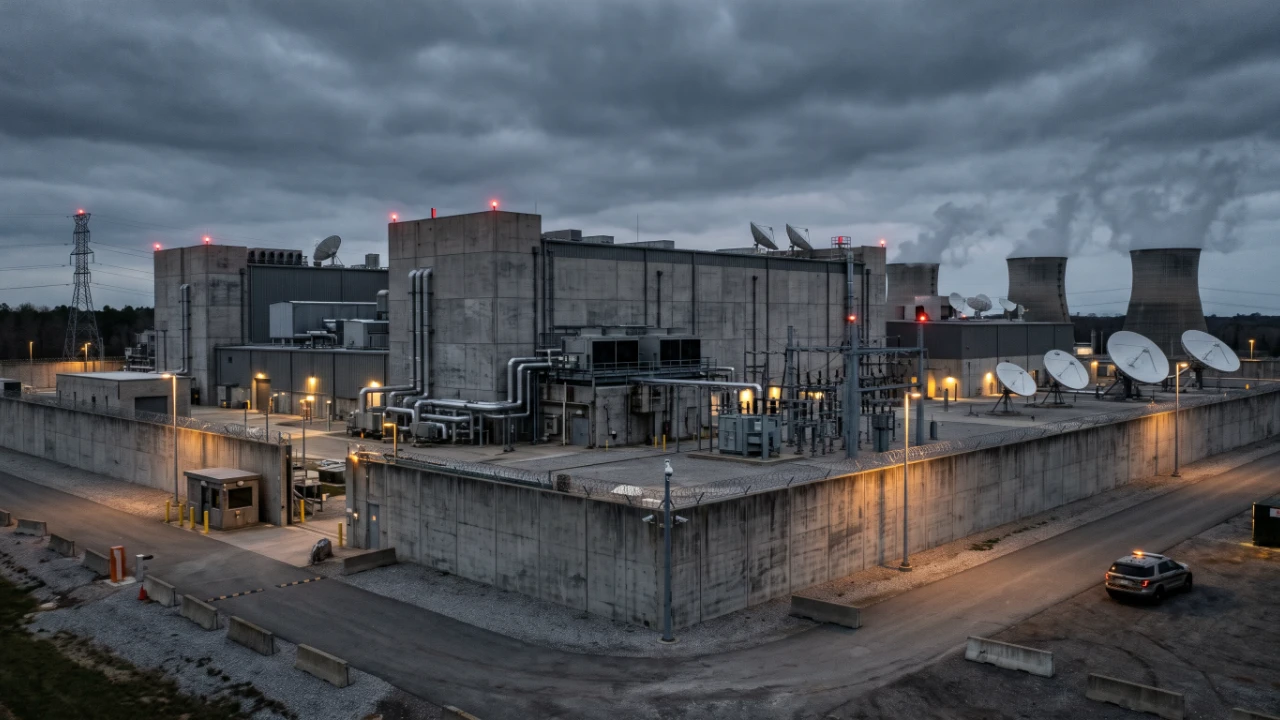
- Sovereign AI Clusters: Governments are quietly building air-gapped, subterranean data centers specifically to run classified military foundation models.
- Energy as Ammunition: Every major AI training run consumes as much electricity as a mid-sized city, turning nuclear and grid capacity into direct military leverage.
In the ai warfare future, cutting off an adversary’s access to advanced chips and cloud compute is the modern equivalent of a naval blockade.
4. Cyber & Cognitive Warfare Strike Before a Shot Is Fired
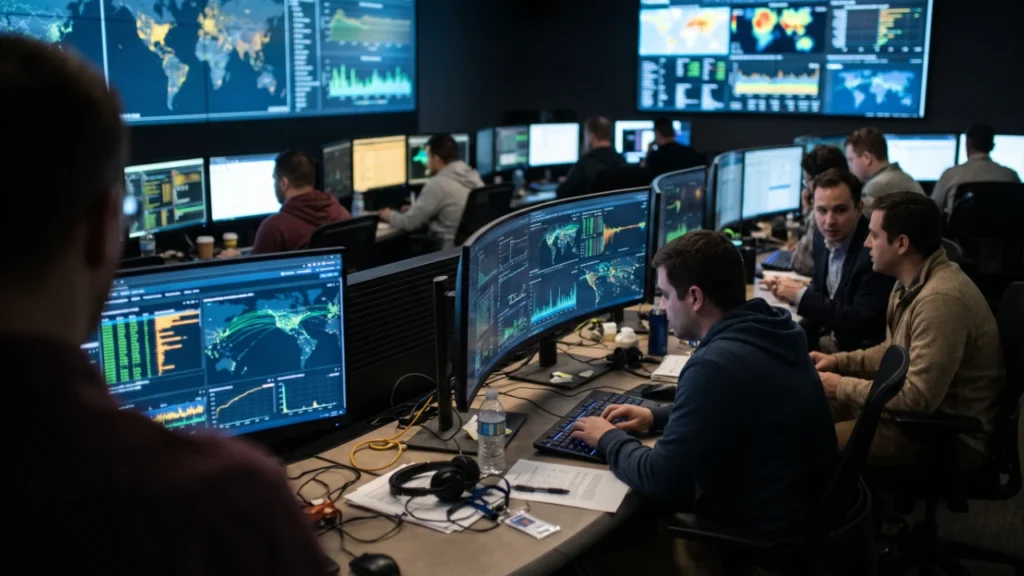
The scariest part of the ai warfare future is that a nation can be defeated without a single building being bombed. Autonomous cyber agents are now capable of scanning millions of lines of infrastructure code to discover zero-day vulnerabilities in power grids, banking networks, and telecom satellites.
At the same time, generative AI engines can flood a target country’s social feeds with hyper-personalized psychological operations in dozens of local dialects simultaneously. While businesses use enterprise hubs to protect their brand identity—something we documented in our ChatGPT Business Hub Setup Guide—nations now face state-sponsored synthetic disinformation at scale.
- Silent Grid Paralysis: AI malware can sit dormant inside water and power control systems, waiting for a single trigger command.
- Synthetic Information Fog: Deepfake broadcasts and automated bot networks can trigger panic, bank runs, and political paralysis within hours.
5. Why Who Controls AI Controls the World (And What Happens Next)

Every major empire in history rose on top of a breakthrough technology—bronze, gunpowder, steam, oil, and nuclear fission. Today, we are watching the sixth great power transition unfold in real time, and who controls ai controls the world for the next century.
A country with inferior tanks can buy better tanks. A country without sovereign AI models, domestic chip manufacturing, and autonomous defense software cannot simply “buy” independence—it becomes permanently dependent on whoever owns the algorithms.
Read Part 2 Now: US China Russia AI Race: 5 Brutal Truths Behind Next WW3: Which three countries actually hold an insurmountable lead in military compute right now—and what happens when two rival AI defense systems lock into an automated escalation loop with zero human brakes?
Join the Debate Below: Do you think human commanders will always keep final control over lethal AI decisions, or has the ai warfare future already pushed humanity out of the loop? Drop your take in the comments below and tell us if you want Part 2 unlocked early!
Frequently Asked Questions
How is artificial intelligence in modern warfare changing the ai warfare future?
In the ai warfare future, artificial intelligence in modern warfare compresses battlefield decisions from hours into milliseconds. Instead of relying purely on tank divisions and artillery shells, modern militaries use real-time computer vision, predictive logistics, and electronic jamming algorithms to out-think and neutralize slower opponents before conventional forces even engage.
Why are autonomous drone swarms ai replacing expensive traditional weapons?
Autonomous drone swarms ai flip military economics upside down. A single air-defense interceptor missile costs millions of dollars, while an AI-guided strike drone costs only a few hundred dollars. Because onboard edge-AI chips guide these drones visually without needing GPS or radio links, coordinated swarms can overwhelm legacy defenses even under heavy electronic jamming.
What does compute power national security mean for global superpowers?
Compute power national security means a country’s military strength now depends on its access to advanced semiconductors, frontier AI models, and massive electrical power grids. Without domestic chip fabrication and sovereign GPU data centers, a nation cannot train autonomous defense systems or protect its power and banking networks from AI-driven cyberattacks.
Why do defense analysts say who controls ai controls the world?
Analysts warn that who controls ai controls the world because sovereign AI infrastructure cannot simply be bought off the shelf like conventional tanks. Nations that lead in frontier algorithms, compute clusters, and autonomous defense software dictate global deterrence, leaving countries without domestic AI capabilities permanently dependent on foreign technology powers.
Will human commanders still control lethal decisions in the ai warfare future?
While defense ministries officially require a human-in-the-loop for lethal force, machine-speed combat is pushing automation closer to the front line. As autonomous cyber agents and drone swarms react in milliseconds, maintaining human oversight without losing tactical speed remains the defining challenge of the ai warfare future.



Leave a Reply