


Written by Shahid Kayani
AI, technology and digital publishing writer
Artificial intelligence can feel almost weightless. You type a question, receive an answer, generate an image or summarize a document, and the result appears on your screen within seconds.
But behind that simple interaction is a physical infrastructure made up of powerful computer chips, servers, data centers, cooling systems, electricity networks and manufactured hardware.
That means AI has an environmental footprint.
The difficult part is determining exactly how large that footprint is.
There is no single number that represents the carbon footprint of all artificial intelligence. The environmental cost varies depending on the AI model, the hardware running it, the task being performed, the amount of computing required, the efficiency of the data center and the source of the electricity powering it.
AI’s environmental impact also extends beyond carbon emissions. Water consumption, electronic waste, semiconductor manufacturing, raw materials and the construction of data-center infrastructure all matter.
So, how much is AI really costing the environment?
The answer is more complicated than a single “grams of CO2 per prompt” figure. Here’s what we know, what remains uncertain, and why the rapid growth of AI could make the question increasingly important.
What Is the Carbon Footprint of AI?
The AI carbon footprint refers broadly to the greenhouse-gas emissions associated with developing, training, operating and maintaining artificial intelligence systems.
Most discussions focus on carbon dioxide, but scientists often use carbon dioxide equivalent, or CO2e, because greenhouse gases other than carbon dioxide can also contribute to climate change.
An AI system can create emissions at several points in its lifecycle.
These include:
- Manufacturing servers and computer chips
- Constructing and operating data centers
- Producing the electricity used by AI systems
- Cooling computing equipment
- Training AI models
- Running AI models when users submit requests
- Replacing and disposing of computing hardware
This is why calculating the carbon footprint of artificial intelligence is difficult.
A simple calculation might look at the electricity consumed during a particular AI task. A more comprehensive lifecycle assessment could also consider the emissions associated with manufacturing the hardware, constructing the facility and producing the electricity.
Those different approaches can produce very different results.
Why There Isn’t One Universal AI Carbon-Footprint Number
It is tempting to ask how many grams of carbon dioxide are produced by one AI prompt.
The problem is that the answer depends on several variables.
A request processed by a small, efficient model running on relatively efficient hardware and powered by a low-carbon electricity grid may have a very different footprint from a computationally demanding request handled by a large model in a data center operating on a more carbon-intensive electricity mix.
The length and complexity of the task can matter as well.
Generating text, analyzing large amounts of information, creating an image or performing more intensive computational tasks can require different amounts of computing.
Therefore, any estimate of an AI carbon footprint needs to be understood in context.
How Does AI Produce Carbon Emissions?
AI doesn’t directly burn fuel every time someone asks a question. Instead, the emissions associated with AI largely come from the electricity and physical infrastructure required to run it.
Instead, the emissions associated with AI largely come from the physical infrastructure required to run it.
The basic chain is:
AI computing → electricity demand → electricity generation → potential greenhouse-gas emissions
There are several steps behind that simple chain.

AI Requires Computing Power
Modern AI models require specialized computing hardware.
Training and operating sophisticated models can involve large numbers of processors working simultaneously. These processors consume electricity and generate heat.
The more computationally demanding the task, the more energy may be required.
The efficiency of the hardware also matters. Newer generations of chips can perform more calculations with less energy than older hardware, meaning that technological improvements can reduce the energy required for a given workload.
Data Centers Consume Electricity
AI models are generally operated in data centers containing large numbers of servers.
Those facilities need electricity not only for computing but also for networking, storage, cooling, lighting and other supporting systems.
The U.S. Department of Energy has also examined the rapidly growing electricity demand associated with data centers and the infrastructure supporting modern computing.
As AI adoption grows, more computing infrastructure may be needed.
That creates a connection between AI growth and broader electricity demand.
Electricity Generation Can Create Emissions
The environmental impact of electricity depends heavily on how it is generated.
Electricity produced from coal and natural gas generally has a different carbon footprint from electricity generated using sources such as wind, solar, hydroelectricity or nuclear power.
As a result, two AI workloads requiring the same amount of electricity can have different carbon footprints depending on where and when they are performed.
This is one of the most important reasons why a single global estimate for AI emissions can be misleading.
Cooling Systems Add to the Footprint
Computer processors generate heat, particularly when operating at high utilization.
Data centers therefore need cooling systems to keep equipment within safe operating temperatures.
Cooling can consume additional electricity, and some cooling systems also require water.
The efficiency of the cooling infrastructure is therefore another factor in AI’s environmental footprint.
AI Hardware Has Its Own Environmental Footprint
The electricity used while an AI model is running is only part of the story.
Computer chips, servers, networking equipment and storage systems must first be manufactured.
Manufacturing requires energy and raw materials, while transporting and eventually replacing the equipment creates additional environmental impacts.
This is why researchers increasingly look beyond operational electricity consumption and consider the broader lifecycle of computing infrastructure.
How Much Carbon Does AI Produce?
There is no reliable single figure that can describe the carbon emissions of all AI systems.
Instead, the answer depends on what is being measured.
Researchers and companies may estimate emissions from:
- Model training
- Model inference
- Data-center electricity
- Hardware manufacturing
- Cooling
- Electricity generation
- An entire AI system’s lifecycle
These measurements are not interchangeable.
Published research has shown why AI emissions estimates can vary substantially depending on the model, hardware, electricity source, workload and system boundaries used in the analysis.
Model Training
Training an advanced AI model can require large amounts of computing over extended periods.
During training, processors perform enormous numbers of calculations while repeatedly processing data and adjusting the model’s parameters.
The resulting energy consumption depends on the model, hardware, training duration, efficiency and other technical factors.
Training can therefore represent a significant environmental cost, particularly for large models.
Model Inference
Inference is what happens when a trained AI model is used to generate a response.
Every time a user interacts with an AI system, computing resources are required to process the request and produce the result.
A single interaction may use far less energy than training a large model, but inference happens repeatedly.
That distinction matters.
If millions of people use an AI service every day, the cumulative computing demand can become substantial even if an individual interaction has a relatively small footprint.
The Importance of Scale
This is one of the biggest issues in understanding AI’s carbon emissions.
The environmental impact of an individual request isn’t necessarily the most important number.
The bigger question may be:
What happens when billions of AI interactions take place across large numbers of users and services?
AI is being integrated into search, productivity software, customer service, coding, education, image creation, business applications and many other activities.
As usage increases, total computing demand can increase as well.
At the same time, improvements in hardware and software efficiency can reduce the energy required for individual tasks.
The future environmental impact of AI will therefore depend on both how quickly usage grows and how quickly efficiency improves.
How AI’s Carbon Footprint Is Measured
Estimating the carbon footprint of an AI system involves more than measuring the electricity used by a computer chip. Researchers may consider the energy required for model training or inference, data-center overhead, the carbon intensity of the electricity supply, hardware efficiency and, in broader lifecycle assessments, the emissions associated with manufacturing and replacing equipment.
The boundary chosen for the calculation can therefore have a major effect on the final estimate. Two studies can examine similar AI workloads and produce different results without either study necessarily being incorrect if they use different assumptions or measurement boundaries.
This is one reason AI emissions figures should always be interpreted alongside the methodology used to calculate them.
AI Training vs. Everyday AI Use: Which Has the Bigger Carbon Footprint?
It is useful to distinguish between training and inference.
Training creates the model.
Inference uses the model.
Training can involve enormous computational workloads concentrated over a specific period. Inference can involve smaller individual workloads that occur continuously as users interact with the system.
As AI becomes embedded in everyday products and personal workflows, the scale of these interactions becomes increasingly important to understanding AI’s environmental footprint.
This makes the comparison more complicated than simply asking which one uses more electricity.
A model may require significant resources to train, but if it is then used by millions of people, the cumulative energy associated with inference can become an important part of its overall environmental footprint.
The relative contribution can also change as models, hardware and usage patterns change.
For that reason, the environmental impact of AI should be considered across its entire lifecycle rather than focusing exclusively on model training.
What Is ChatGPT’s Carbon Footprint?
ChatGPT’s carbon footprint is a specific example of the broader AI emissions question.
When someone sends a ChatGPT request, computing resources are used to process the request and generate a response.
However, determining the exact carbon footprint of an individual ChatGPT interaction isn’t as simple as multiplying a fixed electricity number by a fixed emissions factor.
The calculation can depend on factors such as:
- The model being used
- The complexity of the request
- The amount of information processed
- The hardware involved
- Data-center efficiency
- Cooling requirements
- The electricity source
- How the emissions boundary is defined
This is why estimates for the carbon footprint of ChatGPT can differ.
How Much CO2 Does ChatGPT Produce Per Query?

There isn’t one universally applicable number that can accurately represent every ChatGPT query.
A short text request and a computationally intensive AI task may require different amounts of computing.
The infrastructure serving the request can also vary.
Even if two requests consume the same amount of electricity, their associated carbon emissions could differ if the electricity comes from different sources.
Therefore, claims stating that every ChatGPT question produces exactly a particular amount of CO2 should be treated carefully unless the underlying methodology and assumptions are clearly explained.
Why ChatGPT Carbon-Footprint Estimates Differ
One study might estimate operational electricity consumption.
Another might include cooling.
Another might account for hardware manufacturing.
Another might use a particular electricity mix.
These differences can make otherwise reasonable estimates appear contradictory.
The best approach is to ask:
What exactly does the estimate measure?
That question is often more useful than asking which single number is “correct.”
How Much Energy Does AI Use?
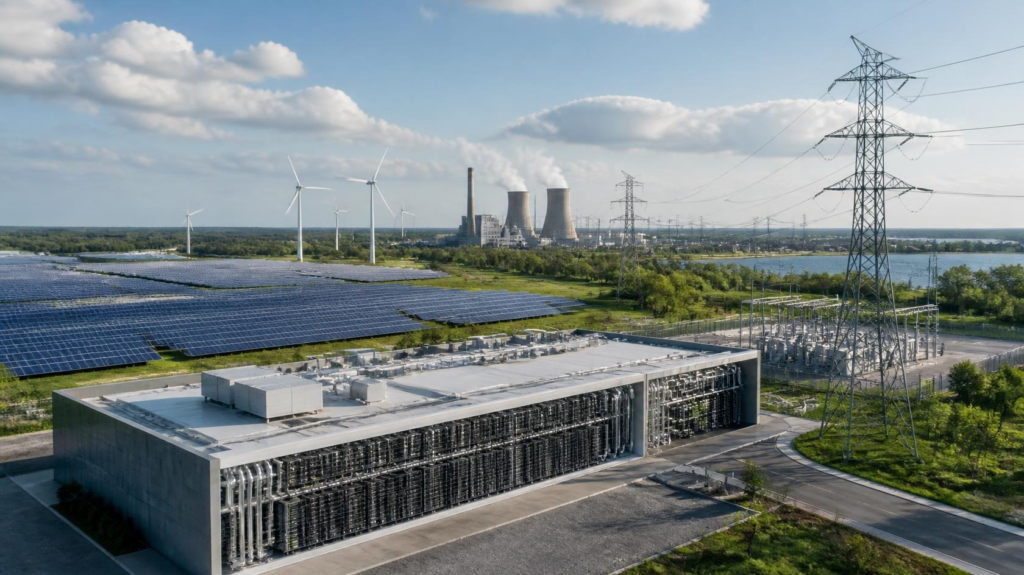
The International Energy Agency has also highlighted the growing electricity demand associated with data centers and AI, making energy use an increasingly important part of the environmental discussion.
The rapid growth of AI has increased attention on AI energy consumption.
AI workloads can require significant computing resources because Modern AI models can involve enormous numbers of parameters and substantial computational workloads.
Energy use comes from more than the processors themselves.
A data center may also require electricity for:
- Cooling
- Networking
- Storage
- Power conversion
- Lighting
- Security systems
- Facility operations
The efficiency of the overall facility matters as much as the efficiency of individual chips.
GPUs and AI Accelerators
Many AI workloads rely on specialized processors designed to perform large numbers of calculations efficiently.
Graphics processing units, or GPUs, have become especially important for AI computing.
Other specialized AI accelerators are also being developed to improve performance and energy efficiency.
Better hardware can help reduce the amount of electricity required for a particular workload.
But improved efficiency can also make AI cheaper and easier to deploy, potentially encouraging greater use.
That creates an important question for the future:
Will efficiency improvements reduce total energy demand, or will increased AI adoption outweigh those savings?
The answer isn’t yet settled.
Does AI Contribute to Climate Change?
Yes, AI can contribute to climate change.
The primary connection is through the energy and physical resources required to build and operate AI systems.
If AI infrastructure uses electricity generated from fossil fuels, the associated greenhouse-gas emissions can contribute to climate change.
The broader relationship between greenhouse-gas emissions and climate change is established in the scientific assessment literature of the Intergovernmental Panel on Climate Change.
But AI’s climate impact isn’t determined by electricity consumption alone.
The electricity source matters.
Hardware manufacturing matters.
Data-center efficiency matters.
The scale of AI adoption matters.
And technological improvements matter.
This means it is inaccurate to describe AI’s climate impact as either completely harmless or inherently catastrophic.
The environmental consequences depend on how the technology is developed, powered and used.
How Does AI Contribute to Global Warming?
The relationship can be simplified as:
AI computing → electricity demand → greenhouse-gas emissions → atmospheric warming
When electricity generation produces greenhouse gases, additional demand can contribute to emissions.
The effect is particularly relevant when electricity comes from carbon-intensive sources.
However, the same AI workload can have a smaller carbon footprint when powered by lower-carbon electricity.
That makes the transition toward cleaner electricity an important part of reducing the environmental impact of expanding computing infrastructure.
AI efficiency also matters.
If a new model can perform the same task using substantially less computing power, its operational footprint can potentially decrease.
AI’s Environmental Footprint Goes Beyond Carbon Emissions
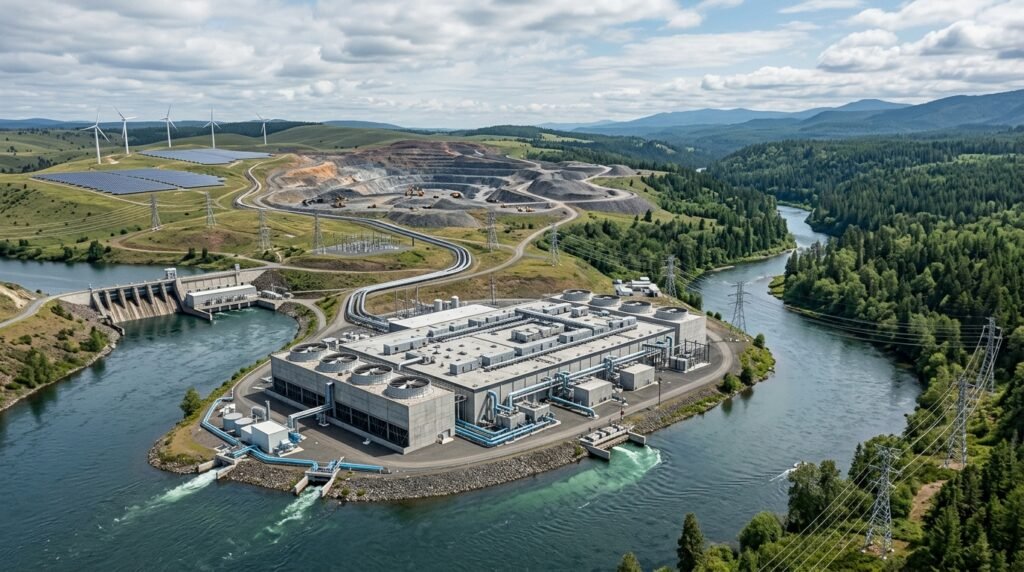
Focusing only on carbon emissions leaves out several other environmental issues.
AI depends on physical infrastructure, and that infrastructure requires resources.
AI’s Water Footprint
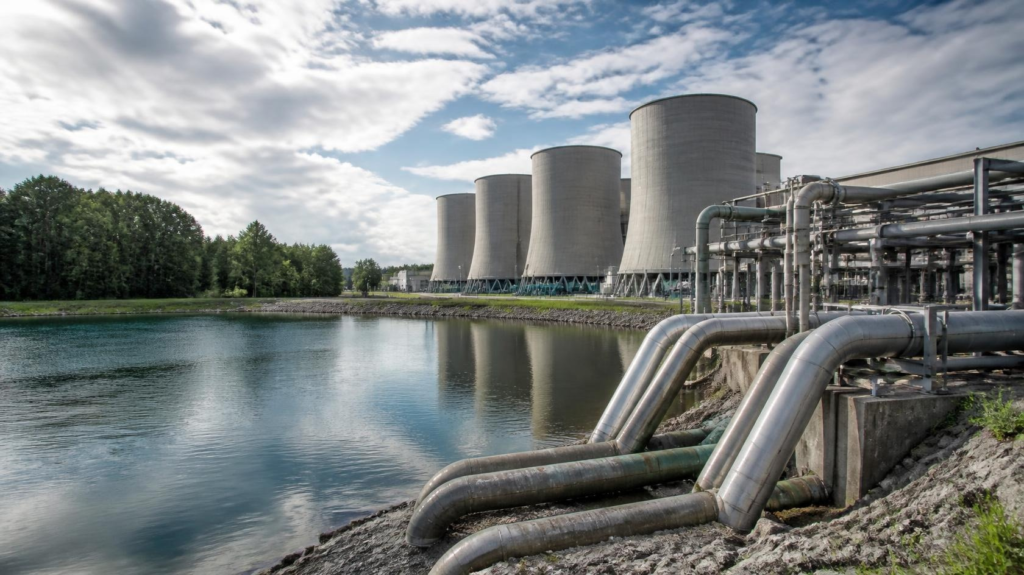
Data centers can use water for cooling, depending on their cooling technology and local conditions.
Water can also be associated indirectly with electricity generation.
This has led to growing interest in the AI water footprint.
Research has shown that AI-related water consumption can vary significantly depending on data-center location, cooling technology, electricity generation and workload.
However, water-use estimates can vary considerably.
A data center in a water-stressed region may raise different environmental concerns from one operating in a region with abundant water resources.
The type of cooling system also matters.
Therefore, simply saying “one AI query uses X amount of water” can be misleading without explaining where and how that water use was calculated.
Electronic Waste
Computing equipment eventually reaches the end of its useful life.
As AI infrastructure expands, older servers and other equipment may be replaced with newer hardware.
Responsible recycling and longer hardware lifecycles can help reduce the environmental impact associated with electronic waste.
Semiconductor Manufacturing
Advanced AI chips require sophisticated manufacturing processes.
Producing semiconductors involves energy, water, chemicals and raw materials.
That means the environmental footprint of AI hardware begins before the equipment reaches a data center.
Raw Materials and Infrastructure
AI infrastructure requires physical materials for chips, servers, networking equipment, buildings and electricity systems.
The environmental implications of advanced technology are also becoming increasingly relevant to companies investing heavily in artificial intelligence, electric vehicles and other energy-intensive technologies.
As AI capacity expands, the demand for these resources can grow.
This is another reason why environmental assessments should consider the entire lifecycle of AI rather than focusing exclusively on electricity consumed during inference.
What About AI Image Generation?
AI is no longer limited to text.
People increasingly use artificial intelligence to generate images, videos, audio and other forms of content.
These workloads can require different amounts of computing from ordinary text-based interactions.
That makes AI image generation’s carbon footprint an increasingly relevant question.
Generating an image requires the model to perform computational operations that can differ substantially from generating a short text response.
The exact energy requirement depends on the model, resolution, hardware, number of generation steps and other technical factors.
The same principle applies here as with text-based AI:
There is no universal carbon footprint for every AI-generated image.
The best comparisons need to account for the technology and methodology behind the measurement.
AI and Deforestation: Is There a Connection?
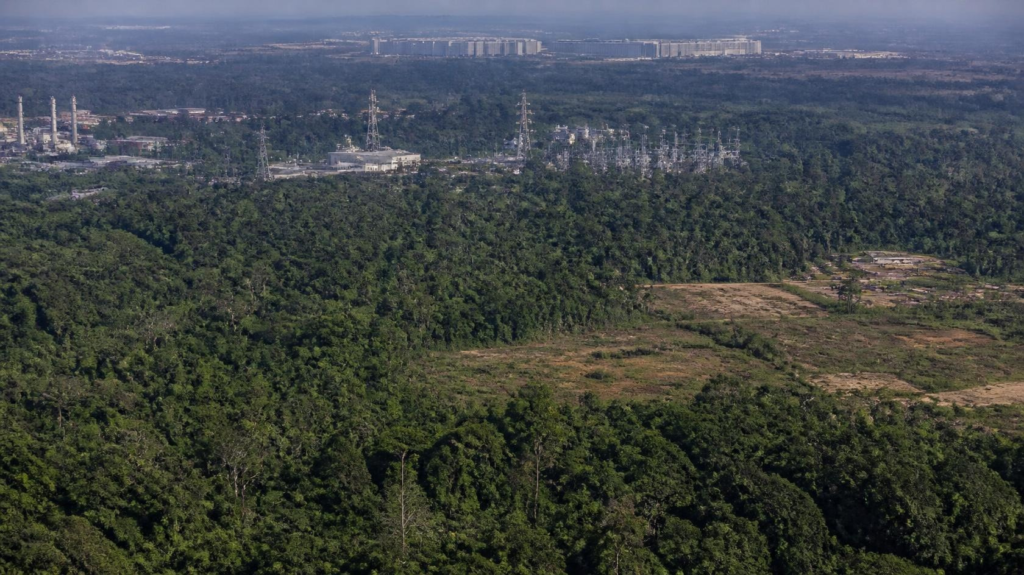
AI does not directly cause deforestation every time someone uses an AI tool, but its environmental footprint can intersect with land and resource use through the broader technology supply chain. Data centers, electricity infrastructure, semiconductor manufacturing and the extraction of raw materials all require physical resources and infrastructure. Deforestation itself is a major climate issue because removing forests can release stored carbon and reduce the planet’s ability to absorb carbon dioxide. That makes forests relevant to the wider environmental discussion surrounding AI, even though AI’s carbon footprint and deforestation are separate environmental problems.
The important point is that AI’s environmental impact should be measured across its full lifecycle rather than reduced to the electricity consumed by a single prompt.
How Does AI Compare With Other Digital Activities?
Comparisons can help put AI’s environmental footprint into perspective, but they need to be made carefully.
It is common to see claims such as:
- One AI prompt equals a certain number of web searches
- One AI-generated image equals a certain number of text queries
- AI consumes more energy than another digital service
Such comparisons can be useful when the underlying measurements are comparable.
But they can also become misleading.
Different studies may use different assumptions about:
- Hardware
- Electricity
- Data-center efficiency
- Cooling
- Network infrastructure
- System boundaries
- Task complexity
For example, comparing the electricity required to generate an AI image with the electricity required for a traditional search may tell only part of the story if the two calculations use different boundaries.
The better question isn’t simply “Which one is bigger?”
It is:
“What exactly was measured, and were the measurements calculated using comparable methods?”
That approach produces a more meaningful understanding of AI’s environmental impact.
Is AI’s Environmental Impact Actually a Serious Problem?
It is reasonable to take AI’s environmental footprint seriously.
AI adoption is expanding rapidly, and increasingly capable systems require substantial computing infrastructure.
That can increase demand for:
- Electricity
- Data centers
- Cooling
- Computer chips
- Servers
- Networking equipment
- Construction
If that growth is powered primarily by carbon-intensive energy and inefficient infrastructure, emissions and other environmental pressures can increase.
But there is another side to the discussion.
AI may also help improve environmental outcomes.
Potential applications include:
- Climate modeling
- Weather forecasting
- Energy optimization
- Electricity-grid management
- Industrial efficiency
- Satellite analysis
- Wildlife monitoring
- Environmental monitoring
- Conservation planning
AI’s environmental impact therefore isn’t simply a question of whether the technology is “good” or “bad” for the planet.
It is a question of how the technology is built, powered and used, and what environmental benefits it can potentially deliver in return.
Can AI Become More Environmentally Friendly?
Yes.
One of the biggest opportunities is improving efficiency.
A more efficient AI model can potentially perform a task using less computing power.
Other approaches include:
More Efficient Hardware
New generations of processors can improve performance per unit of energy.
Smaller Models
Not every task requires the largest available AI model.
Smaller models can potentially perform many tasks using fewer computational resources.
Better Data Centers
Improving cooling, power management and facility efficiency can reduce the resources required to operate AI infrastructure.
Cleaner Electricity
Using lower-carbon electricity can reduce the emissions associated with the same amount of computing.
Carbon-Aware Computing
AI workloads can potentially be scheduled or routed toward times and locations where lower-carbon electricity is available.
These approaches are part of the broader movement toward sustainable AI and green AI.
How Can AI Companies Reduce Their Carbon Footprint?
Technology companies can address AI’s environmental impact at several levels.
1. Use Cleaner Energy
Increasing the share of low-carbon electricity can reduce operational emissions.
2. Improve Hardware Efficiency
More efficient chips can reduce energy consumption for a given amount of computing.
3. Optimize AI Models
Better algorithms and model architectures can reduce unnecessary computation.
4. Improve Cooling
Efficient cooling systems can reduce both electricity and, depending on the technology, water consumption.
5. Extend Hardware Lifecycles
Using computing equipment longer and responsibly managing end-of-life hardware can reduce the environmental impact of manufacturing replacements.
6. Improve Environmental Reporting
Transparent reporting can help researchers, regulators and the public understand how AI systems affect energy, water and emissions.
7. Build Infrastructure Where It Makes Environmental Sense
The location of data centers can influence electricity availability, water conditions, climate and other environmental factors.
There isn’t one solution.
Reducing AI’s environmental impact requires improvements throughout the technology lifecycle.
What Can AI Users Do to Reduce Their Environmental Impact?
Individual users have less influence than the companies operating massive data centers, but everyday choices can still contribute to responsible AI use.
You can:
- Avoid unnecessary repeated generations
- Use the appropriate AI model for the task
- Avoid generating large numbers of images that you don’t need
- Combine related instructions into a useful prompt
- Reuse useful outputs instead of repeatedly regenerating them
At the same time, users shouldn’t be made to feel that every individual AI interaction is an environmental crisis.
The larger issue is the scale of AI infrastructure and demand.
The decisions that matter most involve data-center efficiency, electricity sources, hardware design, model efficiency and the overall growth of AI computing.
The Future of AI and the Environment
The relationship between AI and the environment is likely to become more important as artificial intelligence becomes embedded in more products and services.
AI could increase demand for computing infrastructure substantially.
At the same time, the technology is becoming more efficient.
Future AI systems may use:
- More efficient processors
- Smaller specialized models
- Better algorithms
- More efficient cooling
- Cleaner electricity
- Carbon-aware computing
- Improved data-center designs
The result will depend on the balance between efficiency gains and demand growth.
If AI becomes dramatically more efficient but usage grows even faster, total resource consumption could still increase.
If efficiency improvements outpace growth in demand, the environmental footprint of individual AI tasks could fall significantly.
That is why the most important question isn’t simply whether AI is becoming more efficient.
It is whether efficiency improvements are keeping pace with the scale of AI adoption.
Frequently Asked Questions About AI’s Carbon Footprint
What is the carbon footprint of AI?
The carbon footprint of AI is the greenhouse-gas emissions associated with developing, training, operating and maintaining artificial intelligence systems. It can include emissions from electricity use, cooling, hardware manufacturing and other parts of the technology’s lifecycle.
How much CO2 does AI produce?
There is no single amount of CO2 produced by all AI systems. Emissions depend on the model, workload, hardware, data-center efficiency, electricity source and what parts of the AI lifecycle are included in the calculation.
Does AI contribute to climate change?
Yes. AI can contribute to climate change when the electricity and other resources used to operate and build AI infrastructure result in greenhouse-gas emissions. The size of that contribution depends on how the technology is powered and operated.
How much energy does AI use?
AI energy use varies widely depending on the model and task. Training advanced models can require substantial computing resources, while individual inference tasks may require much less. Total demand becomes important as AI usage scales.
Does ChatGPT produce CO2?
Using ChatGPT requires computing resources and electricity, which can be associated with greenhouse-gas emissions. However, the exact carbon footprint of an individual ChatGPT request varies according to the model, hardware, electricity source, data-center efficiency and calculation methodology.
What is ChatGPT’s carbon footprint?
There is no single universally applicable number for ChatGPT’s carbon footprint. Different estimates can measure different parts of the system, and the footprint can vary according to the task, model, hardware and electricity source.
Does AI use water?
Some AI infrastructure uses water, particularly data centers that rely on water-based cooling systems. Water can also be associated indirectly with electricity generation. The amount varies significantly depending on the facility, cooling technology, location and electricity source.
Is AI bad for the environment?
AI has environmental costs, including energy use, greenhouse-gas emissions, water consumption, hardware manufacturing and electronic waste. However, AI can also potentially help improve energy efficiency, climate modeling, environmental monitoring and conservation. Its overall impact depends on how the technology is developed and used.
Can AI become more environmentally friendly?
Yes. More efficient chips, smaller models, better algorithms, efficient cooling, cleaner electricity and improved data-center designs can all help reduce AI’s environmental footprint.
Does AI contribute to deforestation?
AI isn’t a direct cause of deforestation in the simple sense, but its broader technology supply chain requires physical infrastructure, energy systems and raw materials that can have environmental consequences. Deforestation is itself a major climate issue because forests store carbon and help remove carbon dioxide from the atmosphere.
The Bottom Line
AI has a real environmental footprint, but it cannot be accurately summarized by one universal number.
Its impact comes from much more than the electricity used to answer a prompt.
Training models, running them at scale, powering data centers, cooling equipment, manufacturing advanced chips and replacing hardware all contribute to the broader picture.
The AI carbon footprint also varies substantially depending on the technology and energy infrastructure involved.
That makes sensational claims about a fixed amount of CO2 per AI request less useful than they may appear.
The bigger issue is scale.
As AI becomes more widely used, total computing demand could grow dramatically. At the same time, more efficient hardware, smaller models, cleaner electricity and better data-center technology could reduce the environmental cost of individual AI tasks.
AI also has the potential to help address environmental problems through climate modeling, energy optimization, conservation and environmental monitoring.
So the real question isn’t whether AI has an environmental cost.
It does.
The more important question is whether the AI industry can improve efficiency and reduce emissions quickly enough to keep its environmental footprint under control as adoption continues to grow.
Sources and Research
This article draws on research and information from academic studies, government agencies and scientific organizations, including:
- Association for Computing Machinery (ACM): Research on the water footprint of AI and how water consumption varies based on factors such as location, cooling systems and electricity generation.
- International Energy Agency (IEA): Analysis of the growing electricity demand associated with data centers and artificial intelligence.
- U.S. Department of Energy: Research and analysis concerning data-center electricity consumption and the infrastructure supporting modern computing.
- Intergovernmental Panel on Climate Change (IPCC): Scientific assessments concerning greenhouse-gas emissions, climate change and global warming.
- U.S. Environmental Protection Agency (EPA): Information concerning greenhouse gases and carbon dioxide equivalents.
- U.S. Geological Survey (USGS): Scientific information concerning forests, carbon and environmental resources.
- Food and Agriculture Organization of the United Nations (FAO): Research and data concerning forests and global deforestation.








Leave a Reply