

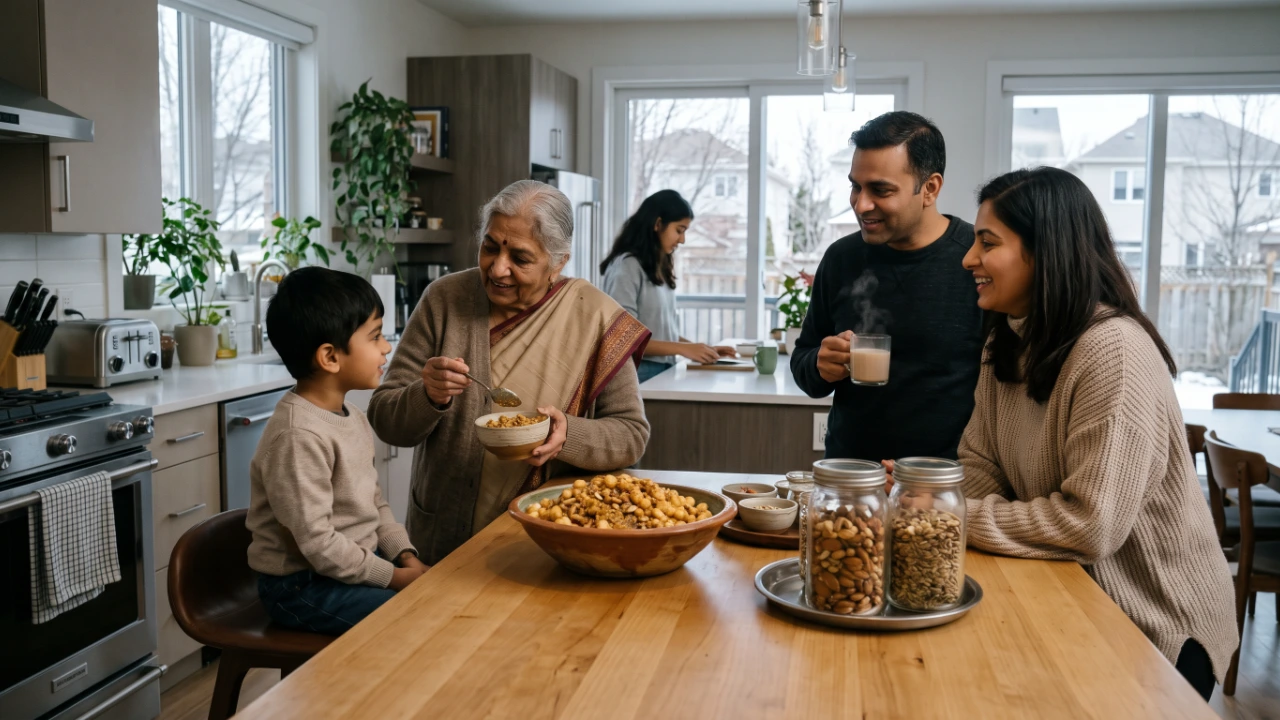
Every November, as the first cold breeze rolls in, a familiar aroma of slow-roasted flour, pure desi ghee, crushed cardamom, and toasted almonds fills traditional kitchens across South Asia. For generations, Desi Panjeeri (also spelled Panjiri) has been our ultimate winter functional food—long before commercial protein bars or synthetic multivitamins existed.
However, when I started tracking the actual macronutrients of traditional homemade and store-bought panjeeri batches, I noticed a major problem: many modern recipes drown the mixture in refined white sugar and excess fat, turning a healing superfood into a 600-calorie sugar bomb.
To fix this, I tested three classic bases in my own kitchen—Roasted Chana Dal, Whole Wheat Atta, and Semolina (Suji)—measuring exact gram weights, roasting times, and calorie densities. Whether you are preparing a batch for postpartum recovery, winter joint support, or a clean pre-workout energy boost, this guide breaks down the science, exact calories per spoon, and our perfected homemade recipe.
Quick Answer: What Is Desi Panjeeri and Why Is It Good for You?
Desi Panjeeri is a traditional South Asian dry-roasted nutritional supplement made from a whole-grain or pulse base (wheat flour, chana dal, or semolina) slow-cooked in pure desi ghee and loaded with functional ingredients like edible gum (gond katira), fox nuts (phool makhana), almonds, walnuts, pistachios, and unrefined cane sugar (shakar). A standard 30-gram serving (2 tablespoons) delivers 145 to 165 kcal, 3.5g to 5.2g of plant protein, slow-digesting healthy fats, and bioavailable calcium, iron, and magnesium for winter warmth, joint lubrication, and sustained energy.
What Goes Into Authentic Desi Panjeeri? (Ingredient-by-Ingredient Science)
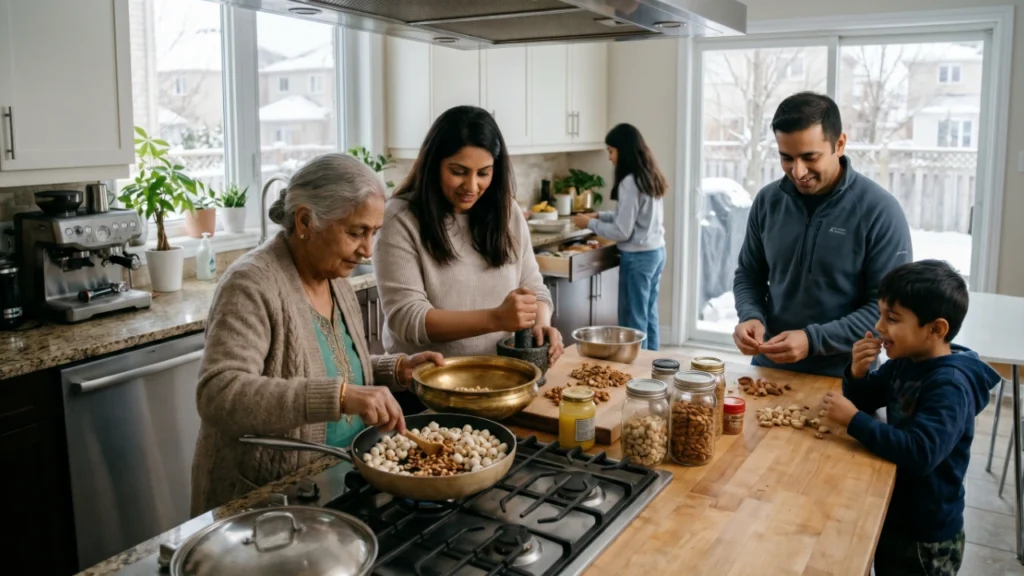
A genuine desi panjeeri is only as powerful as the ratio of its ingredients. Nothing magical happens in the karahi (wok) unless every component serves a specific metabolic purpose. When I formulate a winter batch, I divide the ingredients into four functional pillars:
| Ingredient (English / Desi Name) | Primary Nutritional Role | Key Bioactive Nutrients | Traditional & Practical Benefit |
| Pure Cow/Buffalo Desi Ghee | Lipid carrier & slow energy | Butyric acid, Omega-3s, Vitamins A, D, E, K | Lubricates joints, enhances fat-soluble vitamin absorption, and provides sustained winter warmth. |
| Chana Dal / Whole Wheat Atta | Complex carbohydrate & protein base | Plant protein, dietary fiber, B-vitamins | Prevents blood sugar spikes and keeps you full for 4 to 5 hours. |
| Edible Gum (Gond / Gond Katira) | Structural & joint matrix | Soluble prebiotic fiber, calcium, trace minerals | Puffs into crunchy crystals when fried in ghee; prized for postpartum back and pelvic recovery. |
| Fox Nuts (Phool Makhana) | Low-fat mineral booster | High potassium, magnesium, plant protein | Adds airy crunch without heavy calories; supports muscle recovery and blood pressure balance. |
| Almonds, Walnuts & Pistachios | Brain & heart lipid profile | Vitamin E, Alpha-linolenic acid (ALA), Zinc | Supports cognitive focus for students and office workers while fighting winter lethargy. |
| Melon & Flax Seeds (Char Magaz & Alsi) | Micronutrient density | Zinc, iron, lignans, magnesium | Boosts hair, skin, and immune resilience during dry winter months. |
| Shakar / Gur (Unrefined Jaggery) | Natural glycemic sweetener | Trace iron, potassium, sucrose | Replaces bleached white sugar with a caramel-like warmth and slower energy release. |
7 Evidence-Based Benefits of Desi Panjeeri for Men and Women

While family elders simply call it a “taqat wali” (strength-giving) food, modern nutritional science backs up why a daily two-spoon serving works so effectively when portioned properly:
1. Accelerates Postpartum Recovery and Lactation Support
For centuries, new mothers have been given Gond Panjeeri during the first 40 days after childbirth (chilla). Clinical nutrition research published on PubMed (NIH) confirms that traditional Gond Panjiri exhibits high bioavailability of essential minerals—specifically calcium (Ca), iron (Fe), zinc (Zn), and phosphorus (P)—which directly replenish maternal bone stores and combat postpartum anemia. Furthermore, a controlled lactation study indexed in the National Library of Medicine (PMC) highlights panjeeri as an effective energy-dense maternal supplement to protect nutritional status during breastfeeding.
2. Sustained Winter Energy Without the Mid-Morning Crash
Fats carry 9 calories per gram—more than double that of carbohydrates or protein. When you pair slow-roasted complex carbs (chana dal or whole wheat) with desi ghee and nuts, gastric emptying slows down naturally. Two tablespoons with warm milk at 7:30 AM keeps manual workers, commuters, and gym-goers fueled until lunch without a 10:00 AM sugar crash.
3. Natural Joint Lubrication and Backache Relief
Cold weather stiffens synovial fluid in the knees and lower back. The combination of fried gond (acacia gum), walnut omega-3 fatty acids, and butyrate-rich desi ghee helps combat winter joint stiffness, making it a staple for older adults and athletes lifting heavy weights.
4. High-Satiety Snack That Replaces Processed Biscuits
Most afternoon office snacks in South Asia consist of refined flour (maida) biscuits fried in hydrogenated vegetable oil. Swapping two bakery biscuits for two tablespoons of chana-dal and nut panjeeri upgrades your snack to real dietary fiber, vitamin E, and plant protein. If you are actively optimizing your daily macros, pair this strategy with our guide on the Best High-Protein Foods for Weight Loss to keep cravings locked down all winter.
5. Brain Fuel for Students and Night-Shift Professionals
Almonds, walnuts, and char magaz (four melon seeds) are rich in vitamin E, choline precursors, and zinc. Because panjeeri requires zero cooking or refrigeration once prepared, keeping an airtight glass jar on a study desk provides clean cognitive fuel during exam season.
6. Enhanced Absorption of Fat-Soluble Vitamins (A, D, E, and K)
Winter sunlight exposure drops sharply between November and February, increasing the risk of Vitamin D deficiency. Because Vitamins A, D, E, and K are fat-soluble, the healthy saturated and monounsaturated fats in desi panjeeri act as a biological transport vehicle so your gut actually absorbs those micronutrients.
7. Clean Plant Protein When Built on a Chana Dal & Makhana Base
While a plain semolina (suji) panjeeri is mostly carbohydrates, switching your base to roasted split Bengal gram (chana dal), phool makhana, and crushed pistachios boosts the protein density up to 14g–16g per 100 grams. Explore more practical nutrition upgrades in our Health & Lifestyle section.
Desi Panjeeri Calories & Nutrition Comparison (By Base Type)

Not all panjeeri recipes are created equal. A commercial sweet-shop batch loaded with sugar and cheap vanaspati oil has a completely different metabolic impact than a homemade chana dal batch. Compare the nutrition per 100 grams and per 1 Tablespoon (15g) below:
| Panjeeri Variety | Calories per 100g | Calories per 1 Tbsp (15g) | Protein (per 100g) | Dietary Fiber (per 100g) | Best Suited For |
| Traditional Suji & Sugar Panjeeri | ~550 kcal | ~83 kcal | 8.5 g | 3.2 g | Underweight individuals & high-calorie needs |
| Whole Wheat Atta & Gond Panjeeri | ~520 kcal | ~78 kcal | 10.8 g | 6.4 g | Postpartum mothers & general family winter use |
| High-Protein Chana Dal & Nut Panjeeri | ~495 kcal | ~74 kcal | 15.4 g | 8.1 g | Men, gym-goers, active workers & muscle support |
| Light Fitness Makhana & Seed Panjeeri (Low Ghee) | ~440 kcal | ~66 kcal | 14.2 g | 7.5 g | Desk workers, weight maintenance & portion control |
Interactive Tool: Desi Panjeeri Calories, Macros & Batch Calculator
Desi Panjeeri Calories, Macros & Homemade Batch Calculator
Customize your panjeeri base, ghee intensity, and daily spoon portion below to calculate exact calories, macros, and a scaled homemade shopping list.
My Tested Homemade Desi Panjeeri Recipe (Step-by-Step)

When I made my first batch years ago, I made two classic rookie mistakes: I fried the gond on high heat (which left the inside raw and chewy so it stuck to the teeth), and I added powdered sugar while the mixture was still piping hot (which melted the sugar and turned the loose panjeeri into hard barfi chunks).
Follow this exact temperature-controlled workflow for a fragrant, crumbly, golden-brown 1.2 kg batch that stays fresh for 3 months:
Ingredient Checklist (Yields ~1.2 kg / 40 Servings)
- Base: 250g Whole Wheat Atta + 150g Roasted Chana Dal Flour (Besan or freshly ground roasted chana dal)
- Pure Desi Ghee: 250g (divided across roasting steps—adjust down to 180g for a lighter fitness batch)
- Edible Gum (Gond Katira): 50g (small crystal variety)
- Fox Nuts (Phool Makhana): 50g
- Raw Almonds (Badam): 100g
- Walnuts (Akhrot) & Pistachios (Pista): 100g combined
- Four Melon Seeds (Char Magaz) & Flaxseeds (Alsi): 60g combined
- Desiccated or Grated Dry Coconut (Khopra): 50g
- Sweetener: 180g Organic Shakar (unrefined cane sugar) or finely pulsed Medjool dates
- Aromatics: 1 tbsp freshly ground Green Cardamom (Sabz Elaichi) + 1 tsp Dry Ginger Powder (Sonth)
Step-by-Step Roasting Instructions
- Puff the Gond on Low-Medium Heat: Heat 3 tablespoons of desi ghee in a heavy-bottomed karahi (cast iron or stainless steel). Drop in the gond in two small batches over low-medium heat. Stir continuously until the crystals puff up like white popcorn and crush easily between two fingers. Remove immediately and set aside.
- Toast the Nuts and Seeds: In the remaining ghee, lightly fry the almonds, walnuts, and pistachios for 2 minutes until fragrant. Remove, then toss in the char magaz, flaxseeds, and grated coconut for 60 seconds on low heat. Transfer to a wide tray to cool.
- Crisp the Phool Makhana: Add 1 tablespoon of ghee and roast the fox nuts (makhana) on low heat for 4 to 5 minutes until they snap cleanly when pinched.
- Slow-Roast the Flour Base (The Secret to Digestibility): Melt the remaining desi ghee in the karahi and add the whole wheat atta and chana dal flour. Roast on strictly low heat for 18 to 22 minutes, stirring non-stop. Wait until the raw flour smell disappears completely, the color deepens to a rich toasted hazelnut brown, and tiny bubbles form on top.
- Pulse and Combine: While the roasted flour cools down to lukewarm, pulse the puffed gond and crispy makhana into a coarse crumble, and chop the nuts so every spoonful has crunch.
- Fold in Sweetener at Room Temperature: Once the roasted flour drops below 40°C (warm to the touch, never hot), fold in the crushed gond, makhana, nuts, cardamom, dry ginger powder, and shakar. Mix thoroughly and store in a dry, airtight glass jar.
How to Eat Desi Panjeeri Without Gaining Unwanted Fat
Because authentic panjeeri is calorie-dense, how you eat it determines whether it fuels your metabolism or adds to your waistline:
- Stick to the 2-Tablespoon Rule: For desk workers and moderately active adults, 2 level tablespoons (30g) per day is the sweet spot—delivering ~150 calories of clean micronutrient density without blowing your daily calorie target.
- Best Time to Eat: Eat your portion with a cup of warm low-fat milk or unsweetened green tea at breakfast or 90 minutes before an evening workout. Avoid eating heavy portions right before bed.
- Who Should Modify Their Batch: If you have elevated LDL cholesterol, insulin resistance, or a sedentary office routine, use our Light Fitness preset (chana dal + makhana base, 30% less ghee, and date/stevia sweetener) and limit intake to 1–2 spoons on active days.
Frequently Asked Questions (FAQs)
How many calories are in 1 spoon of desi panjeeri?
One standard tablespoon (15 grams) of homemade desi panjeeri contains 66 to 83 calories, depending on the base and ghee ratio. A lighter makhana and chana-dal panjeeri sits around 66–74 kcal per tablespoon, whereas a traditional suji and heavy desi ghee recipe reaches 83 kcal per tablespoon.
Can I eat desi panjeeri every day in winter?
Yes, eating 1 to 2 tablespoons of homemade desi panjeeri daily from November to February is safe and beneficial for most healthy adults. It supplies essential winter fats, vitamin E, magnesium, and plant protein. If you sit at a desk all day, keep your serving strictly to 1–2 tablespoons so it fits inside your daily maintenance calories.
Which panjeeri is best for weight loss?
For weight loss or lean maintenance, make a Roasted Chana Dal and Phool Makhana Panjeeri using 30% less desi ghee and zero refined white sugar. The high fiber and plant protein from chana dal and fox nuts increase satiety and prevent winter junk-food cravings.
How long does homemade desi panjeeri last without refrigeration?
Because all moisture is cooked out during slow dry-roasting and pure desi ghee acts as a natural preservative, homemade desi panjeeri stays fresh for 8 to 12 weeks at room temperature in a cool, dry cupboard inside an airtight glass jar. Always use a bone-dry spoon when scooping.

Leave a Reply