


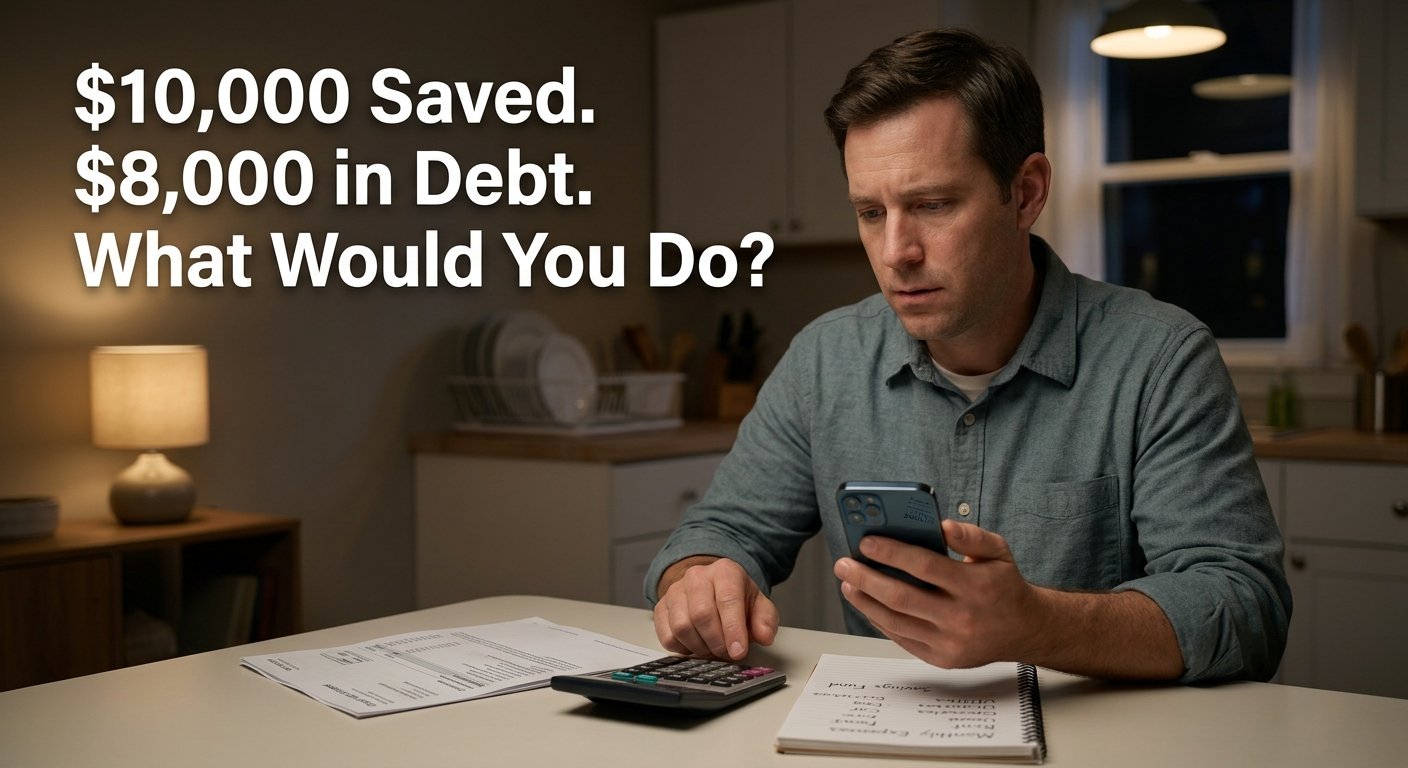
Should I use savings to pay off debt? It’s a question that sounds simple until you look at your bank balance and realize how much effort it took to save that money.
Imagine having $5,000 in savings and $4,000 in credit card debt.
You could pay off the card tomorrow. No more worrying about the balance. No more watching interest charges appear on your statement.
But then your savings would fall to $1,000.
What if your car breaks down next week? What if you miss a paycheck? What if another medical bill arrives?
That uncertainty is why the decision isn’t just about interest rates. It’s also about how much financial breathing room you’ll have afterward.
There is a middle ground between keeping every dollar in savings and using everything to eliminate debt.
Here’s how to figure out what makes sense for you.
Quick Answer: Should I Use Savings to Pay Off Debt?
Using savings to pay off high-interest credit card debt often makes financial sense when the interest you’re paying is much higher than the interest you’re earning. However, using all your emergency savings can leave you vulnerable to unexpected expenses.
Before paying off a card, consider your borrowing rate, essential monthly expenses, income stability, upcoming bills, and how quickly you could replace the money.
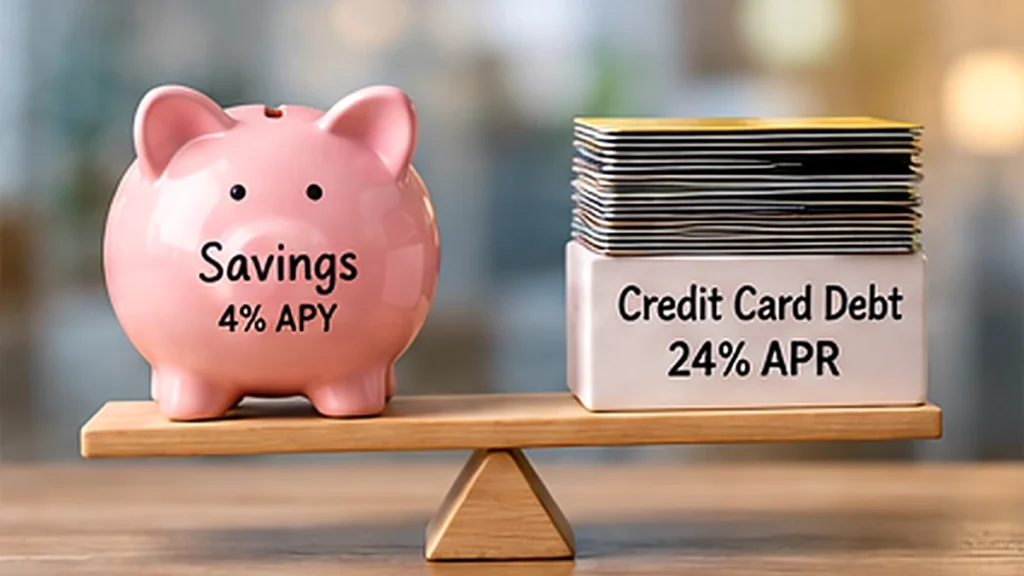
If you’re paying 24% APR on a credit card while earning 4% APY in a savings account, reducing that card balance can produce substantial interest savings.
But if the payment would leave you unable to cover rent, groceries, or an urgent repair, paying down part of the balance may be a safer option.
The right answer depends on more than the amount you owe.
How Much Savings Can You Safely Use to Pay Off Credit Card Debt?
Before making a large credit card payment, work out how much of your savings is actually available.
Having $5,000 in the bank doesn’t necessarily mean you can afford to spend $5,000. Some of that money may be needed for upcoming bills, essential expenses, or an emergency.
Start with this calculation:
Potential debt payment = Accessible savings − Emergency reserve − Upcoming essential expenses not already covered by income
Here’s an example:
| Financial detail | Amount |
|---|---|
| Total accessible savings | $5,000 |
| Emergency reserve to keep | $2,000 |
| Upcoming rent and utilities not covered by income | $600 |
| Other unavoidable expenses | $400 |
| Potential amount available for debt repayment | $2,000 |
In this situation, someone with $4,000 in credit card debt could consider paying $2,000 immediately while retaining $3,000 for identified financial needs.
That doesn’t make $2,000 the correct payment for every household. The appropriate amount depends on actual expenses, job security, and the cash needed before the next paycheck. Make sure expenses aren’t counted twice.
If you’re deciding whether to prioritize debt repayment or build savings from future income, read our broader guide on should you pay off debt or save first.
The goal isn’t to empty your savings account. It’s to identify money you can use without putting essential expenses at risk.
Why Paying Off Debt With Savings Feels So Difficult
A savings account represents something very personal.
Maybe you spent a year building it. Maybe you worked extra shifts or stopped buying things you wanted. Perhaps it’s the first time you’ve managed to keep several thousand dollars untouched.
Seeing that money disappear in one payment can feel like moving backward.
Meanwhile, credit card debt can seem easier to manage because the required monthly payment may be relatively small.
The problem is that a manageable minimum payment doesn’t necessarily mean the borrowing is affordable.
Interest can continue accumulating while your savings earn comparatively little.
There’s another side to the situation, though.
A person with a secure job, affordable rent, and no dependents may be comfortable keeping a smaller emergency reserve.
Someone supporting children, working inconsistent hours, or facing uncertain employment may need a larger financial cushion.
Both people can have the same credit card balance and reasonably make different decisions.
How Much Does Credit Card Debt Really Cost Compared With Savings?
Let’s compare two numbers.
Suppose you have $3,000 that could either remain in your savings account or be used to eliminate an equal amount of credit card debt.
| Financial detail | Example |
|---|---|
| Money available | $3,000 |
| Credit card APR | 24% |
| Savings account APY | 4% |
| Approximate annual card interest | $720 |
| Approximate annual savings interest | $120 |
| Approximate difference | $600 |
These figures illustrate a simple annual interest comparison, assuming unchanged balances and rates and ignoring credit card compounding. Actual credit card interest depends on daily balances, payment timing and account terms. Savings interest is generally taxable. Actual card interest depends on daily balances, payments, and card terms. Savings interest is also generally taxable.
The calculation reveals something important.
Keeping the $3,000 in savings could earn around $120 over a year, but carrying the same $3,000 as card debt could cost approximately $720.
That’s a $600 difference before considering taxes.
Paying down the card also reduces the balance on which future interest can accumulate.
According to the Consumer Financial Protection Bureau’s explanation of credit card interest, many issuers calculate interest daily. That means reducing an interest-bearing balance sooner can lower subsequent charges.
However, the calculation does not mean you should automatically transfer your last $3,000 to the card.
You still need a plan for an unexpected expense.
1. How Much Emergency Savings Will You Have Left?
Before making a large payment, subtract the amount you plan to use from your available cash.
Then ask whether the remaining money could cover your most important expenses.
Think about housing, food, utilities, transportation, insurance, and essential medical needs.
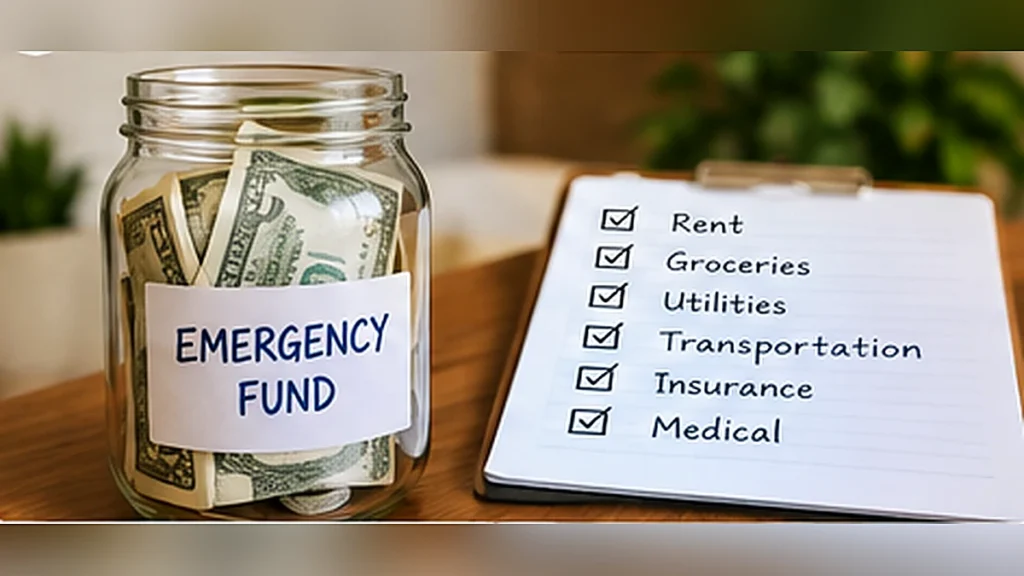
For example, imagine your monthly essential expenses total $2,200.
You have $4,500 in savings and want to use $4,000 to clear a credit card.
After the payment, you would have just $500 left.
That may be too little protection if you rely on one paycheck or have expenses coming due.
On the other hand, someone with $12,000 in savings and $2,000 in credit card debt might be in a stronger position to eliminate the balance immediately.
There is no universally safe dollar amount for everyone.
The CFPB’s emergency fund guidance emphasizes that your savings target should reflect your personal circumstances and the financial shocks you may face.
For a more detailed breakdown, read our guide on how much money you should have in savings.
The question isn’t simply whether you can afford the debt payment today.
It’s whether you can afford your life after making it.
2. How Stable Is Your Income Right Now?
Your paycheck matters just as much as your account balance.
If you have consistent employment, predictable expenses, and room in your monthly budget, you may be able to rebuild savings relatively quickly.
But a different approach may be appropriate if you’re self-employed, working irregular hours, expecting a job change, or depending on income that could stop unexpectedly.
Consider two people who each have $6,000 saved and owe $3,000 on a credit card.
One has steady employment, modest bills, and enough monthly income to replace $500 in savings.
The other earns a different amount every month and is already worried about making rent.
The same debt payment would create very different levels of risk.
For the second person, maintaining more accessible cash while making a smaller debt payment may be worth the additional interest cost.
Having money available when income becomes uncertain has real value, even if that value doesn’t show up in an interest-rate calculation.
3. Are You Paying High Interest or Using a 0% APR Promotion?
Not every debt should receive the same priority.
A card charging 24% APR creates a different financial problem from one offering a temporary 0% introductory rate.
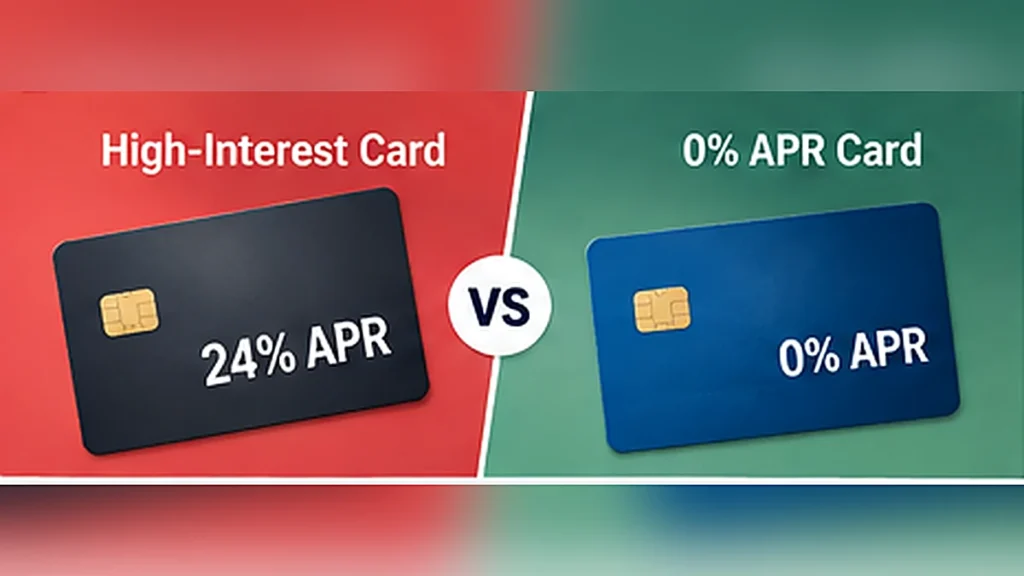
If you’re paying substantial interest every month, reducing the balance can be especially valuable.
However, if you have a genuine 0% introductory APR on the relevant balance, keep paying on time and have a realistic plan to eliminate the amount before the promotional period ends.
Check the offer carefully.
A 0% introductory APR is not necessarily the same as deferred interest. With some deferred-interest arrangements, failing to pay the required amount in full by the deadline can trigger previously accrued interest.
Balance-transfer offers may also charge fees, and new purchases might receive different treatment.
Don’t assume all promotional credit card agreements work the same way.
Review your statement and account terms before moving money.
4. Could an Unexpected Expense Force You Back Into Debt?
Imagine using nearly all your savings to pay off a credit card.
Two weeks later, your car needs a $1,400 repair.

Without accessible cash, you may have to use the same card again.
That doesn’t necessarily mean the earlier payment was mathematically wrong. But it shows why eliminating debt without maintaining a cash reserve can fail to solve the underlying problem.
An emergency fund is not wasted money simply because it earns less interest than a loan costs.
It’s money reserved for problems you cannot schedule.
Unexpected medical expenses are a useful example. Before putting a hospital bill on a credit card, check whether you qualify for financial assistance or a payment plan.
Our article about whether medical debt can hurt your credit explains why turning a medical bill into ordinary credit card debt can create additional complications.
Protecting some savings can help you avoid making a rushed borrowing decision later.
5. How Quickly Can You Rebuild Your Savings?
Paying off debt should ideally be followed by a realistic savings plan.
Suppose you use $2,000 to reduce your card balance.
If you can consistently put $250 back into savings every month, replacing that amount would take eight months, excluding interest.
But if your budget leaves only $40 each month, rebuilding the same $2,000 would take much longer.
That difference matters.
Before making the payment, calculate how much you can afford to save from your regular income without creating new card debt.
If the number is small, you may want to keep a larger reserve.
If you have a comfortable monthly surplus, using more savings to eliminate expensive debt may be reasonable.
The goal is to improve your finances without creating another problem.
Should I Pay Off Credit Card Debt With Savings or Pay Half?
You don’t always have to choose between paying everything and paying nothing.
Partial repayment can be a practical compromise.
Imagine this situation:
| Item | Amount |
|---|---|
| Savings balance | $5,000 |
| Credit card balance | $4,000 |
| Planned debt payment | $2,500 |
| Savings remaining | $2,500 |
| Card balance remaining | $1,500 |
You would still owe money, but the amount subject to interest would be substantially lower.
At the same time, you’d retain $2,500 for unexpected expenses.
Whether that’s enough depends on your essential expenses and financial circumstances.
If you choose partial repayment, continue making required payments and direct extra money toward the remaining high-interest balance when your budget permits.
The important point is that debt reduction doesn’t have to be an all-or-nothing decision.
Savings vs. Debt Payoff: Which Option Fits Your Situation?
| Your situation | Approach worth considering |
|---|---|
| High-interest debt with substantial savings remaining | Pay off the debt while retaining an adequate emergency reserve |
| High-interest debt with very little savings | Keep some emergency cash and make a partial payment |
| 0% introductory APR debt | Preserve liquidity if appropriate, but plan to repay before the offer ends |
| Irregular income or possible job loss | Consider keeping a larger cash cushion |
| Multiple cards charging different rates | Generally prioritize the highest-interest balance while staying current on required payments |
| Difficulty making minimum payments | Contact your card issuer promptly to discuss hardship options |
These are decision guidelines, not universal instructions. Your best option depends on your actual expenses, account agreements, and borrowing costs.
What If Your Savings Are in a High-Yield Savings Account?
This is where many savers hesitate.
You may have worked hard to open a high-yield savings account and finally started earning meaningful interest.
Moving money out can feel like sacrificing progress.
But earning a competitive savings APY is only one part of your finances.
If you earn 4% on deposits while paying 24% on revolving debt, the borrowing cost is substantially higher.
That doesn’t make a high-yield account a bad product. It simply means your credit card may deserve more immediate attention.
Once your debt becomes manageable, a savings account can remain useful for holding an emergency reserve.
You can compare options in our best high-yield savings accounts for 2026 guide.
Before opening an account, check withdrawal access, minimum balances, fees, promotional conditions, and deposit insurance. Savings APYs may change.
For eligible deposits at an FDIC-insured bank, standard insurance coverage is generally $250,000 per depositor, per bank, per ownership category. You can verify coverage through the FDIC’s official guidance.
Remember that easy access to emergency money may be more important than chasing a slightly higher yield.
Will Paying Off Credit Card Debt Improve Your Credit Score?
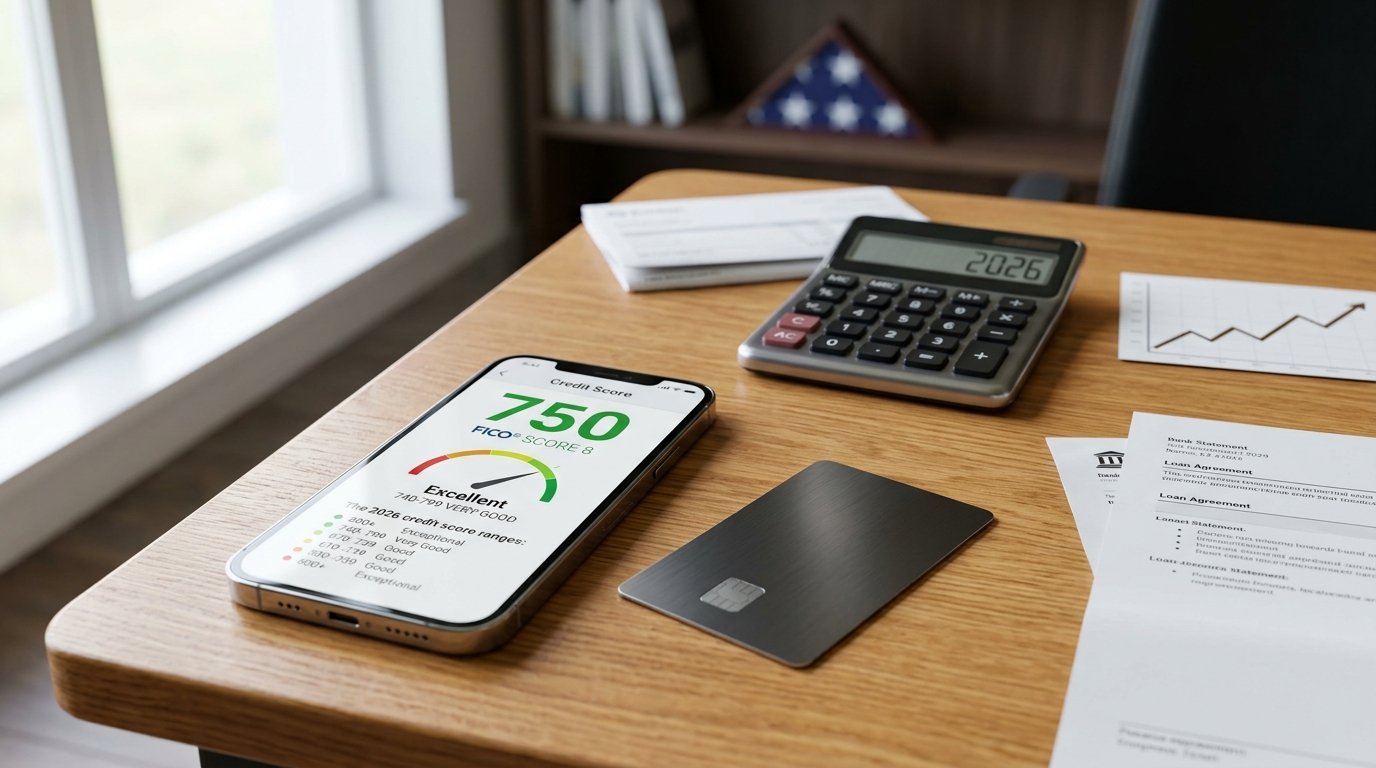
Paying down a credit card can help your credit score, particularly when it reduces your credit utilization.
Credit utilization measures how much revolving credit you’re using relative to your available limits.
For example, if your credit limit is $5,000 and you owe $4,000, your utilization on that card is 80%.
Reducing the balance to $1,000 lowers utilization on that card to 20%, assuming the limit hasn’t changed.
A lower reported balance can be beneficial for many credit-scoring models.
However, there’s no reliable way to promise an exact increase.
Your score also depends on payment history, account age, other balances, recent credit applications, and the scoring model being used.
Paying off the card does not necessarily mean you should close the account.
For a broader explanation, see EEZYPOST’s guide to what is a good credit score.
Improving your credit can be valuable, but don’t sacrifice essential financial stability just to chase a particular score.
What If You Cannot Afford Your Credit Card Payments?
If you’re struggling to make the minimum payment, the problem may be larger than deciding whether to move money from savings.
Contact your card issuer before the situation gets worse.
Ask whether it offers hardship assistance, temporary payment adjustments, reduced interest, or another arrangement based on your circumstances.
Explain how much you can realistically afford and when your financial situation might improve.
The CFPB recommends contacting your card company immediately if you cannot pay your bill.
A reputable nonprofit credit counselor may also help you review options.
Be cautious of companies promising to erase credit card debt quickly, particularly those charging questionable fees or encouraging you to stop communicating with creditors.
And don’t drain the cash needed for essential living expenses simply to make a large credit card payment.
A Practical Plan Before Moving Money Out of Savings
You don’t need to solve your entire financial situation today.
Start by answering these seven questions:

- What is my total credit card balance, and what APR applies to each portion?
- How much do I currently have in accessible savings?
- What are my essential expenses for the next month?
- Are there upcoming bills or income changes I need to prepare for?
- How much cash should I keep for unexpected expenses?
- What debt payment could I make without compromising those needs?
- How much can I realistically put back into savings each payday?
If you have several cards, keep making required payments and consider directing additional payments toward the highest-interest balance.
After making a debt payment, review your budget and set a manageable savings target.
Small, reliable contributions are better than promising yourself you’ll replace thousands of dollars immediately when you have no realistic way to do so.
You can also explore our personal finance and money management guide for a broader approach to balancing everyday expenses, debt, and savings.
Frequently Asked Questions
Should I use all my savings to pay off credit card debt?
Usually, consider retaining enough accessible money for essential expenses and unexpected financial problems before using the rest to reduce high-interest debt. The appropriate reserve depends on your income, household needs, and financial risks.
Is it better to have $5,000 in savings or no credit card debt?
It depends on the credit card APR, savings yield, income stability, and expenses. Eliminating high-interest debt can save substantial money, but keeping some emergency cash may prevent new borrowing after an unexpected expense.
Should I stop saving while paying off debt?
Not necessarily. If you have little emergency cash, continuing to build a modest reserve can be sensible while making required debt payments. If you already have adequate savings, focusing more heavily on high-interest debt may help reduce borrowing costs.
Is it smart to pay off half my credit card with savings?
It can be. A partial payment reduces the interest-bearing balance without necessarily exhausting your emergency reserve. Compare the remaining savings with essential expenses before deciding on an amount.
Should I keep money in a high-yield savings account instead of paying debt?
Compare the account’s APY with your debt’s effective borrowing cost. High-interest credit card debt often costs far more than savings earn, but maintaining emergency liquidity still matters.
Does paying off credit card debt immediately raise my credit score?
Not necessarily immediately, and an increase isn’t guaranteed. Lower balances can improve credit utilization once updated information is reported, but the outcome depends on your overall credit profile and the scoring model.
The Bottom Line
Should I use savings to pay off debt?
For many people carrying high-interest credit card balances, using part of their savings to reduce debt can be a sensible financial decision.
But paying off a card isn’t automatically the best move if it leaves you unable to handle ordinary necessities or an unexpected expense.
Compare the actual interest costs, keep a realistic emergency reserve, and choose a payment you can recover from.
You worked hard to save that money.
Using some of it to reduce expensive debt can be progress, too, provided you aren’t trading today’s relief for tomorrow’s financial emergency.
EEZYPOST editorial note: This article provides general U.S. personal finance education, not individualized financial advice. Numerical examples are illustrative, not quotations of current market offers. Actual interest costs, credit-score effects, and repayment outcomes depend on individual account terms and circumstances.
Last reviewed: October 16, 2026.





Leave a Reply