

Shopping for dresses for a pear shaped body can feel unnecessarily complicated. You find a dress with the perfect neckline, but it pulls across your hips. Another fits comfortably below the waist yet leaves extra fabric around the bust. And the dress that looks effortless on the model somehow sits in the wrong place when you try it on.
The problem is not your body. It is often the way a dress is cut.
Pear-shaped proportions usually mean the hips are wider than the shoulders or bust, often with a more defined waist. That can make some ready-to-wear dresses harder to fit, especially when the bodice and skirt are designed around one standard set of measurements.
The best dress is one that fits your measurements, feels comfortable, and gives you the silhouette you actually want.
This guide compares 12 dress styles, from A-line and wrap dresses to fitted sheaths and relaxed maxis. You will also learn how to shop for affordable dresses, choose the right size online, and solve common fitting problems without replacing your entire wardrobe.
Last Updated: October 20, 2026
Editor’s Note: This guide was substantially updated with 12 dress styles, practical sizing advice, affordable shopping recommendations, dress-fit solutions, and new EEZYPOST visual comparisons to help readers make informed clothing choices.
What Dress Styles Look Best on a Pear Shaped Body?
Quick answer: A-line, wrap, and fit-and-flare dresses are reliable starting points for pear-shaped proportions because their skirts can provide room through the hips while their bodices create a defined shape. Empire-waist dresses, relaxed shirt dresses, and flowing maxis are also worth trying.
However, the right choice depends on more than body shape. Your bust measurement, waist placement, torso length, fabric preference, and the occasion all influence how a dress fits.
For example, an A-line dress with a rigid waistband may feel less comfortable than a stretchy fitted dress. A wrap dress might adjust beautifully at the waist but need a camisole or additional fastening around the bust.
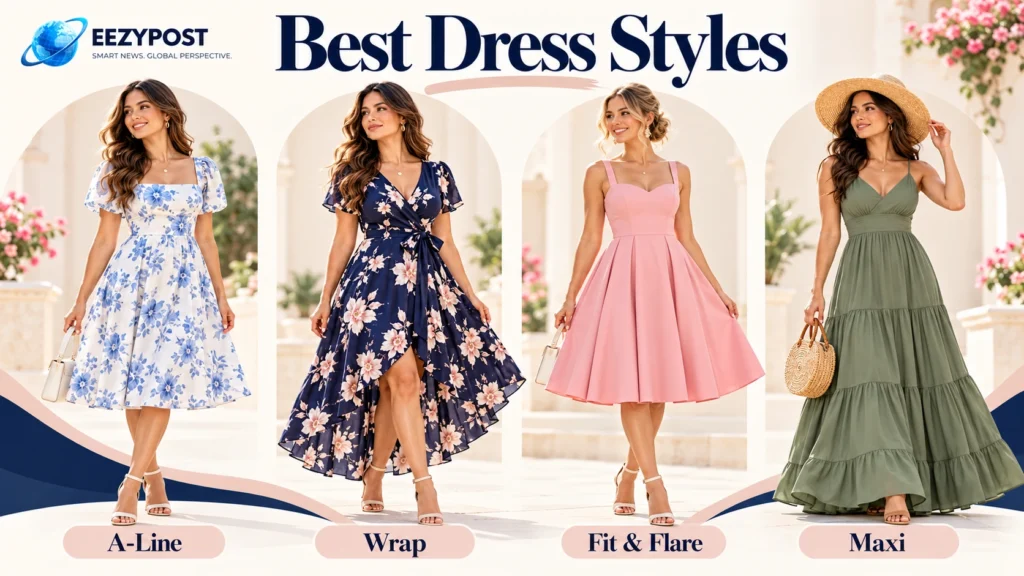
Here is a practical comparison.
| Dress style | Best starting point for | Main fit consideration |
|---|---|---|
| A-line | Everyday wear, work, weddings | Waist and bodice fit |
| Wrap | Adjustable waist, date nights | Neckline coverage and overlap |
| Fit-and-flare | Parties, formal events | Where the waist seam sits |
| Shirt dress | Casual and smart-casual wear | Button pulling around bust and hips |
| Empire waist | Relaxed summer dresses | Seam placement below the bust |
| Bias-cut slip | Minimal evening style | Fabric cling and hip ease |
| Princess-seam sheath | Tailored office clothing | Bust, waist and hip shaping |
| Ruched bodycon | Fitted evening wear | Stretch and movement |
| Smocked sundress | Comfortable everyday wear | Elastic support and skirt volume |
| Tiered maxi | Summer, travel, vacations | Where tiers add volume |
| One-shoulder dress | Weddings and formal occasions | Bodice support and shoulder fit |
| Relaxed shift | Loose-fitting casual dresses | Shoulder fit and overall length |
These descriptions refer to typical designs. Individual garments can vary considerably.
If you are looking for complete outfits with jeans, trousers, skirts, and jackets rather than dresses alone, visit our pear shaped body outfits guide, which includes 15 everyday and occasion-based looks.
12 Dresses for a Pear Shaped Body Worth Trying
A dress does not need to disguise your hips to look good. Some styles follow your natural shape, others add volume, and a few deliberately create a relaxed silhouette.
The goal is to understand what each design does before spending money.
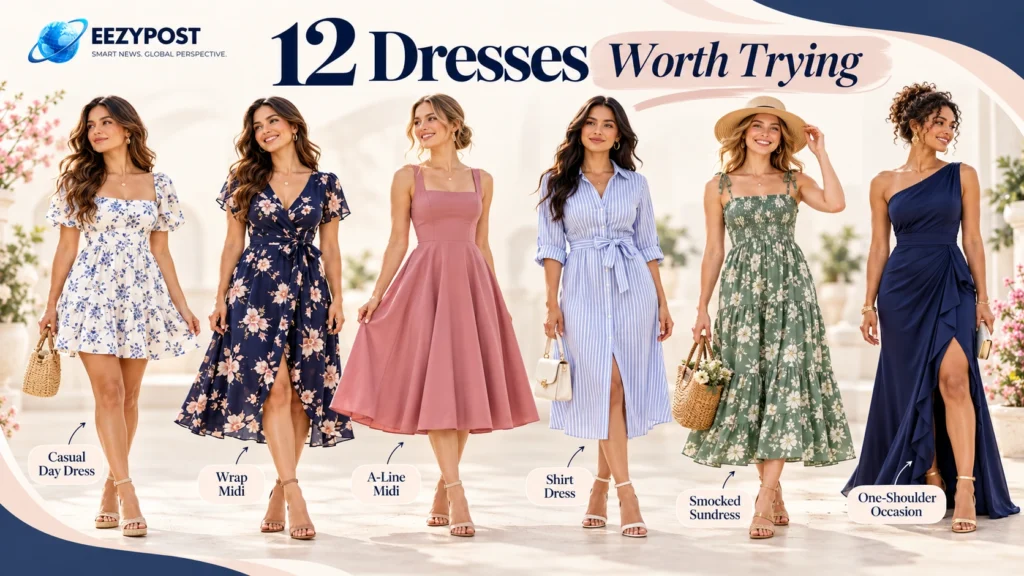
1. A-Line Dresses: An Easy Starting Point
An A-line dress is usually narrower through the upper body and gradually widens toward the hem, creating a shape similar to the letter A.
That gradual flare can provide room around the hips without requiring the skirt to fit closely.
For everyday wear, try a cotton A-line midi dress with a square neckline and simple flats. For a wedding, choose a more structured bodice with a softly flowing skirt.
What to check: The waist seam should sit comfortably, and the skirt should not pull when you sit down.
A-line dresses for pear shaped body types are especially practical when the hip measurement makes buying fitted dresses difficult.
However, not every A-line design provides the same amount of room. A narrow A-line skirt in stiff fabric may still feel restrictive.
Best for: Work, casual outings, weddings, and anyone who prefers roomier skirts.
2. Wrap Dresses: Adjustable Without Looking Complicated
A wrap dress crosses one side of the garment over the other, usually fastening with a tie at the waist.
This design can offer more flexibility than a fixed waistband.
Imagine finding a dress that fits your hips but feels slightly loose around your middle. An adjustable wrap may allow you to change the waist fit without needing an alteration.
The neckline is another consideration. Many wrap dresses create a V shape, but some open when you sit or bend forward.
Look for adequate fabric overlap, a secure tie, and a skirt that stays closed while walking.
A burgundy wrap midi dress with block heels works well for dinner. A printed cotton version with sandals feels more relaxed.
Best for: Date nights, office wear, travel, and adjustable waist styling.
Watch for: Gaping necklines, insufficient skirt overlap, and ties that loosen during movement.
3. Fit-and-Flare Dresses: Defined Bodice, Fuller Skirt
Fit-and-flare dresses have a closer-fitting bodice and a skirt that opens noticeably below the waist.
They are similar to A-line dresses, but the flare is often more pronounced.
This makes them useful when you want a visible waistline without a tightly fitted lower half.
A sleeveless fit-and-flare midi dress can work for a graduation, brunch, or wedding guest outfit. Add a cropped jacket for a more formal setting.
The waist seam is important. If it sits above or below your natural waist in an uncomfortable place, the dress may look or feel awkward even when the size label is correct.
Try different torso lengths and bodice constructions before deciding.
Best for: Special occasions, parties, and structured day dresses.
4. Shirt Dresses: Relaxed Enough for Everyday Wear
Shirt dresses borrow details from button-down shirts, including collars, front buttons, cuffs, and sometimes waist ties.
They are useful when you want a dress that feels casual without looking like loungewear.
For a pear-shaped figure, consider a shirt dress with a gently flared skirt or a relaxed lower section.
A belted denim shirt dress with sneakers makes an easy weekend outfit. A lightweight cotton poplin version with loafers can work for a casual office.
The biggest fitting issue is often button pulling.
Check the dress while sitting and walking. If the lower buttons separate around the hips, a different cut may be better than simply choosing a larger size.
A shirt dress with a detachable belt also gives you the option of wearing the waist loose.
Best for: Everyday wear, smart-casual workplaces, and transitional weather.
5. Empire-Waist Dresses: Comfort Without a Tight Waistband
An empire-waist dress has a raised seam, usually positioned just below the bust. The skirt falls from that point rather than from the natural waist.
This can be an attractive option when you do not want fabric fitted closely around your middle.
For summer, choose a lightweight empire-waist dress with comfortable straps and enough volume through the skirt.
A soft floral design works for daytime events, while a floor-length version may suit more formal occasions.
Unlike a dress with a natural waist seam, an empire-waist silhouette places emphasis higher on the torso.
Check the raised seam carefully. If it cuts across the bust instead of sitting underneath it, try another size or design.
Also check the lining. Thin fabric can become more transparent in bright daylight.
Best for: Summer outings, relaxed celebrations, and people who prefer less waist restriction.
6. Bias-Cut Slip Dresses: Minimal Style With a Different Drape
A bias-cut dress is made with fabric pieces cut diagonally relative to the fabric’s grain.
This can change how the material drapes and moves around the body.
Slip dresses often use this construction to create a fluid silhouette. However, a bias cut does not automatically mean the garment will fit comfortably through the hips.
Some slip dresses skim the body, while others cling closely depending on fabric and construction.
If you are shopping for one, pay attention to hip measurements, lining, and how the dress moves when you walk.
A chocolate-brown slip midi with low heels makes an elegant dinner outfit. Wear it with a fine-knit cardigan for a softer daytime look.
Best for: Minimal evening clothing and simple layered outfits.
Watch for: Static cling, visible seam pulling, thin lining, and limited room around the thighs.
7. Princess-Seam Sheath Dresses: Tailored and Professional
A sheath dress usually follows the body more closely than an A-line design.
Princess seams are shaped seams running vertically through parts of the bodice, and sometimes farther down the garment. They can help create a more contoured fit.
For office wear, a properly fitted sheath dress can look polished without needing a lot of accessories.
Try a navy or charcoal knee-length style with a structured jacket and comfortable loafers.
The challenge is that fitted construction leaves less room for size differences between the bust, waist, and hips.
If the upper body fits but the skirt pulls, the garment may need alterations or a different cut.
A tailor can sometimes adjust certain seams, but you should ask about feasibility and cost before buying.
Best for: Professional settings and people who enjoy tailored silhouettes.
8. Ruched Bodycon Dresses: Fitted Dresses Are an Option Too
Pear-shaped women can absolutely wear bodycon dresses.
A bodycon dress follows the body’s contours rather than creating extra room around the hips.
If that is the look you prefer, there is no reason to avoid it.
Ruching adds gathered fabric, which can change the texture and appearance of a fitted garment. Some ruched dresses also contain stretch, although that depends on the material.
A ruched black midi dress with simple sandals makes a straightforward evening outfit.
Fit matters more than the styling label. Check whether the fabric stretches comfortably, whether seams stay flat, and whether the dress rides up when you walk.
A tightly fitted dress should not prevent you from sitting comfortably or moving naturally.
Best for: Date nights, evenings, and anyone who likes a body-hugging silhouette.
9. Smocked Sundresses: Flexible Casual Dressing
Smocking is a technique that uses stitching to create gathers, often allowing parts of the garment to stretch.
Smocked-bodice sundresses are popular for warm-weather wear because the upper section can feel more flexible than a rigid fitted bodice.
A smocked square-neck dress with a flowing skirt is a useful casual option.
Choose cotton or another comfortable fabric, and check whether the elastic section stays in place without squeezing.
For fuller hips, pay attention to where the skirt begins. A dress that opens below the smocked bodice may provide the movement you want.
Wear it with flat sandals and a lightweight bag for a weekend outing.
Best for: Summer days, vacations, casual brunches, and flexible bodice fit.
10. Tiered Maxi Dresses: Length, Movement, and Volume
A maxi dress typically reaches the ankles or near the floor.
A tiered maxi adds separate fabric sections that create volume as the skirt continues downward.
This can be appealing if you enjoy relaxed clothing with movement.
However, the placement of the tiers matters.
A large tier starting exactly across your widest hip measurement can add volume in that area. That is not inherently a problem, but it may create a different silhouette from the one you expected.
If you prefer a smoother line through the hips, try a maxi with a longer uninterrupted upper skirt and lower tiers.
A navy tiered maxi with a square neckline and flat sandals makes an easy vacation outfit.
Best for: Summer, travel, informal outdoor events, and relaxed maxi styling.
11. One-Shoulder Dresses: A Distinct Formal Look
One-shoulder dresses create an asymmetrical neckline, making the upper body the main design feature.
They can look striking with a simple flowing skirt.
For weddings or evening events, consider a one-shoulder midi dress with a gently flared lower half.
A solid-color version in emerald, navy, or burgundy can make the neckline stand out without requiring heavy embellishment.
Before buying, check whether the bodice offers enough support for your bust and stays in place when you move.
Some designs require particular undergarments, which is worth considering before committing to a purchase.
Best for: Weddings, cocktail events, formal dinners, and occasionwear.
12. Relaxed Shift Dresses: When You Don’t Want Waist Definition
A shift dress typically hangs more loosely from the shoulders and does not rely on a strongly fitted waist.
It offers a different silhouette from wrap dresses and fit-and-flare styles.
If you prefer relaxed clothing, a shift dress may suit your everyday wardrobe better than a tightly tailored option.
Try a short shift dress with structured shoulders and comfortable flats, or a longer linen version for warm weather.
Some straight-cut shifts may feel tight around the hips despite appearing loose in product photographs.
Check the garment’s width at the hip and whether the side seams remain straight when worn.
Best for: Casual dressing, warm weather, and anyone who prefers a less waist-defined silhouette.
Which Cheap Dresses Work for a Pear Shape?
You do not need an expensive dress to get a good fit.
An affordable A-line, wrap, smocked, or relaxed shirt dress may serve you better than a premium garment with the wrong proportions.
The key is knowing what to inspect.
Start with construction, not the discount
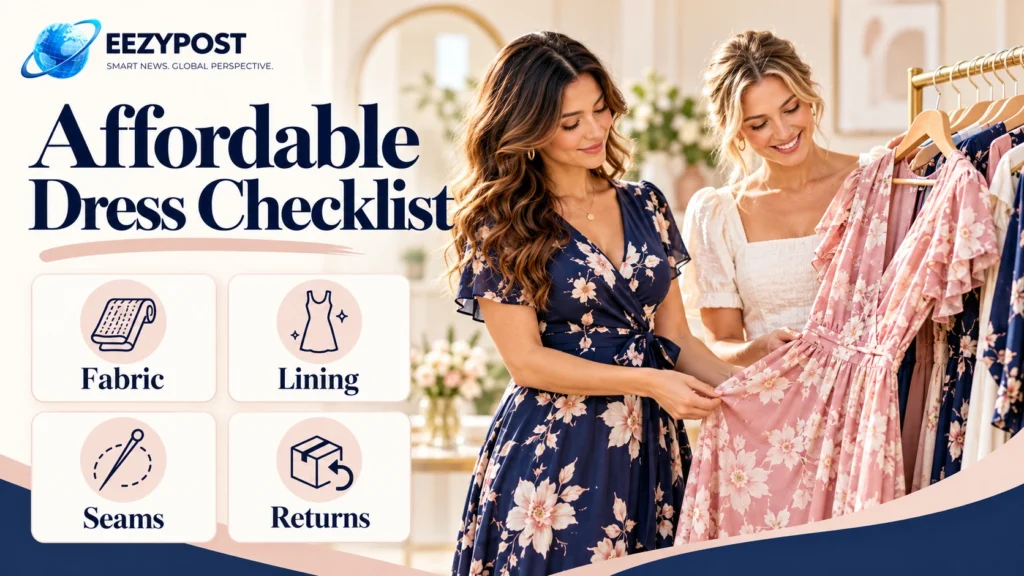
When comparing inexpensive dresses, look closely at four details.
Fabric: Check the composition and whether it has stretch. A soft fabric may feel comfortable, but thin material can also become transparent.
Lining: Find out whether the skirt or bodice is lined. An inexpensive dress that needs an additional slip may cost more than expected.
Seams: Inspect where the waist seam falls and whether the side seams pull around the hips.
Fastenings: Look at buttons, zippers, ties, and elastic. A dress that cannot be fastened comfortably is not a bargain.
The affordable dress checklist
| If you’re buying | Look for | Be careful with |
|---|---|---|
| Budget A-line dress | Comfortable bodice and gradual skirt flare | Rigid waistbands |
| Inexpensive wrap dress | Secure ties and sufficient overlap | Gaping neckline |
| Casual maxi dress | Suitable lining and comfortable length | Thin, transparent fabric |
| Budget shirt dress | Enough hip room and secure buttons | Button pulling |
| Smocked sundress | Comfortable elastic and a flexible bodice | Elastic that digs in |
Someone searching for cheap dresses for a pear shape is usually trying to avoid wasting money on a poor fit.
That makes sizing information and return policies just as important as the listed price.
The Federal Trade Commission’s online shopping guidance recommends checking return conditions, shipping costs, and refund policies before purchasing. Sale and clearance items may have different rules.
If you cannot find clear sizing information and the retailer does not accept returns, think carefully before ordering.
How to Choose a Maxi Dress for a Pear Shaped Body

A maxi dress can be a good choice for pear-shaped proportions, but length alone does not determine how it fits.
There are three useful features to examine.
Look at the upper-body fit
A structured square neckline, wrap bodice, or comfortable smocked section can create different effects.
Choose according to the fit and support you prefer.
If the straps are adjustable, you may have more flexibility in positioning the bodice.
Check where the skirt starts
A maxi dress that flares from the natural waist may feel different from an empire-waist version or a straight-cut design.
For additional room around the hips, consider A-line or flowing skirts.
If you want a closer silhouette, a fitted maxi with suitable stretch may work better.
Measure the length
A maxi should not drag on the floor unintentionally.
Check the dress length against your height and the shoes you plan to wear.
Petite shoppers may benefit from shorter-length options, but the actual measurement matters more than the size category.
For tall women, look at both the overall length and the position of the waist seam.
EEZYPOST fit tip: When shopping online for a maxi dress, check the bust, waist, hip, and length measurements together. A dress can have enough room around your hips and still fit incorrectly because the waist seam sits too high.
How to Measure Your Bust, Waist, and Hips Before Buying a Dress
This is one of the most useful steps you can take before ordering clothes online.
A familiar size label is not always enough. Different brands and individual dress designs can use different measurements.
Use a flexible measuring tape and record your measurements in inches or centimeters.
Step 1: Measure your bust
Wrap the tape around the fullest part of your bust.
Keep it level and comfortable without pulling it tightly against your body.
Step 2: Measure your natural waist
Find the natural waist, usually around the narrowest or naturally creasing part of your midsection.
Measure without holding your breath or pulling your stomach inward.
Step 3: Measure your hips
Stand with your feet close together and measure around the fullest part of your hips and seat.
Keep the tape parallel to the floor.
Step 4: Compare with the brand’s actual chart
Consider this illustrative example:
| Body measurement | Example |
|---|---|
| Bust | 35 inches |
| Waist | 29 inches |
| Hips | 41 inches |
A shopper with these measurements might find that the bust corresponds to one size while the hips correspond to another.
What should she choose?
For a fitted sheath dress, the hip measurement may be the limiting factor. For a dress with a roomy A-line skirt, the bust and waist fit may deserve more attention.
There is no universal rule to always size up or size down. The garment’s cut, stretch, intended ease, and brand chart matter.
Nordstrom provides a useful reference for taking body measurements and reading clothing size charts.
Important: Body measurements and finished garment measurements are not the same. A garment may include additional room, called ease, to allow comfortable movement.
If a retailer does not explain its sizing, contact customer service before ordering.
Dress Fit Problems and How to Fix Them
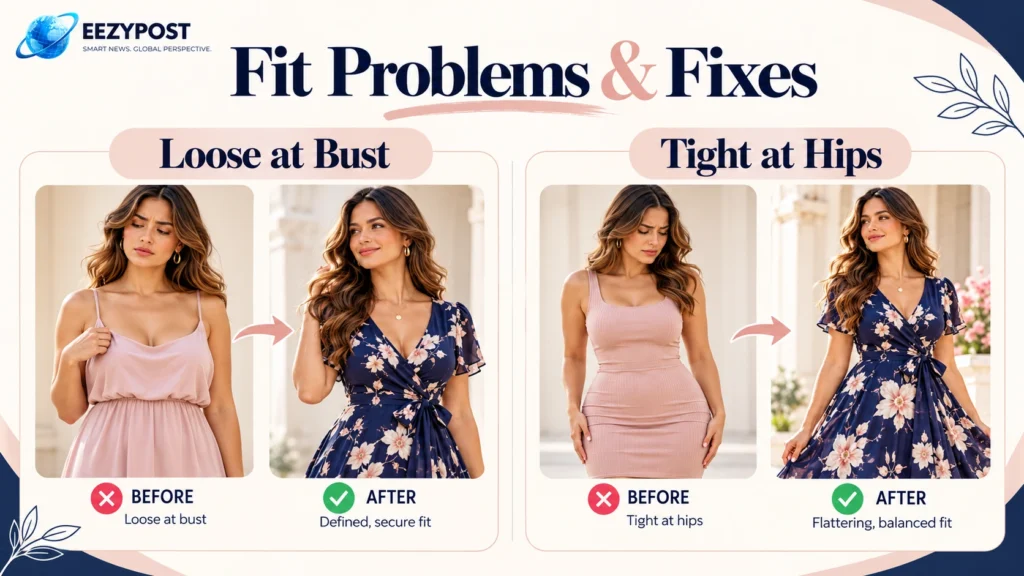
Some dresses look beautiful on the hanger but become uncomfortable as soon as you move.
Before returning one, identify exactly where the fit is wrong.
| Fit problem | Possible cause | What to try |
|---|---|---|
| Fits hips, loose at bust | Different upper and lower measurements | Adjustable bodice or tailoring |
| Pulls across hips | Insufficient room or stretch | Different cut or size |
| Waist seam too high | Bodice length mismatch | Different torso length or design |
| Wrap neckline opens | Insufficient overlap | Camisole, fastening, or another cut |
| Skirt rides up | Tight hip fit or limited movement | More hip ease or different fabric |
| Dress looks transparent | Thin fabric or inadequate lining | Fully lined style or suitable slip |
| Maxi drags on floor | Excess length | Petite length or hemming |
When should you use a tailor?
Tailoring can be helpful when the dress already fits comfortably in its most difficult areas.
A slightly loose waist, long hem, or adjustable shoulder strap may be relatively straightforward to discuss with a tailor.
Major changes to rigid bust construction, intricate beading, or complex side seams can be more difficult.
Ask about the cost before buying a dress that needs substantial alterations.
When should you return the dress?
If the fabric pulls sharply around the hips, the bodice restricts movement, or several parts fit incorrectly, another design may be a better purchase.
A dress should not require constant adjustment to remain wearable.
Best Dresses for Petite, Tall, and Plus-Size Pear Shapes
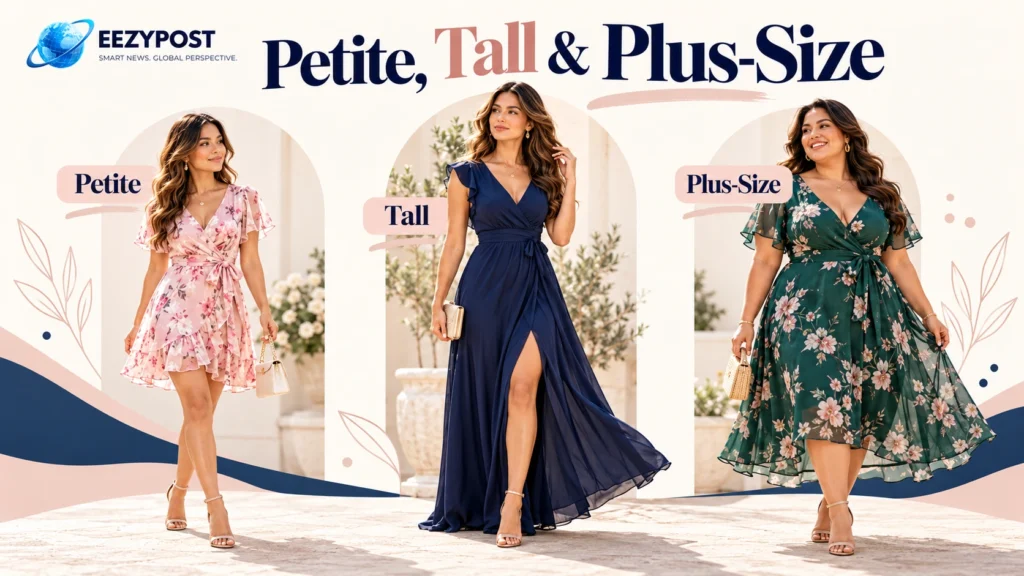
Pear-shaped proportions are not limited to one clothing size or height.
Two women may both have fuller hips relative to their upper bodies but need very different dress cuts.
Petite pear-shaped figures
Focus on the position of the waist seam and overall dress length.
A dress labeled petite may have a shorter bodice, not just a shorter hem.
A knee-length A-line dress or a shorter wrap midi can be useful starting points. Check the actual measurements rather than assuming every petite garment will fit.
Tall pear-shaped figures
Pay attention to torso length, sleeve placement, and whether a midi or maxi dress reaches the intended position.
A longer-length wrap dress or structured maxi may provide the proportions you prefer.
If the natural waist seam sits too high, look for designs made for longer torsos.
Plus-size pear-shaped figures
Choose retailers that publish clear size charts and garment measurements.
A fuller skirt does not automatically guarantee a comfortable fit if the waist or bust is too restrictive.
Wrap dresses, A-line styles, and relaxed maxis can be useful, but construction matters more than the label.
Stretch and support should work together. A garment that stretches but loses shape may not be comfortable throughout the day.
Which Dress Should You Wear for Each Occasion?
Once you have found a comfortable silhouette, the occasion becomes easier to plan.
| Occasion | Dress idea | Practical styling option |
|---|---|---|
| Everyday errands | Cotton A-line dress | Sneakers and a crossbody bag |
| Office | Princess-seam sheath | Blazer and loafers |
| Casual dinner | Wrap midi dress | Block heels and simple earrings |
| Wedding guest | Fit-and-flare midi | Dress shoes and a clutch |
| Summer vacation | Smocked sundress | Sandals and a lightweight bag |
| Formal evening | One-shoulder dress | Minimal jewelry |
| Weekend brunch | Relaxed shirt dress | Flats and a shoulder bag |
| Travel | Soft maxi dress | Comfortable sandals and a cardigan |
You do not have to buy a different dress for each occasion.
The same wrap midi might work for the office with a jacket and for dinner with different shoes.
If you prefer more ideas for combining dresses with accessories, jackets, and other wardrobe pieces, explore our 15 pear shaped body outfit ideas.
A Five-Point Dress Fit Checklist Before You Buy
Before keeping a new dress, give it a simple score.
This is an EEZYPOST shopping checklist, not a scientific fitting system or substitute for a professional alteration assessment.
| Check | Question | Pass when |
|---|---|---|
| Bust | Does the neckline stay in place? | No uncomfortable pulling or gaping |
| Waist | Is the seam in the right position? | Comfortable sitting and movement |
| Hips | Does the skirt provide enough room? | No restrictive pulling |
| Fabric | Does the material feel and look right? | Suitable drape, lining, and coverage |
| Movement | Can you walk, sit, and raise your arms? | No constant readjustment |
How to use it: Give the dress one point for each check it passes.
A score of five means it meets all five basic checks. A low score is a reason to investigate the fit, not a judgment about your body.
For example, if a dress passes the bust and waist checks but fails at the hips, changing the skirt cut may be more effective than changing the size.
This quick process is particularly helpful when choosing between two similarly priced dresses.
Frequently Asked Questions
What is the best dress style for a pear shaped body?
An A-line or fit-and-flare dress is a useful starting point because the skirt can provide room around the hips while the bodice defines the upper body. Wrap dresses are another option when adjustable waist fit is important.
Which cheap dresses work for a pear shape?
Affordable A-line, wrap, shirt, and smocked dresses can work well. Check fabric quality, lining, waist placement, hip measurements, and return conditions before buying.
Are A-line dresses good for pear-shaped bodies?
Yes. Their gradually widening skirts can provide comfortable hip room. The bodice and waist still need to fit correctly, especially when the fabric has little stretch.
Can a pear-shaped woman wear a maxi dress?
Absolutely. Wrap, empire-waist, A-line, tiered, and fitted maxi dresses are all options. Choose according to the bodice fit, skirt construction, and length you prefer.
Can pear-shaped women wear bodycon dresses?
Yes. Bodycon dresses emphasize rather than conceal the hips, which may be exactly the intended look. Choose a comfortable fabric and check how the garment moves when walking and sitting.
What dress length is best for a pear-shaped figure?
There is no single ideal length. Mini, knee-length, midi, and maxi dresses can all work. Consider your height, the occasion, and where the hem falls when you move.
What neckline works best for a pear-shaped body?
Square, boat, V-neck, sweetheart, and one-shoulder necklines offer different styling effects. If you want to draw attention toward the shoulders or neckline, choose a design with interesting upper-body details.
What should I avoid when buying a dress for wider hips?
Avoid assuming a standard size will fit simply because it matches your usual label. Look out for tight hip seams, restrictive waistbands, uncomfortable lining, and dresses that ride up while walking.
Should I buy a dress based on my bust or hip size?
It depends on the cut. A fitted sheath may require close attention to hip measurements, while an A-line design with a roomy skirt may place more emphasis on the bodice and waist. Always consult the specific garment’s size chart.
How This EEZYPOST Guide Was Prepared
This guide focuses on garment construction, commonly available dress silhouettes, measurement-based sizing principles, and practical shopping considerations.
The recommendations are intended to help readers compare styles and recognize potential fit problems. They are not claims that EEZYPOST has personally tested every dress type or reviewed every clothing retailer.
For measurement guidance, we referenced Nordstrom’s published sizing information. For online purchasing considerations, we consulted the U.S. Federal Trade Commission’s consumer advice.
Individual fit varies by manufacturer, garment design, fabric, and personal preference.
Final Thoughts
Finding dresses for a pear shaped body gets easier when you pay attention to construction instead of following strict fashion rules.
If you want room around the hips, try A-line, fit-and-flare, or relaxed maxi styles. If you prefer a defined waist, explore wrap dresses or tailored designs. And if you enjoy showing your curves, a well-fitting bodycon or sheath dress is just as valid a choice.
Before buying, check your measurements, look at the fabric, and make sure the garment feels comfortable when you move.
A higher price does not guarantee a better fit. Neither does a dress being described as flattering.
The right dress is one that fits your body, works for your lifestyle, and makes getting dressed easier.
EEZYPOST takeaway: Choose your dress by its fit, fabric, and construction first. Let your personal style decide the silhouette.


Leave a Reply