

Updated for 2026
| Medically reviewed sources referenced | Evidence-based nutrition guide
Losing weight isn’t just about eating fewer calories. Choosing the right foods can make a significant difference in how hungry you feel, how much muscle you retain, and how easy it is to maintain healthy eating habits over time. That’s one reason high-protein foods continue to be recommended by registered dietitians and major health organizations as part of a balanced weight-loss plan.
Protein plays several important roles in the body. It helps build and repair muscles, supports hormone and enzyme production, and contributes to a longer-lasting feeling of fullness after meals. When paired with vegetables, whole grains, healthy fats, regular physical activity, and an appropriate calorie intake, protein-rich foods can support healthy, sustainable weight loss.
Whether your goal is to lose your first 10 pounds, maintain muscle while reducing body fat, or simply eat healthier, this comprehensive guide will help you make informed choices.
In this ultimate guide, you’ll discover:
- The best high-protein foods for weight loss
- Animal and plant-based protein sources
- High-protein breakfast, lunch, dinner, and snack ideas
- A complete protein foods list with calories and protein content
- A practical one-week high-protein meal plan
- Budget-friendly protein options
- Common protein myths explained
- Expert-backed tips for building a sustainable, healthy eating routine
Rather than focusing on restrictive diets or quick fixes, this guide emphasizes practical habits supported by current nutrition research. The goal isn’t simply to lose weight quickly, but to develop eating patterns that help you feel satisfied, preserve lean muscle, and support long-term health.
Quick Answer: What Are the Best High-Protein Foods for Weight Loss?
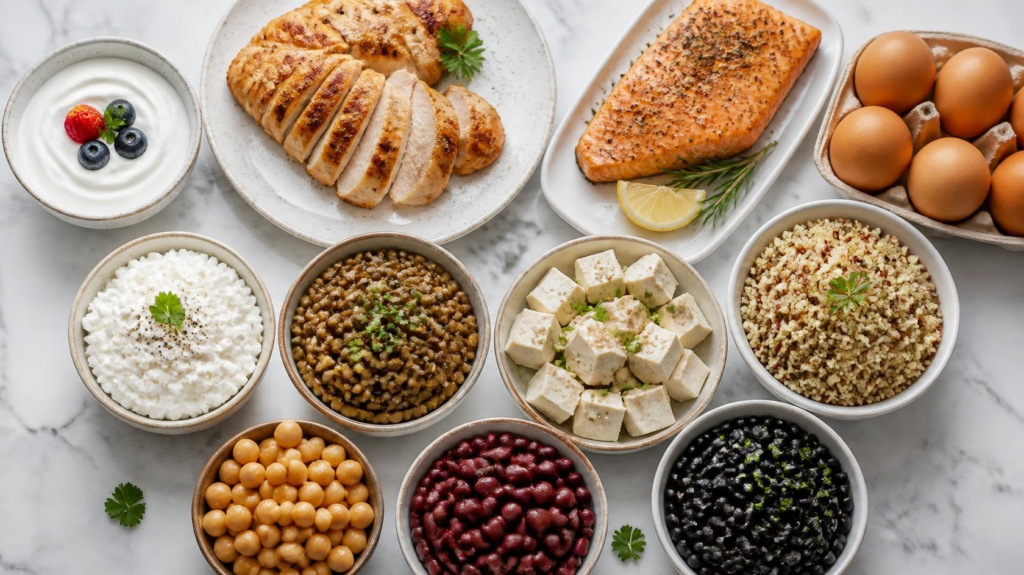
If you’re looking for a short answer, these are among the best high-protein foods to include in a balanced weight-loss diet:
- Skinless chicken breast
- Salmon
- Eggs
- Greek yogurt
- Cottage cheese
- Tuna
- Turkey breast
- Lentils
- Chickpeas
- Tofu
- Tempeh
- Edamame
- Quinoa
- Shrimp
- Lean beef
These foods fit within the broader framework of the Dietary Guidelines for Americans 2025–2030, which emphasize nutritious foods and balanced eating patterns as part of a healthy lifestyle.
These foods are rich in protein while also providing important nutrients such as vitamins, minerals, and healthy fats. Many are naturally filling, making it easier to control hunger and reduce unnecessary snacking throughout the day.
However, no single food burns fat on its own. Sustainable weight loss is achieved through an overall eating pattern that combines nutritious foods, appropriate calorie intake, regular movement, adequate sleep, and consistency over time.
Key Takeaways
✔ Protein helps increase fullness, which may reduce overall calorie intake.
✔ Eating enough protein supports muscle maintenance during weight loss.
✔ Both animal-based and plant-based proteins can be part of a healthy diet.
✔ Whole-food protein sources generally provide more nutrients than relying primarily on supplements.
✔ Combining protein with fiber-rich vegetables, fruits, legumes, and whole grains creates balanced meals that support long-term health.
✔ Meal planning and preparation can make it easier to meet daily protein goals.
✔ Sustainable habits are more effective than extreme diets or eliminating entire food groups.
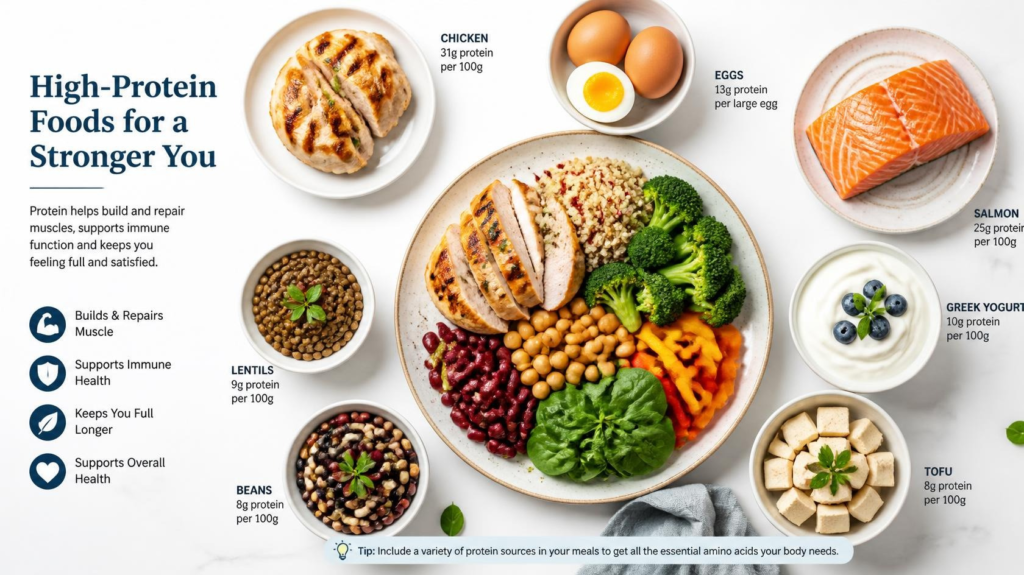
What Are High-Protein Foods?
High-protein foods are foods that provide a substantial amount of protein relative to their serving size or calorie content. Protein is one of the three major macronutrients, alongside carbohydrates and fats, and is essential for nearly every system in the body.
Your body uses protein to:
- Build and repair muscles
- Produce enzymes and hormones
- Support immune function
- Maintain healthy skin, hair, and nails
- Help transport nutrients throughout the body
- Support recovery after exercise
Unlike some nutrients, the body does not store large reserves of protein for future use. That is why consuming adequate protein throughout the day is important for overall health.
Why Protein Matters During Weight Loss
When people reduce calorie intake to lose weight, they often lose both body fat and lean muscle. Preserving muscle is important because muscle tissue supports strength, mobility, physical performance, and overall metabolism.
Research suggests that consuming enough protein while following a calorie-controlled eating plan, especially when combined with resistance exercise, can help reduce muscle loss during weight reduction. NIDDK’s guidance on healthy eating and physical activity also emphasizes combining a sustainable eating plan with regular physical activity for healthy weight management.
Protein also has a higher thermic effect of food (TEF) than carbohydrates and fats. This means the body uses slightly more energy to digest, absorb, and process protein. While this effect alone won’t cause significant weight loss, it contributes to the overall benefits of a balanced, high-protein eating pattern.
Perhaps most importantly, protein promotes satiety, the feeling of fullness after eating. Meals that include adequate protein often help people stay satisfied longer, making it easier to avoid excessive snacking and overeating.
Complete vs. Incomplete Proteins
Not all protein sources provide the same combination of amino acids.
Complete Proteins
Complete proteins contain all nine essential amino acids that the body cannot produce on its own.
Common examples include:
- Chicken
- Turkey
- Fish
- Eggs
- Greek yogurt
- Cottage cheese
- Milk
- Soy foods such as tofu and tempeh
These foods provide high-quality protein that supports muscle maintenance and overall health.
Incomplete Proteins
Incomplete proteins are missing one or more essential amino acids or contain them in smaller amounts.
Examples include:
- Beans
- Lentils
- Peas
- Nuts
- Seeds
- Whole grains
Although individual plant foods may not always provide every essential amino acid in ideal proportions, eating a varied diet throughout the day allows most people to obtain all the amino acids their bodies need. There’s generally no need to combine specific plant proteins within the same meal.
Animal Protein vs. Plant Protein
Both animal-based and plant-based protein foods can support healthy weight loss.
Animal Protein
Animal protein sources are typically complete proteins and often contain higher amounts of protein per serving.
Benefits include:
- High protein density
- Rich in vitamin B12
- Excellent source of iron (particularly red meat)
- High-quality amino acid profile
- Supports muscle maintenance
Examples include poultry, seafood, eggs, dairy products, and lean cuts of meat.
Plant Protein
Plant proteins provide protein along with dietary fiber, antioxidants, vitamins, minerals, and beneficial plant compounds.
Benefits include:
- Naturally high in fiber
- Supports digestive health
- May help improve heart health when replacing some processed or high-fat meats
- Often lower in saturated fat
- Environmentally sustainable options are available
Excellent plant protein sources include lentils, beans, tofu, tempeh, edamame, quinoa, nuts, and seeds.
For many people, combining both animal and plant protein sources creates a balanced and nutritious eating pattern.
How Much Protein Do You Need for Weight Loss?
There is no single protein target that works for everyone. Your protein needs can vary based on factors such as body size, age, activity level, overall diet, and health status. Harvard’s Nutrition Source provides an overview of protein requirements and the factors that can influence how much protein a person needs.
What Makes a Protein Food Good for Weight Loss?
Not every high-protein food is equally supportive of a weight-loss goal. Some processed products contain large amounts of added sugar, sodium, or saturated fat, which can make them less nutritious choices.
In general, the best protein foods for weight loss share several characteristics:
- High protein relative to calories
- Rich in vitamins and minerals
- Low in added sugars
- Minimal processing
- Easy to include in everyday meals
- Good source of nutrients that promote fullness, such as protein and, in many cases, fiber
For example, grilled chicken breast, plain Greek yogurt, lentils, salmon, cottage cheese, tofu, eggs, and edamame provide substantial protein while fitting well into balanced meal plans.
The healthiest approach is to choose a variety of protein sources rather than relying heavily on a single food. Including different lean meats, seafood, dairy products, legumes, soy foods, nuts, and seeds helps provide a broader range of nutrients while keeping meals interesting and enjoyable.
As you’ll see throughout this guide, the most effective weight-loss diet isn’t built around one “superfood.” It’s built around consistent, balanced choices that you can maintain for the long term.
Why Protein Helps With Weight Loss
If you’ve ever felt hungry shortly after eating a meal, the amount of protein on your plate may have played a role. Protein is one of the most satisfying nutrients you can eat, and it does much more than support muscle growth. It can help you stay full, preserve lean muscle during weight loss, and make it easier to maintain healthy eating habits over time.
While protein is not a magic solution for burning fat, increasing your intake as part of a balanced, calorie-controlled diet may improve your chances of losing weight in a healthy and sustainable way. The key is to combine protein-rich foods with plenty of vegetables, fruits, whole grains, healthy fats, regular physical activity, and adequate sleep.
Quick Answer
Protein supports healthy weight loss by helping you feel fuller for longer, preserving lean muscle during a calorie deficit, and requiring slightly more energy to digest than carbohydrates or fats. These benefits can make it easier to reduce overall calorie intake while maintaining strength and supporting long-term health.
1. Protein Helps You Feel Full Longer
One of the biggest challenges during weight loss is managing hunger. Many people struggle because they feel deprived between meals, leading to frequent snacking or overeating.
Protein helps increase satiety, the feeling of fullness after eating. Compared with meals that are mostly refined carbohydrates, meals containing adequate protein generally keep people satisfied for a longer period.
This effect is influenced by several factors, including the release of hormones involved in appetite regulation and the slower digestion of many protein-rich foods.
For example:
- Scrambled eggs with whole-grain toast and fruit are often more filling than a sugary pastry.
- Plain Greek yogurt with berries and nuts may help curb afternoon hunger better than sweetened snack foods.
- Grilled chicken with vegetables can provide longer-lasting satisfaction than a meal centered on refined grains alone.
Feeling satisfied after meals may make it easier to avoid unnecessary snacking and stay within your calorie goals.
EEZYPOST Expert Tip: Aim to include a quality protein source at each meal instead of eating most of your daily protein at dinner.
2. Protein Helps Preserve Lean Muscle During Weight Loss
When you lose weight, you don’t want to lose only fat. Without enough protein and regular resistance exercise, your body may also lose lean muscle.
Maintaining muscle matters because it supports:
- Everyday strength
- Physical function
- Balance and mobility
- Healthy aging
- Exercise performance
Including enough protein while following a calorie-controlled eating plan, especially alongside strength training, can help reduce muscle loss during weight reduction.
This is particularly important for:
- Adults over 50
- People returning to exercise
- Individuals losing a significant amount of weight
- Anyone following a reduced-calorie eating plan
Preserving muscle also helps maintain a healthier body composition as fat is lost.
3. Protein Has a Higher Thermic Effect of Food (TEF)
Digesting food requires energy. This is known as the Thermic Effect of Food (TEF).
Different macronutrients require different amounts of energy for digestion:
| Nutrient | Approximate Thermic Effect |
|---|---|
| Fat | 0–3% |
| Carbohydrates | 5–10% |
| Protein | 20–30% |
This means your body typically uses more energy to digest protein than it does to digest carbohydrates or fats.
Although this extra calorie burn is modest and should not be viewed as a weight-loss shortcut, it contributes to the overall advantages of including protein-rich foods in a balanced diet.
4. Protein Can Help Reduce Cravings
Many people find that cravings, especially in the evening, make it difficult to stick to healthy eating habits.
Meals that contain sufficient protein may help reduce the urge to snack between meals because they promote longer-lasting fullness.
To help manage cravings:
- Eat protein at breakfast.
- Pair protein with fiber-rich foods such as vegetables, beans, fruit, or whole grains.
- Avoid skipping meals.
- Stay hydrated throughout the day.
A breakfast that includes eggs, Greek yogurt, or cottage cheese may help you feel satisfied longer than one built mostly around refined carbohydrates.
5. Protein Supports a Healthy Metabolism
Your metabolism is influenced by many factors, including age, genetics, physical activity, sleep, hormone levels, and body composition.
Protein does not “speed up” metabolism in a dramatic way. However, it supports a healthy metabolism by helping preserve lean muscle, which is more metabolically active than fat tissue.
Combined with regular strength training and an active lifestyle, adequate protein intake can support long-term weight management.
6. Protein Makes Healthy Meal Planning Easier
One practical benefit of eating more protein is that it encourages balanced meals.
A simple approach is to build your plate around a protein source first, then add:
- Colorful vegetables
- Whole grains or other high-fiber carbohydrates
- Healthy fats such as avocado, olive oil, nuts, or seeds
For example:
Breakfast
- Greek yogurt
- Berries
- Oats
- Chia seeds
Lunch
- Grilled chicken
- Mixed vegetables
- Brown rice
Dinner
- Baked salmon
- Roasted broccoli
- Quinoa
This pattern helps create meals that are satisfying, nutrient-dense, and easier to sustain over time.
Does Protein Burn Belly Fat?
This is one of the most common questions people ask.
The answer is no single food or nutrient specifically burns belly fat.
Body fat is lost from the entire body over time when you consistently maintain an appropriate calorie deficit. Where fat is lost first depends largely on genetics, hormones, age, sex, and individual body composition.
Protein can support this process because it helps you:
- Stay full longer
- Maintain muscle during weight loss
- Support consistent eating habits
- Meet nutritional needs while reducing calories
Rather than targeting belly fat directly, protein supports the overall lifestyle habits that lead to gradual fat loss.
Protein Works Best as Part of a Healthy Lifestyle
Protein alone is not enough for successful weight loss.
For the best results, combine a protein-rich diet with:
- Plenty of vegetables and fruit
- Whole grains
- Healthy fats
- Regular physical activity
- Strength training at least two days per week, if appropriate for your fitness level
- Adequate sleep
- Stress management
- Consistent eating habits
Small, sustainable changes are generally more effective than restrictive diets that are difficult to maintain.
Common Mistakes to Avoid
Even healthy habits can become less effective when taken to extremes.
Try to avoid these common mistakes:
- Relying mostly on protein shakes instead of whole foods
- Ignoring vegetables and fiber
- Choosing heavily processed protein snacks high in added sugar or sodium
- Eating very large portions simply because a food is high in protein
- Expecting protein alone to produce weight loss without an overall calorie balance
Whole-food protein sources should form the foundation of most eating patterns, while supplements can be useful when needed to help meet protein goals.
EEZYPOST Expert Insight
The strongest evidence doesn’t suggest that people need to follow an extremely high-protein diet to lose weight. Instead, success comes from eating enough high-quality protein throughout the day as part of a balanced, calorie-appropriate eating pattern.
Focusing on lean meats, seafood, eggs, dairy, legumes, soy foods, nuts, and seeds while limiting highly processed foods creates a sustainable approach that supports both weight management and overall health. When combined with regular exercise, especially resistance training, adequate protein intake can help preserve muscle, improve fullness after meals, and make long-term healthy eating easier to maintain.
Key Takeaways
- Protein increases satiety and may help reduce overall calorie intake.
- Adequate protein supports lean muscle preservation during weight loss.
- Protein has a higher thermic effect than carbohydrates and fats, although the impact is modest.
- Protein-rich meals may help reduce cravings and support healthier eating habits.
- Sustainable weight loss depends on an overall healthy lifestyle, not on protein alone.
- Choosing mostly whole-food protein sources provides additional vitamins, minerals, and other important nutrients.
How Much Protein Do You Need Each Day?
One of the most common questions people ask when trying to lose weight is, “How much protein should I eat each day?”
The answer isn’t the same for everyone. Your ideal protein intake depends on several factors, including your age, body weight, activity level, overall health, and whether your goal is weight loss, muscle maintenance, or improving athletic performance.
There isn’t a single “perfect” number. Instead, experts recommend choosing an intake that supports your health while fitting your lifestyle and dietary preferences.
Quick Answer
Most healthy adults should aim to consume enough protein to meet their individual needs. People trying to lose weight or preserve muscle often benefit from consuming more protein than the minimum recommended amount, especially when following a calorie-controlled eating plan. For personalized advice, particularly if you have kidney disease or another medical condition, consult a registered dietitian or healthcare professional.
What Is the Recommended Daily Protein Intake?
The Recommended Dietary Allowance (RDA) for protein for healthy adults is 0.8 grams of protein per kilogram of body weight per day. This amount is designed to meet the basic needs of most healthy adults and prevent deficiency.
However, the RDA is not necessarily the ideal intake for people who:
- Are trying to lose weight
- Exercise regularly
- Perform strength training
- Are recovering from illness or injury
- Want to preserve lean muscle as they age
Many nutrition professionals recommend higher protein intakes for these groups, provided there are no medical conditions that require protein restriction.
Protein Needs by Goal
The table below provides general guidance for healthy adults.
| Goal | General Protein Intake* |
|---|---|
| Basic health needs | Around 0.8 g/kg body weight |
| Weight loss with muscle preservation | Often higher than the RDA, based on individual needs |
| Regular exercise | May require additional protein depending on training volume |
| Strength training | Frequently benefits from increased protein intake |
| Older adults | May benefit from higher protein intake to support muscle health |
*These are general ranges, not individualized medical recommendations.
How to Estimate Your Daily Protein Needs
A simple way to estimate protein intake is to use your body weight.
Example 1
A person weighing 70 kg (154 lb):
- Basic RDA:
- 70 × 0.8 = 56 grams of protein per day
Example 2
Someone following a weight-loss program while strength training may require more than the basic recommendation, depending on their goals and guidance from a qualified healthcare professional.
These examples illustrate why two people of the same age may have different protein requirements.
Protein Needs for Women
Women need adequate protein throughout life to support:
- Muscle maintenance
- Bone health
- Healthy aging
- Recovery from exercise
- Overall nutrition during weight loss
Women who are physically active or trying to lose weight may need more protein than the minimum RDA, particularly if they want to preserve lean muscle.
Protein Needs for Men
Men generally consume more total calories than women, which often means they naturally eat more protein.
However, protein needs still depend primarily on:
- Body weight
- Activity level
- Age
- Fitness goals
Men who perform regular resistance training usually benefit from distributing protein across meals rather than eating most of it in one sitting.
Protein Needs for Older Adults
As we age, maintaining muscle becomes increasingly important.
Older adults naturally lose muscle over time, a process known as age-related muscle loss.
Adequate protein intake, combined with regular physical activity and strength training when appropriate, can help support:
- Mobility
- Balance
- Independence
- Healthy aging
- Physical function
Healthcare providers may recommend higher protein intake for some older adults based on their individual circumstances.
Protein for Vegetarians and Vegans
Plant-based diets can absolutely provide enough protein.
Excellent options include:
- Lentils
- Chickpeas
- Black beans
- Kidney beans
- Edamame
- Tofu
- Tempeh
- Soy milk
- Quinoa
- Pumpkin seeds
- Chia seeds
- Hemp seeds
- Nuts
Eating a wide variety of plant foods throughout the day helps ensure adequate intake of essential amino acids.
Is It Better to Spread Protein Throughout the Day?
Yes.
Research suggests that distributing protein across meals may support muscle protein synthesis more effectively than eating most of your daily protein at one meal.
Instead of consuming a very large amount at dinner, consider including protein at:
- Breakfast
- Lunch
- Dinner
- One or two healthy snacks if needed
Example:
Breakfast
Greek yogurt with berries
Lunch
Chicken salad
Snack
Cottage cheese
Dinner
Grilled salmon with vegetables
This approach also helps many people stay satisfied throughout the day.
Signs You May Not Be Getting Enough Protein
Most people in developed countries consume adequate protein, but some groups may fall short.
Possible signs include:
- Frequent hunger
- Loss of muscle mass
- Reduced strength
- Slow recovery after exercise
- Feeling tired more often
- Poor wound healing
- Brittle hair or nails
These symptoms can have many causes, so they should not be used to diagnose a protein deficiency on their own.
Can You Eat Too Much Protein?
For most healthy adults, eating a moderately higher-protein diet is generally considered safe.
However, consuming excessive amounts of protein offers no guarantee of faster weight loss and may simply increase overall calorie intake if not balanced with the rest of the diet.
People with chronic kidney disease or certain other medical conditions may need to limit protein intake and should follow the advice of their healthcare team.
If you’re unsure how much protein is right for you, speak with a registered dietitian or qualified healthcare professional.
Easy Ways to Reach Your Protein Goal
Meeting your daily protein target doesn’t have to be complicated.
Simple strategies include:
- Add eggs or Greek yogurt to breakfast.
- Include a lean protein source with lunch and dinner.
- Keep healthy protein snacks available.
- Choose beans or lentils in soups and salads.
- Replace some refined snacks with nuts or roasted chickpeas.
- Prepare meals in advance to reduce reliance on convenience foods.
Small changes practiced consistently often produce better long-term results than dramatic diet overhauls.
Sample One-Day Protein Distribution
| Meal | Example |
|---|---|
| Breakfast | Greek yogurt, berries, oats |
| Morning Snack | Cottage cheese |
| Lunch | Grilled chicken, brown rice, vegetables |
| Afternoon Snack | Roasted edamame |
| Dinner | Baked salmon, quinoa, broccoli |
The exact amount of protein at each meal will vary depending on your calorie needs, body size, and nutrition goals.
EEZYPOST Expert Insight
Protein requirements are highly individual. Rather than chasing a specific number you see on social media, focus on building balanced meals with quality protein sources and adjusting your intake based on your health goals, activity level, and guidance from qualified professionals. A consistent eating pattern that includes protein at most meals is often easier to maintain than trying to consume large amounts all at once.
Key Takeaways
- Protein needs vary based on body weight, age, activity level, and health goals.
- The RDA provides the minimum amount needed for most healthy adults, but some people may benefit from higher intakes.
- Spreading protein across meals can help support fullness and muscle maintenance.
- Both animal-based and plant-based diets can provide enough protein.
- Whole-food protein sources should form the foundation of a healthy eating pattern.
- If you have kidney disease or another medical condition, seek personalized advice before significantly increasing your protein intake.
40+ Best High-Protein Foods for Weight Loss
Choosing the right protein sources can make healthy eating more satisfying and easier to maintain. The best high-protein foods for weight loss are those that provide plenty of protein while also delivering vitamins, minerals, and other nutrients that support overall health.
There is no single “best” protein food for everyone. Your ideal choices depend on your dietary preferences, budget, cooking habits, activity level, and health goals. That’s why the most effective approach is to include a variety of lean animal proteins and plant-based protein sources throughout the week.
The foods below are among the most nutritious options for supporting a balanced weight-loss plan.
EEZYPOST Expert Tip:
Focus on building meals around whole-food protein sources first. Protein powders and bars can be convenient, but they should complement, not replace, a nutritious diet.
Top 10 High-Protein Foods for Weight Loss at a Glance
| Food | Protein (Approx.) | Why It’s Great |
|---|---|---|
| Chicken breast | 31 g per 100 g | Lean, versatile, high protein |
| Greek yogurt | 10 g per 100 g | High protein, calcium, satisfying |
| Eggs | 6 g per large egg | Affordable, nutrient-dense |
| Salmon | 22 g per 100 g | Protein plus heart-healthy omega-3 fats |
| Cottage cheese | 11 g per 100 g | Rich in protein and calcium |
| Turkey breast | 29 g per 100 g | Lean and filling |
| Lentils (cooked) | 9 g per 100 g | Protein plus fiber |
| Tofu | 8 g per 100 g | Excellent plant-based protein |
| Tuna | 29 g per 100 g | High protein and convenient |
| Edamame | 11 g per 100 g | Complete plant protein with fiber |
Protein values are approximate and may vary by brand and preparation method.
Foods Ranked by Protein Per Calorie
If your goal is fat loss while preserving muscle, foods that provide more protein for fewer calories can be especially helpful.
| Food | Why It Ranks Highly |
|---|---|
| Skinless chicken breast | Very high protein with relatively few calories |
| Turkey breast | Lean and filling |
| Shrimp | High protein, low fat |
| Tuna | Excellent protein density |
| Egg whites | Nearly pure protein |
| Low-fat cottage cheese | High protein dairy option |
| Plain nonfat Greek yogurt | Protein-rich and versatile |
Remember, low-calorie foods are not automatically “better.” Healthy fats from foods like salmon, nuts, and seeds also provide important nutrients and can fit well into a balanced eating pattern.
1. Chicken Breast
Approximate protein: 31 g per 100 g
Chicken breast is often considered one of the best protein sources for people trying to lose weight. It delivers a large amount of high-quality protein while remaining relatively low in saturated fat, especially when the skin is removed.
Why it’s good for weight loss
- Excellent protein-to-calorie ratio
- Helps promote fullness
- Supports muscle maintenance
- Easy to prepare in many different ways
- Widely available and budget friendly
Healthy serving ideas
- Grilled with roasted vegetables
- Added to salads
- Sliced into whole-grain wraps
- Mixed into soups
- Used in meal-prep bowls with brown rice and broccoli
EEZYPOST Rating: ★★★★★
2. Greek Yogurt
Approximate protein: 10 g per 100 g (higher in many strained varieties)
Plain Greek yogurt is a protein-rich dairy food that also provides calcium and beneficial nutrients. Choosing plain varieties helps reduce added sugar intake.
Why it’s good for weight loss
- High in protein
- Convenient breakfast or snack
- Helps increase fullness
- Pairs well with fruit, oats, and nuts
- Easy to include in meal prep
Healthy serving ideas
- Topped with berries and chia seeds
- Mixed into overnight oats
- Used as a creamy base for dips
- Added to smoothies
EEZYPOST Rating: ★★★★★
3. Eggs
Approximate protein: 6 g per large egg
Eggs are one of the most affordable and nutrient-dense protein foods available. They contain high-quality protein along with vitamins and minerals, including choline, which supports normal brain function.
Why they’re good for weight loss
- Highly satisfying
- Easy to cook
- Affordable
- Portable when hard-boiled
- Suitable for breakfast, lunch, or dinner
Healthy serving ideas
- Vegetable omelet
- Hard-boiled eggs
- Poached eggs on whole-grain toast
- Egg muffins for meal prep
Current nutrition research suggests that eggs can be part of a heart-healthy eating pattern for many people, though individual dietary advice may vary.
EEZYPOST Rating: ★★★★★
4. Salmon
Approximate protein: 22 g per 100 g
Salmon combines high-quality protein with omega-3 fatty acids, making it one of the most nutritious seafood choices.
Why it’s good for weight loss
- Rich in protein
- Provides heart-healthy fats
- Supports overall nutrition
- Keeps meals satisfying
- Works well in many recipes
Healthy serving ideas
- Baked with asparagus
- Grilled over mixed greens
- Added to grain bowls
- Served with roasted vegetables
Because salmon contains healthy fats, it has more calories than very lean proteins, but those fats also provide important nutritional benefits.
EEZYPOST Rating: ★★★★★
5. Cottage Cheese
Approximate protein: 11 g per 100 g
Cottage cheese has become increasingly popular among people looking for convenient, high-protein foods.
Why it’s good for weight loss
- High protein
- Naturally filling
- Rich in calcium
- Works in both sweet and savory meals
- Easy snack option
Healthy serving ideas
- With fresh berries
- Mixed with sliced cucumber and tomatoes
- Spread on whole-grain toast
- Added to smoothies
Choosing lower-fat or reduced-sodium varieties may be appropriate depending on your dietary needs.
EEZYPOST Rating: ★★★★★
6. Turkey Breast
Approximate protein: 29 g per 100 g
Turkey breast is another excellent lean protein that can easily replace or rotate with chicken to add variety to your meals.
Why it’s good for weight loss
- Lean source of complete protein
- Helps support muscle maintenance
- Low in saturated fat
- Versatile for sandwiches, salads, and dinners
Healthy serving ideas
- Oven-roasted turkey slices
- Turkey lettuce wraps
- Turkey chili with beans
- Grilled turkey breast with vegetables
EEZYPOST Rating: ★★★★★
7. Lentils
Approximate protein: 9 g per 100 g (cooked)
Lentils are among the best plant-based protein foods because they also provide dietary fiber, iron, and several essential minerals.
Why they’re good for weight loss
- High in both protein and fiber
- Budget friendly
- Very filling
- Support digestive health
- Excellent for vegetarian and vegan diets
Healthy serving ideas
- Lentil soup
- Lentil salad
- Lentil curry
- Mixed into grain bowls
The combination of protein and fiber makes lentils especially satisfying and a smart choice for balanced meals.
EEZYPOST Rating: ★★★★★
8. Tofu
Approximate protein: 8 g per 100 g
Tofu is made from soybeans and is one of the few plant foods considered a complete protein.
Why it’s good for weight loss
- Complete plant protein
- Low in saturated fat
- Absorbs flavors well
- Suitable for many cuisines
- Excellent meat alternative
Healthy serving ideas
- Stir-fries
- Baked tofu cubes
- Grilled tofu
- Added to salads and noodle dishes
Choose minimally processed tofu products whenever possible for the greatest nutritional benefit.
EEZYPOST Rating: ★★★★★
9. Tuna
Approximate protein: 29 g per 100 g (cooked or canned in water, drained)
Tuna is one of the most convenient high-protein foods available. It’s inexpensive, shelf-stable when canned, and easy to add to quick meals.
Why it’s good for weight loss
- Very high in protein
- Low in calories compared with many protein sources
- Convenient for busy schedules
- Rich in selenium and vitamin B12
- Requires little preparation
Healthy serving ideas
- Tuna salad made with plain Greek yogurt instead of mayonnaise
- Whole-grain tuna sandwich with lettuce and tomato
- Mixed into a green salad
- Tuna pasta salad with vegetables
- Stuffed into whole-grain pita pockets
Expert Tip: Choose tuna varieties lower in mercury more often, especially for children and people who are pregnant or breastfeeding. Following seafood consumption guidance helps balance nutrition and safety.
EEZYPOST Rating: ★★★★★
10. Edamame
Approximate protein: 11 g per 100 g (cooked)
Edamame are young soybeans that provide complete plant protein along with fiber, vitamins, and minerals.
Why it’s good for weight loss
- Complete plant protein
- High in fiber
- Naturally filling
- Supports vegetarian and vegan diets
- Easy snack or side dish
Healthy serving ideas
- Steamed with a light sprinkle of sea salt
- Added to grain bowls
- Mixed into salads
- Stir-fried with vegetables
- Added to soups
EEZYPOST Rating: ★★★★★
11. Shrimp
Approximate protein: 24 g per 100 g
Shrimp is one of the leanest seafood options, delivering a large amount of protein with relatively few calories.
Why it’s good for weight loss
- High protein-to-calorie ratio
- Low in saturated fat
- Quick to cook
- Rich in selenium and iodine
- Versatile for many cuisines
Healthy serving ideas
- Shrimp stir-fry
- Grilled shrimp skewers
- Shrimp tacos on whole-grain tortillas
- Mixed into salads
- Garlic shrimp with roasted vegetables
Avoid deep-frying or serving with heavy butter sauces if your goal is healthy weight management.
EEZYPOST Rating: ★★★★★
12. Lean Beef
Approximate protein: 26 g per 100 g
Lean cuts of beef provide complete protein together with iron, zinc, and vitamin B12.
Why it’s good for weight loss
- High-quality protein
- Excellent source of iron
- Supports muscle maintenance
- Helps increase satiety
Choose lean cuts such as:
- Sirloin
- Eye of round
- Top round
- Top sirloin
- 95% lean ground beef
Healthy serving ideas
- Beef and vegetable stir-fry
- Lean beef chili
- Grilled steak with vegetables
- Beef salad
Limiting processed meats while choosing lean, minimally processed cuts is generally considered a healthier approach.
EEZYPOST Rating: ★★★★☆
13. Black Beans
Approximate protein: 9 g per 100 g (cooked)
Black beans combine plant protein with dietary fiber, making them one of the most satisfying foods for weight management.
Why they’re good for weight loss
- High in fiber
- Plant-based protein
- Budget friendly
- Supports digestive health
- Helps promote fullness
Healthy serving ideas
- Burrito bowls
- Bean salads
- Soups
- Vegetable chili
- Whole-grain wraps
EEZYPOST Rating: ★★★★★
14. Chickpeas
Approximate protein: 9 g per 100 g (cooked)
Chickpeas are another excellent source of plant protein and fiber.
Why they’re good for weight loss
- Filling
- Affordable
- Highly versatile
- Rich in minerals
- Support balanced meals
Healthy serving ideas
- Roasted chickpeas
- Homemade hummus
- Chickpea salads
- Curries
- Grain bowls
Roasted chickpeas also make an excellent alternative to chips for a crunchy snack.
EEZYPOST Rating: ★★★★★
15. Quinoa
Approximate protein: 4–5 g per 100 g (cooked)
Quinoa is technically a seed but is commonly prepared like a whole grain. It is one of the few plant foods that contains all nine essential amino acids.
Why it’s good for weight loss
- Complete protein
- Good source of fiber
- Naturally gluten-free
- Rich in magnesium
- Supports balanced meals
Healthy serving ideas
- Breakfast quinoa bowls
- Quinoa salads
- Meal-prep bowls
- Side dish instead of white rice
- Stuffed vegetables
Although quinoa contains fewer grams of protein than meat or fish, it contributes valuable nutrients to a healthy eating pattern.
EEZYPOST Rating: ★★★★☆
16. Pumpkin Seeds
Approximate protein: 30 g per 100 g
Pumpkin seeds are nutrient-dense and provide healthy fats in addition to protein.
Why they’re good for weight loss
- Protein-rich snack
- High in magnesium
- Contain healthy unsaturated fats
- Easy to add to meals
Healthy serving ideas
- Sprinkle over oatmeal
- Add to salads
- Mix into yogurt
- Homemade trail mix
- Blend into smoothies
Because seeds are calorie-dense, enjoy appropriate portion sizes.
EEZYPOST Rating: ★★★★☆
17. Chia Seeds
Approximate protein: 17 g per 100 g
Chia seeds may not provide as much protein per serving as meats or dairy, but they contribute protein, fiber, and omega-3 fats.
Why they’re good for weight loss
- Very high in fiber
- Promote fullness
- Easy to include in recipes
- Rich in minerals
- Long shelf life
Healthy serving ideas
- Chia pudding
- Overnight oats
- Smoothies
- Yogurt bowls
- Homemade energy bites
Their impressive fiber content makes them especially useful for balanced meals.
EEZYPOST Rating: ★★★★☆
18. Low-Fat Milk
Approximate protein: 8 g per cup (240 ml)
Milk provides complete protein together with calcium, vitamin B12, and other important nutrients.
Why it’s good for weight loss
- Convenient source of protein
- Supports bone health
- Works well in smoothies
- Affordable
- Widely available
Healthy serving ideas
- Morning smoothie
- With high-fiber cereal
- Added to oatmeal
- Protein-rich hot chocolate made with unsweetened cocoa
Choose the variety that best fits your nutritional needs and calorie goals.
EEZYPOST Rating: ★★★★☆
19. Skyr (Icelandic Yogurt)
Approximate protein: 11–12 g per 100 g
Skyr is a cultured dairy product similar to Greek yogurt but often contains even more protein while remaining low in fat.
Why it’s good for weight loss
- Exceptionally high protein
- Thick and satisfying
- Rich in calcium
- Low in added sugar when plain
- Excellent breakfast option
Healthy serving ideas
- Fresh fruit and walnuts
- Mixed with oats
- Smoothie bowls
- Healthy desserts
EEZYPOST Rating: ★★★★★
20. Sardines
Approximate protein: 25 g per 100 g
Sardines are one of the most nutrient-dense seafood choices available. They provide protein, omega-3 fatty acids, calcium (when eaten with bones), and vitamin D.
Why they’re good for weight loss
- High-quality protein
- Heart-healthy fats
- Rich in calcium
- Budget friendly
- Shelf-stable canned option
Healthy serving ideas
- Whole-grain toast
- Mixed into salads
- Mediterranean grain bowls
- Pasta with vegetables
Their strong flavor may not appeal to everyone, but nutritionally they are among the best seafood choices.
EEZYPOST Rating: ★★★★★
EEZYPOST Expert Pick: Build Your Plate Around Protein
Instead of asking, “How can I add protein?” try asking, “What’s my protein source for this meal?”
A simple balanced plate includes:
- ¼ plate: Lean protein (chicken, fish, tofu, beans, eggs)
- ½ plate: Non-starchy vegetables
- ¼ plate: Whole grains or starchy vegetables
- Add: A small serving of healthy fats such as avocado, olive oil, nuts, or seeds
This approach naturally increases protein intake while supporting fiber, vitamins, minerals, and overall diet quality without making meals overly restrictive.
21. Tempeh
Approximate protein: 19 g per 100 g
Tempeh is made from fermented soybeans and is one of the highest-protein plant-based foods available. Its firm texture and nutty flavor make it an excellent alternative to meat in many recipes.
Why it’s good for weight loss
- Complete plant protein
- Rich in fiber
- Naturally satisfying
- Contains iron and calcium
- Fermented food that fits well into a balanced diet
Healthy serving ideas
- Grilled tempeh bowls
- Vegetable stir-fries
- Sandwiches and wraps
- Crumbled into tacos
- Air-fried tempeh bites
Because tempeh is minimally processed, it provides a nutritious option for vegetarian and vegan meal plans.
EEZYPOST Rating: ★★★★★
22. Seitan
Approximate protein: 25 g per 100 g
Seitan, also known as wheat gluten, is one of the highest-protein meat alternatives.
Why it’s good for weight loss
- Extremely high in protein
- Low in fat
- Dense, meat-like texture
- Easy to season
- Works well in stir-fries and sandwiches
Healthy serving ideas
- Grilled seitan strips
- Vegetable stir-fry
- Whole-grain wraps
- Fajitas
- Protein bowls
Note: Seitan is not suitable for people with celiac disease or gluten intolerance.
EEZYPOST Rating: ★★★★☆
23. Kidney Beans
Approximate protein: 9 g per 100 g (cooked)
Kidney beans provide an excellent combination of protein, fiber, and complex carbohydrates.
Why they’re good for weight loss
- High in fiber
- Budget friendly
- Promote fullness
- Rich in iron and folate
- Versatile ingredient
Healthy serving ideas
- Homemade chili
- Mixed bean salads
- Rice and bean bowls
- Vegetable soup
- Burrito bowls
The combination of protein and fiber helps support steady energy throughout the day.
EEZYPOST Rating: ★★★★★
24. White Beans
Approximate protein: 8–9 g per 100 g (cooked)
White beans are another nutritious legume that deserves a place in a healthy eating plan.
Why they’re good for weight loss
- Good source of plant protein
- Rich in dietary fiber
- Affordable
- Support digestive health
- Easy to cook in bulk
Healthy serving ideas
- White bean soup
- Mediterranean salads
- Whole-grain pasta dishes
- Vegetable casseroles
- Mashed bean spreads
EEZYPOST Rating: ★★★★★
25. Almonds
Approximate protein: 21 g per 100 g
Almonds are well known for their healthy fats, but they also contribute a useful amount of protein.
Why they’re good for weight loss
- Protein plus healthy fats
- Rich in vitamin E
- Portable snack
- Helps increase meal satisfaction
- Long shelf life
Healthy serving ideas
- Handful as a snack
- Mixed into oatmeal
- Added to yogurt
- Homemade trail mix
- Salad topping
Because almonds are calorie-dense, portion control is important.
EEZYPOST Rating: ★★★★☆
26. Peanuts
Approximate protein: 26 g per 100 g
Peanuts are technically legumes, but nutritionally they’re often grouped with nuts.
Why they’re good for weight loss
- High in protein
- Budget friendly
- Rich in healthy fats
- Convenient snack
- Easy to include in meals
Healthy serving ideas
- Unsalted roasted peanuts
- Peanut butter on whole-grain toast
- Added to stir-fries
- Homemade energy bites
- Smoothies
Choose natural peanut butter with minimal added sugar or hydrogenated oils whenever possible.
EEZYPOST Rating: ★★★★☆
27. Hemp Seeds
Approximate protein: 31 g per 100 g
Hemp seeds are among the richest plant-based sources of protein.
Why they’re good for weight loss
- Complete protein
- Rich in omega-3 and omega-6 fats
- Easy to sprinkle onto meals
- High in magnesium
- Support balanced nutrition
Healthy serving ideas
- Smoothies
- Oatmeal
- Yogurt bowls
- Salads
- Homemade granola
A small serving can significantly boost the protein content of meals.
EEZYPOST Rating: ★★★★★
28. Kefir
Approximate protein: 3–4 g per 100 ml
Kefir is a fermented dairy drink that provides protein along with calcium and beneficial live cultures.
Why it’s good for weight loss
- Convenient drinkable protein
- Supports a balanced diet
- Rich in calcium
- Works well in smoothies
- Filling snack option
Healthy serving ideas
- Breakfast smoothie
- Afternoon snack
- Overnight oats
- Fruit parfait
Choose plain, unsweetened kefir whenever possible to reduce added sugar intake.
EEZYPOST Rating: ★★★★☆
29. Oats
Approximate protein: 13 g per 100 g (dry)
Although oats are best known as a whole grain, they contain more protein than many other cereals while also providing soluble fiber.
Why they’re good for weight loss
- High in fiber
- Affordable
- Filling breakfast option
- Supports heart health
- Easy to prepare
Healthy serving ideas
- Overnight oats
- Warm oatmeal
- Protein oatmeal with Greek yogurt
- Homemade oat pancakes
- Smoothies
Pairing oats with milk, yogurt, protein powder, or nuts creates a more balanced, protein-rich breakfast.
EEZYPOST Rating: ★★★★☆
30. Soy Milk
Approximate protein: 7–8 g per cup (240 ml)
Among plant-based milk alternatives, soy milk is one of the highest in protein.
Why it’s good for weight loss
- Complete plant protein
- Dairy-free option
- Versatile in cooking
- Suitable for smoothies and cereals
- Often fortified with calcium and vitamin D
Healthy serving ideas
- Smoothies
- Coffee
- Overnight oats
- Whole-grain cereal
- Protein shakes
When buying soy milk, compare labels and choose unsweetened varieties when appropriate.
EEZYPOST Rating: ★★★★★
Comparison Table: Animal vs. Plant Protein
| Feature | Animal Protein | Plant Protein |
|---|---|---|
| Complete protein | Usually yes | Some sources, such as soy and quinoa, are complete |
| Fiber | Little or none | Often high |
| Vitamin B12 | Naturally present | Usually fortified foods or supplements |
| Healthy fats | Varies by food | Present in many nuts and seeds |
| Best examples | Chicken, fish, eggs, dairy | Lentils, beans, tofu, tempeh, edamame |
Both animal and plant proteins can support healthy weight loss. A varied diet that emphasizes minimally processed foods provides the greatest range of nutrients.
EEZYPOST Expert Tip
Don’t judge a food by its protein content alone. Consider the complete nutritional picture, including fiber, healthy fats, vitamins, minerals, sodium, and added sugars. A balanced meal built around whole foods is generally more satisfying and nutritious than relying on highly processed protein products.
31. Ground Turkey (Lean)
Approximate protein: 27 g per 100 g
Lean ground turkey is a versatile protein that works well in everything from burgers to soups. Choosing lean or extra-lean varieties helps reduce saturated fat while keeping protein intake high.
Why it’s good for weight loss
- High-quality complete protein
- Lean and filling
- Easy to meal prep
- Budget-friendly alternative to beef
- Versatile for many recipes
Healthy serving ideas
- Turkey burgers on whole-grain buns
- Turkey meatballs
- Stuffed bell peppers
- Turkey chili
- Lettuce wraps
EEZYPOST Rating: ★★★★★
32. Chicken Thigh (Skinless)
Approximate protein: 26 g per 100 g
Although chicken breast is leaner, skinless chicken thighs remain an excellent source of protein while offering a richer flavor.
Why it’s good for weight loss
- Complete protein
- Juicier than chicken breast
- Rich in B vitamins
- Ideal for roasting or grilling
- Helps add variety to weekly meal plans
Healthy serving ideas
- Oven-roasted thighs
- Grilled with vegetables
- Slow-cooker meals
- Sheet-pan dinners
- Chicken tacos
Removing the skin before eating helps reduce saturated fat and calories.
EEZYPOST Rating: ★★★★☆
33. Cod
Approximate protein: 23 g per 100 g
Cod is a mild white fish that provides plenty of protein while remaining very low in fat.
Why it’s good for weight loss
- Excellent protein-to-calorie ratio
- Mild flavor
- Low in saturated fat
- Quick to cook
- Good source of vitamin B12
Healthy serving ideas
- Baked cod with lemon
- Fish tacos
- Mediterranean-style baked cod
- Air-fried cod
- Served with roasted vegetables
EEZYPOST Rating: ★★★★★
34. Tilapia
Approximate protein: 26 g per 100 g
Tilapia is another lean fish that’s widely available and affordable.
Why it’s good for weight loss
- High in protein
- Low in calories
- Mild taste
- Budget friendly
- Cooks quickly
Healthy serving ideas
- Grilled fillets
- Fish bowls with brown rice
- Baked with herbs
- Served alongside steamed vegetables
Choose baked, grilled, or air-fried preparations instead of deep-fried versions.
EEZYPOST Rating: ★★★★☆
35. Mussels
Approximate protein: 24 g per 100 g
Mussels are a nutritious shellfish packed with protein, iron, vitamin B12, and minerals.
Why they’re good for weight loss
- High-quality protein
- Rich in iron
- Excellent source of vitamin B12
- Relatively low in calories
- Sustainably farmed in many regions
Healthy serving ideas
- Steamed mussels
- Seafood pasta with whole-grain pasta
- Tomato-based seafood stew
- Mediterranean seafood bowls
EEZYPOST Rating: ★★★★★
36. Turkey Jerky (Lower-Sodium Options)
Approximate protein: 30–35 g per 100 g
Turkey jerky can be a convenient travel or work snack when refrigeration isn’t available.
Why it’s good for weight loss
- Portable protein
- Long shelf life
- Helps manage hunger
- Easy post-workout snack
Healthy serving ideas
- Emergency snack
- Hiking fuel
- Paired with fruit
- Included in homemade snack boxes
Look for products with lower sodium and minimal added sugar.
EEZYPOST Rating: ★★★★☆
37. Green Peas
Approximate protein: 5 g per 100 g (cooked)
Although not as protein-rich as beans or lentils, green peas contribute both protein and fiber to meals.
Why they’re good for weight loss
- High in fiber
- Affordable
- Easy frozen option
- Rich in vitamins
- Increase meal volume
Healthy serving ideas
- Mixed vegetables
- Soups
- Fried rice
- Pasta dishes
- Side dishes
EEZYPOST Rating: ★★★★☆
38. Black-Eyed Peas
Approximate protein: 8 g per 100 g (cooked)
Black-eyed peas combine plant protein with fiber and important minerals.
Why they’re good for weight loss
- Budget friendly
- High in fiber
- Plant-based protein
- Very filling
- Great for meal prep
Healthy serving ideas
- Bean salads
- Soups
- Rice bowls
- Southern-inspired dishes
- Vegetable stews
EEZYPOST Rating: ★★★★★
39. Ricotta Cheese (Part-Skim)
Approximate protein: 11 g per 100 g
Part-skim ricotta offers a creamy texture while contributing protein and calcium.
Why it’s good for weight loss
- High in protein
- Rich in calcium
- Versatile ingredient
- Suitable for sweet and savory recipes
Healthy serving ideas
- Whole-grain toast
- Stuffed vegetables
- Fruit bowls
- Whole-wheat pasta dishes
- Protein pancakes
Choose part-skim varieties when appropriate to reduce saturated fat.
EEZYPOST Rating: ★★★★☆
40. Soybeans
Approximate protein: 18 g per 100 g (cooked)
Soybeans are among the highest-protein legumes and provide all nine essential amino acids.
Why they’re good for weight loss
- Complete plant protein
- Rich in fiber
- Excellent source of iron
- Support vegetarian and vegan diets
- Highly nutritious
Healthy serving ideas
- Boiled soybeans
- Salads
- Grain bowls
- Homemade soybean salad
- Stir-fries
Soybeans are also the foundation for nutritious foods such as tofu, tempeh, and edamame.
EEZYPOST Rating: ★★★★★
Bonus High-Protein Foods Worth Adding to Your Diet
If you want even more variety, consider including:
- Egg whites
- Bison
- Venison
- Plain high-protein yogurt
- Split peas
- Navy beans
- Pinto beans
- Farro
- Buckwheat
- Sunflower seeds
- Pistachios
- Cashews
- Sardines
- Mackerel
- Trout
Rotating different protein sources throughout the week helps provide a wider range of nutrients while keeping meals enjoyable.
EEZYPOST Expert Insight: Variety Beats Perfection
One of the biggest misconceptions about healthy eating is that you need to rely on a single “superfood.” In reality, sustainable weight loss comes from consistently eating a variety of nutrient-dense foods.
Aim to include:
- Lean animal proteins such as chicken, turkey, fish, eggs, and low-fat dairy.
- Plant proteins such as beans, lentils, tofu, tempeh, and edamame.
- Protein-rich snacks like Greek yogurt, cottage cheese, nuts, and seeds.
- High-fiber foods including vegetables, fruits, legumes, and whole grains.
This balanced approach helps you meet your protein needs while also providing fiber, healthy fats, vitamins, and minerals that support overall health.
Key Takeaways
- The best high-protein foods for weight loss are nutrient-dense, minimally processed, and easy to include in everyday meals.
- Both animal-based and plant-based proteins can support healthy weight management.
- Prioritize variety instead of relying on a single protein source.
- Pair protein with fiber-rich foods for meals that are more satisfying.
- Consistency, portion awareness, and an overall balanced eating pattern are more important than chasing one “perfect” food.
Protein Per Calorie Rankings
If your goal is healthy weight loss, one of the smartest ways to choose protein foods is by looking at how much protein you get for the calories you consume. Foods with a high protein-to-calorie ratio can help you stay full while making it easier to manage your daily calorie intake.
The table below highlights some of the best options.
| Rank | Food | Why It Stands Out |
|---|---|---|
| 1 | Skinless chicken breast | Extremely high protein with relatively few calories |
| 2 | Tuna (packed in water) | Lean, convenient, and protein-rich |
| 3 | Shrimp | High protein with very little fat |
| 4 | Turkey breast | Lean, versatile, and filling |
| 5 | Egg whites | Nearly pure protein with minimal calories |
| 6 | Cod | Lean white fish with excellent protein density |
| 7 | Plain nonfat Greek yogurt | High-protein dairy option for meals and snacks |
| 8 | Low-fat cottage cheese | Rich in protein and calcium |
| 9 | Tilapia | Affordable, lean fish |
| 10 | Tempeh | One of the best high-protein plant-based foods |
Remember: Foods such as salmon, nuts, seeds, and whole eggs contain more calories because they also provide healthy fats. Those fats support overall health and can absolutely be part of a balanced weight-loss plan.
Best High-Protein Foods by Category
Different situations call for different protein choices. These recommendations can help you build meals that fit your lifestyle and budget.
Best Overall
- Chicken breast
- Salmon
- Greek yogurt
- Eggs
- Lentils
These foods combine excellent nutrition, versatility, affordability, and strong scientific support for inclusion in a healthy eating pattern.
Best Budget-Friendly Choices
Eating more protein doesn’t have to be expensive.
Excellent low-cost options include:
- Eggs
- Lentils
- Black beans
- Chickpeas
- Canned tuna
- Peanut butter
- Frozen chicken
- Cottage cheese
- Oats
- Soybeans
Buying dried beans, frozen vegetables, and larger family-sized packages can often reduce grocery costs.
Best Plant-Based Protein Foods
For vegetarians and vegans, these foods provide outstanding nutrition.
- Tempeh
- Tofu
- Edamame
- Lentils
- Chickpeas
- Black beans
- Kidney beans
- Soybeans
- Quinoa
- Hemp seeds
Combining a variety of plant foods throughout the week helps provide a broad range of nutrients.
Best High-Protein Breakfast Foods
Starting the day with protein may help improve fullness and reduce mid-morning hunger.
Top breakfast choices include:
- Greek yogurt
- Eggs
- Cottage cheese
- Skyr
- Overnight oats with added protein
- Protein smoothies
- Tofu scramble
Pair these foods with fruit or whole grains for a balanced breakfast.
Best High-Protein Lunch Foods
Easy lunch ideas include:
- Grilled chicken salad
- Turkey wrap
- Tuna salad
- Lentil soup
- Quinoa bowl
- Tofu stir-fry
Preparing lunches ahead of time can make healthy choices more convenient during busy workdays.
Best High-Protein Dinner Foods
Nutritious dinner options include:
- Baked salmon
- Grilled chicken
- Lean turkey chili
- Cod with vegetables
- Shrimp stir-fry
- Tempeh curry
Aim to fill half your plate with vegetables, one-quarter with lean protein, and one-quarter with whole grains or starchy vegetables.
Best High-Protein Snacks
Healthy snacks can help bridge the gap between meals without relying on highly processed convenience foods.
Good options include:
- Plain Greek yogurt
- Cottage cheese
- Hard-boiled eggs
- Roasted chickpeas
- Edamame
- Almonds
- Pumpkin seeds
- Turkey jerky (lower-sodium)
- Protein smoothie
- Natural peanut butter with apple slices
Portion awareness is important, especially with calorie-dense foods such as nuts and seeds.
Best Foods for Meal Prep
If you like preparing meals in advance, these foods store and reheat well.
- Chicken breast
- Turkey breast
- Lean ground turkey
- Brown rice
- Quinoa
- Lentils
- Black beans
- Roasted vegetables
- Hard-boiled eggs
- Greek yogurt
Cooking proteins in batches can save time while making it easier to stick to healthy eating habits.
Smart Grocery Shopping Tips
Choosing healthy protein foods starts at the grocery store.
When shopping:
- Compare nutrition labels.
- Choose plain dairy products with little or no added sugar.
- Select lean cuts of meat whenever possible.
- Buy frozen seafood for convenience.
- Keep canned beans and tuna in the pantry.
- Stock frozen vegetables for quick meals.
- Choose minimally processed foods most of the time.
Planning meals before shopping can also reduce food waste and help control grocery spending.
Foods That Only Seem Healthy
Some products are marketed as “high protein” but may also contain large amounts of added sugar, sodium, or saturated fat.
Read labels carefully when buying:
- Protein bars
- Protein cookies
- Sweetened yogurt
- Processed meat snacks
- Frozen ready meals
- Flavored protein drinks
Whole-food protein sources should make up the majority of your protein intake whenever possible.
EEZYPOST Expert Recommendations
After reviewing the nutritional quality, affordability, versatility, and practical value of more than 40 protein-rich foods, these are our top recommendations for most healthy adults.
Best Overall Protein Food
🥇 Skinless Chicken Breast
High-quality complete protein, affordable, easy to prepare, and suitable for nearly every healthy eating pattern.
Best Seafood Choice
🥇 Salmon
Excellent protein together with omega-3 fatty acids that support heart health.
Best Dairy Choice
🥇 Plain Greek Yogurt
High in protein, convenient, and ideal for breakfast or snacks.
Best Vegetarian Choice
🥇 Tempeh
One of the richest complete plant proteins with an impressive nutrient profile.
Best Vegan Choice
🥇 Lentils
Affordable, filling, rich in both protein and fiber, and incredibly versatile.
Best Budget Protein
🥇 Eggs
Nutritious, inexpensive, and suitable for almost any meal.
Best Snack
🥇 Cottage Cheese
A convenient, protein-rich snack that pairs well with fruit or vegetables.
Best Meal Prep Protein
🥇 Turkey Breast
Lean, flavorful, and easy to prepare in large batches.
Final Thoughts Before Building Your Meal Plan
The best high-protein diet isn’t built around one “perfect” food. Instead, it’s created by combining a variety of nutritious protein sources with vegetables, fruits, whole grains, healthy fats, and regular physical activity.
Aim to include protein at each meal, choose mostly minimally processed foods, and focus on habits you can maintain over the long term. Small, consistent improvements are far more effective than extreme diets that are difficult to follow.
In the next section, we’ll look at the best animal-based high-protein foods in greater detail, including their nutritional benefits, practical serving ideas, and how to incorporate them into balanced meals for healthy weight loss.
Animal Protein vs. Plant Protein: Which Is Better for Weight Loss?
After learning about the best high-protein foods for weight loss, you might be wondering whether animal protein or plant protein is the better choice.
The short answer is that both can support healthy weight loss. The best option depends on your personal preferences, health goals, dietary pattern, budget, and overall nutrition. Rather than viewing one as “good” and the other as “bad,” it’s more helpful to understand the strengths of each and how they fit into a balanced eating plan.
For many people, including a variety of both animal and plant protein sources provides the greatest nutritional benefits. The American Heart Association’s guidance on healthy protein sources also recommends emphasizing plant proteins and seafood while choosing lean, unprocessed meat and poultry when included in the diet.
Quick Answer
Animal proteins generally provide all nine essential amino acids and often contain more protein per serving, making them highly effective for supporting muscle maintenance. Plant proteins offer protein along with fiber, vitamins, minerals, and beneficial plant compounds that support overall health and help promote fullness. For most healthy adults, a balanced diet that includes a variety of protein sources is an excellent approach for sustainable weight loss.
Understanding Complete and Incomplete Proteins
Protein is made up of building blocks called amino acids. Nine of these amino acids are considered essential, meaning your body cannot make them and must obtain them from food.
Complete Proteins
Complete proteins contain all nine essential amino acids in adequate amounts.
Examples include:
- Chicken
- Turkey
- Fish
- Eggs
- Milk
- Greek yogurt
- Cottage cheese
- Soy foods such as tofu, tempeh, and edamame
These foods are especially helpful for supporting muscle repair and maintenance.
Incomplete Proteins
Many plant foods contain protein but are lower in one or more essential amino acids.
Examples include:
- Lentils
- Black beans
- Kidney beans
- Chickpeas
- Peanuts
- Almonds
- Oats
This doesn’t mean they are poor choices. Eating a variety of plant foods throughout the day provides the amino acids your body needs. Current nutrition guidance no longer recommends combining specific plant proteins within the same meal for most healthy people.
Animal Protein vs. Plant Protein at a Glance
| Feature | Animal Protein | Plant Protein |
|---|---|---|
| Complete protein | Usually yes | Some foods, such as soy and quinoa, are complete |
| Fiber | Little or none | Often high |
| Healthy fats | Varies by food | Common in nuts and seeds |
| Vitamin B12 | Naturally present | Usually from fortified foods or supplements |
| Iron | Heme iron, generally more easily absorbed | Non-heme iron, absorption can vary |
| Protein density | Often higher per serving | Varies depending on the food |
| Environmental impact | Generally higher | Often lower |
Both categories have valuable nutritional qualities, so the goal is not to choose one exclusively but to build a balanced eating pattern.
Which Protein Keeps You Fuller?
Protein is one of the most satisfying nutrients, but fiber also plays an important role in fullness.
Animal proteins such as chicken, fish, eggs, and Greek yogurt are highly satisfying because of their protein content.
Plant foods like lentils, beans, and chickpeas provide both protein and fiber, which may help extend feelings of fullness after meals.
For many people, combining the two works especially well.
Example:
- Grilled chicken with roasted vegetables and quinoa
- Lentil soup served with plain Greek yogurt
- Tofu stir-fry with broccoli and brown rice
These meals combine protein, fiber, and complex carbohydrates for lasting satisfaction.
Which Protein Is Better for Building and Preserving Muscle?
If your goal is to preserve muscle while losing body fat, getting enough total protein is one of the most important factors.
Animal proteins are naturally rich in essential amino acids and are generally easier to digest, making them efficient sources of protein for muscle maintenance.
Plant proteins can also support muscle health when consumed in sufficient amounts from a variety of sources. Foods such as tofu, tempeh, edamame, soy milk, and legumes are excellent choices for vegetarian and vegan eating patterns.
Resistance training, adequate sleep, and overall calorie intake are just as important as protein source when it comes to maintaining lean muscle.
Which Option Is Better for Heart Health?
Heart health depends on your overall eating pattern rather than a single food.
Many animal proteins, including salmon, trout, sardines, skinless poultry, and low-fat dairy, can fit into a heart-healthy diet.
Plant proteins such as beans, lentils, nuts, seeds, and soy foods are naturally rich in fiber and unsaturated fats, making them valuable additions to meals.
Replacing some processed meats with fish, legumes, or soy-based foods may support a healthier dietary pattern.
Which Protein Is More Budget Friendly?
Eating enough protein doesn’t have to be expensive.
Affordable Animal Proteins
- Eggs
- Canned tuna
- Cottage cheese
- Frozen chicken
- Plain Greek yogurt
Affordable Plant Proteins
- Lentils
- Black beans
- Chickpeas
- Kidney beans
- Soybeans
- Oats
- Peanut butter
Buying dried beans, frozen foods, and family-size packages can help lower grocery costs while maintaining nutritional quality.
Which Protein Is More Environmentally Sustainable?
Food choices affect more than personal health. They also influence environmental sustainability.
Generally, plant-based protein sources require fewer natural resources than many animal-based foods.
Examples include:
- Lentils
- Beans
- Chickpeas
- Tofu
- Tempeh
- Peas
That said, sustainability varies depending on farming methods, transportation, and food waste. Choosing seasonal foods, reducing waste, and eating a wider variety of protein sources can all contribute to a more sustainable diet.
Which Protein Is Best for Women?
Women often benefit from including a mix of animal and plant proteins.
Examples include:
- Greek yogurt
- Eggs
- Salmon
- Lentils
- Tofu
- Cottage cheese
These foods provide protein along with nutrients such as calcium, iron, and vitamin D (depending on the food and fortification), which are important throughout different stages of life.
Which Protein Is Best for Men?
Men who are physically active or aiming to maintain muscle while losing weight should prioritize meeting their overall protein needs through balanced meals.
Excellent options include:
- Chicken breast
- Turkey
- Lean beef
- Salmon
- Eggs
- Beans
- Tempeh
Combining protein with resistance exercise supports healthy muscle maintenance.
Which Protein Is Best for Older Adults?
Maintaining muscle becomes increasingly important with age.
Older adults can benefit from including protein at each meal rather than consuming most of it at dinner.
Good choices include:
- Greek yogurt
- Cottage cheese
- Eggs
- Fish
- Chicken
- Lentils
- Tofu
Soft, easy-to-chew protein foods such as yogurt, cottage cheese, and baked fish may also be practical options for some individuals.
Can You Combine Animal and Plant Proteins?
Absolutely.
In fact, many healthy eating patterns naturally combine both.
Examples include:
- Chicken with quinoa and vegetables
- Greek yogurt topped with nuts and berries
- Salmon served with lentils
- Turkey chili with beans
- Egg and black bean breakfast burrito
- Tofu and vegetable stir-fry with brown rice
Combining different protein sources also adds variety, making healthy eating easier to maintain over the long term.
Common Mistakes When Choosing Protein
Even healthy foods can become less beneficial if overall eating habits are unbalanced.
Avoid these common mistakes:
- Choosing only processed meats such as sausage or bacon
- Ignoring portion sizes
- Skipping vegetables and whole grains
- Relying entirely on protein shakes
- Assuming more protein always leads to faster weight loss
- Forgetting to drink enough water, especially when increasing protein intake
The goal is a balanced eating pattern rather than focusing on protein alone.
EEZYPOST Expert Analysis
One of the biggest misconceptions in nutrition is that you must choose either animal protein or plant protein. Current evidence suggests that both can play an important role in a healthy eating pattern.
Animal proteins are excellent sources of complete protein and several key nutrients, while plant proteins contribute fiber, vitamins, minerals, and beneficial plant compounds. Rather than debating which category is “better,” most healthy adults benefit from eating a wide variety of minimally processed protein foods that fit their preferences, cultural traditions, and budget.
For sustainable weight loss, the focus should be on total diet quality, appropriate calorie intake, regular physical activity, and consistency over time. A grilled chicken salad, a lentil soup, or a tofu stir-fry can all support healthy weight management when they are part of a balanced lifestyle.
Key Takeaways
- Both animal and plant proteins can support healthy weight loss.
- Animal proteins generally provide complete protein and high protein density.
- Plant proteins offer protein plus fiber and many beneficial nutrients.
- Variety is more important than choosing one category exclusively.
- Build balanced meals that include protein, vegetables, whole grains, and healthy fats.
- Focus on sustainable eating habits rather than searching for a single “best” protein source.
High-Protein Breakfast Ideas for Weight Loss
Breakfast is often called the most important meal of the day, but the quality of your breakfast matters more than simply eating early. Starting your morning with a protein-rich, balanced meal may help you feel fuller for longer, reduce mid-morning cravings, and make it easier to stick to your calorie goals throughout the day.
While breakfast habits vary from person to person, including a good source of protein can support muscle maintenance and provide steady energy when paired with fiber-rich carbohydrates and healthy fats.
Why Choose a High-Protein Breakfast?
A breakfast centered around protein offers several potential benefits:
- Helps increase feelings of fullness
- May reduce unnecessary snacking before lunch
- Supports lean muscle during weight loss
- Provides steady energy throughout the morning
- Makes it easier to reach your daily protein goal
The best breakfasts combine protein, fiber, healthy fats, and minimally processed carbohydrates rather than relying on sugary cereals or pastries.
What Makes a Balanced High-Protein Breakfast?
An ideal breakfast doesn’t need to be complicated.
A simple formula is:
- Protein: Eggs, Greek yogurt, cottage cheese, tofu, milk, or lean turkey
- Fiber: Fruit, vegetables, oats, or whole-grain bread
- Healthy fats: Nuts, seeds, avocado, or natural nut butter
- Hydration: Water, milk, or unsweetened tea or coffee
This combination helps create satisfying meals that fit into a healthy eating pattern.
10 Best High-Protein Breakfast Ideas
1. Greek Yogurt Power Bowl
Ingredients
- Plain Greek yogurt
- Mixed berries
- Chia seeds
- Rolled oats
- Chopped almonds
Why it works
This breakfast combines protein, fiber, antioxidants, and healthy fats in one easy-to-prepare meal.
2. Vegetable Omelet
Fill an omelet with vegetables such as:
- Spinach
- Mushrooms
- Tomatoes
- Bell peppers
- Onions
Serve with whole-grain toast and fresh fruit.
Benefits
- High-quality protein
- Rich in vitamins and minerals
- Very satisfying
3. Cottage Cheese Breakfast Bowl
Top cottage cheese with:
- Blueberries
- Strawberries
- Walnuts
- Cinnamon
This quick breakfast provides protein and calcium while requiring almost no preparation.
4. Overnight Oats with Protein
Combine:
- Rolled oats
- Milk or soy milk
- Greek yogurt
- Chia seeds
- Fresh fruit
Prepare the night before for a convenient grab-and-go breakfast.
5. Tofu Scramble
A great plant-based alternative to scrambled eggs.
Add:
- Spinach
- Mushrooms
- Bell peppers
- Turmeric
- Black pepper
Serve with whole-grain toast or roasted sweet potatoes.
6. Protein Smoothie
Blend together:
- Greek yogurt or soy milk
- Banana
- Frozen berries
- Spinach
- Peanut butter
- Ice
Optional: Add protein powder if recommended by your healthcare professional or if it fits your nutritional needs.
7. Egg and Avocado Toast
Top whole-grain toast with:
- Sliced avocado
- Poached or boiled eggs
- Tomato slices
- Black pepper
This meal combines protein, fiber, and heart-healthy fats.
8. Breakfast Burrito
Fill a whole-grain tortilla with:
- Scrambled eggs
- Black beans
- Salsa
- Spinach
- Avocado
Prepare several ahead of time and freeze for busy mornings.
9. High-Protein Pancakes
Use ingredients such as:
- Oats
- Eggs
- Cottage cheese
- Banana
Serve with fresh berries instead of syrup whenever possible.
10. Smoked Salmon Breakfast Plate
Pair smoked salmon with:
- Whole-grain toast
- Cottage cheese
- Sliced cucumber
- Tomato
- Fresh herbs
This option provides protein along with heart-healthy omega-3 fats.
High-Protein Breakfast Comparison Table
| Breakfast | Prep Time | Protein Source | Best For |
|---|---|---|---|
| Greek yogurt bowl | 5 minutes | Greek yogurt | Busy mornings |
| Vegetable omelet | 10 minutes | Eggs | Long-lasting fullness |
| Cottage cheese bowl | 5 minutes | Cottage cheese | Quick breakfast |
| Overnight oats | 5 minutes (night before) | Greek yogurt, milk | Meal prep |
| Tofu scramble | 10 minutes | Tofu | Vegan diets |
| Protein smoothie | 5 minutes | Yogurt or soy milk | On-the-go meals |
| Egg and avocado toast | 10 minutes | Eggs | Balanced nutrition |
| Breakfast burrito | 15 minutes | Eggs, beans | Meal prep |
| Protein pancakes | 20 minutes | Eggs, cottage cheese | Weekend breakfast |
| Smoked salmon plate | 10 minutes | Salmon | High-protein brunch |
Breakfast Meal Prep Tips
Preparing breakfast in advance makes healthy eating easier during busy weekdays.
Ideas include:
- Cook hard-boiled eggs for several days.
- Portion Greek yogurt into containers.
- Prepare overnight oats in mason jars.
- Freeze breakfast burritos.
- Chop vegetables for omelets.
- Make smoothie ingredient packs and freeze them.
Spending a short time preparing meals once or twice a week can save time and reduce reliance on convenience foods.
Common Breakfast Mistakes
Even breakfasts marketed as “healthy” may not provide enough protein.
Common mistakes include:
- Eating only sugary cereal
- Skipping breakfast because of a busy schedule
- Drinking coffee without eating
- Choosing pastries every morning
- Eating too little protein
- Forgetting fiber-rich foods
Replacing refined carbohydrates with balanced meals containing protein and fiber often leads to greater satisfaction.
High-Protein Breakfast for Different Diets
Vegetarian
- Greek yogurt bowl
- Cottage cheese with fruit
- Overnight oats
- Eggs
- Smoothies
Vegan
- Tofu scramble
- Soy yogurt with berries
- Overnight oats with soy milk
- Peanut butter toast
- Chia pudding
Gluten-Free
- Eggs
- Greek yogurt
- Cottage cheese
- Smoothies
- Certified gluten-free oats
Budget-Friendly
- Eggs
- Oatmeal with milk
- Peanut butter toast
- Cottage cheese
- Homemade yogurt bowls
EEZYPOST Expert Tips
- Aim to include 20–30 grams of protein at breakfast if it fits your calorie needs and nutrition goals.
- Pair protein with fiber-rich foods such as fruit, vegetables, oats, or whole grains.
- Limit breakfasts high in added sugars and refined carbohydrates.
- Meal prep can make it much easier to stay consistent during busy weeks.
- Variety helps ensure you get a wider range of nutrients while preventing meal fatigue.
Sample 7-Day High-Protein Breakfast Plan
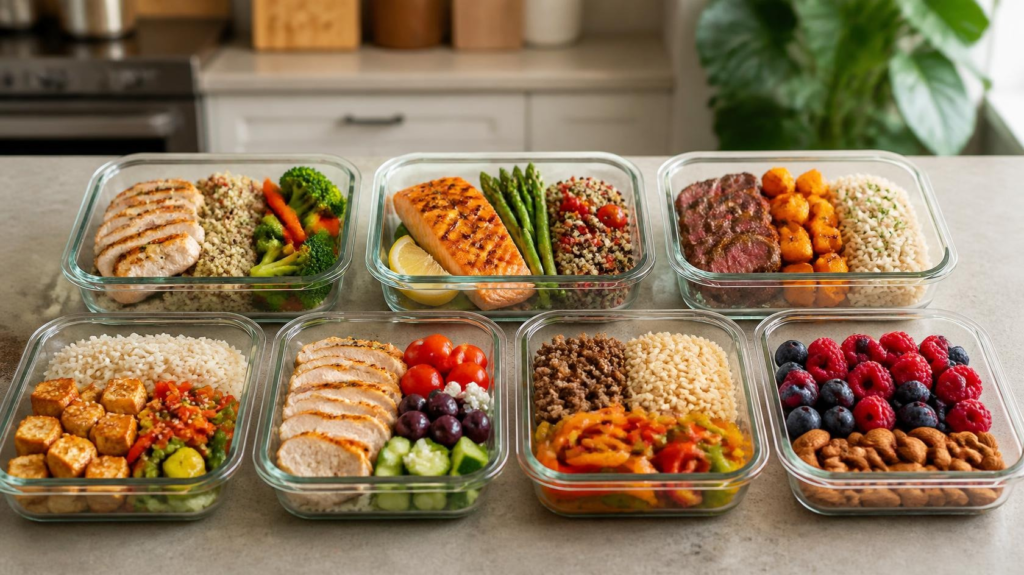
| Day | Breakfast |
|---|---|
| Monday | Greek yogurt with berries, oats, and chia seeds |
| Tuesday | Vegetable omelet with whole-grain toast |
| Wednesday | Cottage cheese with blueberries and walnuts |
| Thursday | Overnight oats with Greek yogurt |
| Friday | Tofu scramble with vegetables |
| Saturday | Protein pancakes with fresh fruit |
| Sunday | Smoked salmon, whole-grain toast, and sliced tomato |
This weekly rotation provides a mix of animal and plant proteins while keeping breakfasts interesting and nutritionally balanced.
Key Takeaways
- A protein-rich breakfast can help support fullness and make it easier to meet your daily protein goals.
- Combine protein with fiber and healthy fats for a balanced meal.
- Meal-prep breakfasts save time and encourage healthier choices.
- Both animal-based and plant-based breakfasts can fit into a healthy weight-loss plan.
- Consistency matters more than finding one “perfect” breakfast recipe.
High-Protein Lunch, Dinner, and Snack Ideas for Weight Loss
Eating enough protein throughout the day is often easier than trying to consume most of it in a single meal. Distributing protein across breakfast, lunch, dinner, and snacks may help support fullness, maintain lean muscle, and provide steady energy.
The key is to build meals around whole, minimally processed protein sources, then add vegetables, whole grains, fruit, and healthy fats to create balanced, satisfying plates.
The Simple Protein Plate Method
A quick way to build healthy meals is to use this plate guide:
- ½ Plate: Non-starchy vegetables (broccoli, spinach, peppers, tomatoes, carrots, cucumber)
- ¼ Plate: Lean protein (chicken, fish, turkey, tofu, beans, eggs)
- ¼ Plate: Whole grains or starchy vegetables (brown rice, quinoa, sweet potato, whole-wheat pasta)
- Healthy fats: Olive oil, avocado, nuts, or seeds in moderate portions
This approach naturally increases protein intake while also providing fiber, vitamins, and minerals.
10 High-Protein Lunch Ideas
1. Grilled Chicken Salad
Ingredients:
- Grilled chicken breast
- Mixed greens
- Cherry tomatoes
- Cucumbers
- Bell peppers
- Olive oil and lemon dressing
Why it’s a great choice: High in protein, rich in fiber, and easy to prepare for meal prep.
2. Turkey and Avocado Wrap
Ingredients:
- Whole-grain tortilla
- Sliced turkey breast
- Avocado
- Lettuce
- Tomato
- Mustard
A portable lunch that’s filling without feeling heavy.
3. Tuna and Bean Salad
Combine:
- Tuna packed in water
- White beans
- Spinach
- Tomatoes
- Cucumbers
- Olive oil
- Lemon juice
This meal combines lean protein with fiber for lasting satisfaction.
4. Lentil Soup with Whole-Grain Bread
A comforting, budget-friendly meal that provides plant protein, fiber, and slow-digesting carbohydrates.
5. Tofu Stir-Fry
Cook tofu with:
- Broccoli
- Carrots
- Snap peas
- Mushrooms
- Low-sodium soy sauce
Serve over brown rice or quinoa.
6. Salmon Grain Bowl
Combine:
- Baked salmon
- Quinoa
- Roasted vegetables
- Spinach
- Lemon dressing
This bowl delivers protein together with heart-healthy omega-3 fats.
7. Cottage Cheese Power Bowl
Top cottage cheese with:
- Cucumber
- Cherry tomatoes
- Black pepper
- Pumpkin seeds
A refreshing lunch that requires almost no cooking.
8. Shrimp and Vegetable Stir-Fry
Pair shrimp with colorful vegetables and serve over cauliflower rice or brown rice.
9. Chickpea Mediterranean Bowl
Ingredients:
- Chickpeas
- Cucumbers
- Tomatoes
- Parsley
- Olive oil
- Lemon juice
Add grilled chicken or tofu for additional protein if desired.
10. Egg and Quinoa Salad
Mix:
- Hard-boiled eggs
- Quinoa
- Spinach
- Tomatoes
- Avocado
This combination provides protein, fiber, and healthy fats.
10 High-Protein Dinner Ideas
1. Grilled Chicken with Roasted Vegetables
A simple dinner that combines lean protein with colorful vegetables for a satisfying meal.
2. Baked Salmon with Quinoa
Serve salmon with quinoa and steamed broccoli for a balanced dinner rich in protein and omega-3 fats.
3. Turkey Chili
Combine:
- Lean ground turkey
- Kidney beans
- Tomatoes
- Bell peppers
- Onions
This meal reheats well, making it excellent for meal prep.
4. Lean Beef and Vegetable Stir-Fry
Use lean beef with broccoli, carrots, mushrooms, and peppers. Serve with brown rice if desired.
5. Tofu Curry
Prepare tofu with mixed vegetables and a light coconut milk curry sauce. Serve over brown rice.
6. Baked Cod with Sweet Potato
A lean seafood dinner that’s rich in protein and easy to prepare.
7. Shrimp Pasta
Use whole-wheat pasta with shrimp, spinach, garlic, tomatoes, and olive oil for a balanced meal.
8. Lentil and Vegetable Stew
A hearty plant-based dinner that’s rich in protein, fiber, and minerals.
9. Stuffed Bell Peppers
Fill peppers with:
- Lean turkey
- Brown rice
- Black beans
- Tomatoes
- Herbs
Bake until tender.
10. Chicken Fajita Bowl
Combine:
- Grilled chicken
- Brown rice
- Black beans
- Bell peppers
- Salsa
- Avocado
This colorful bowl is ideal for meal prep and customizable to your preferences.
15 Healthy High-Protein Snack Ideas
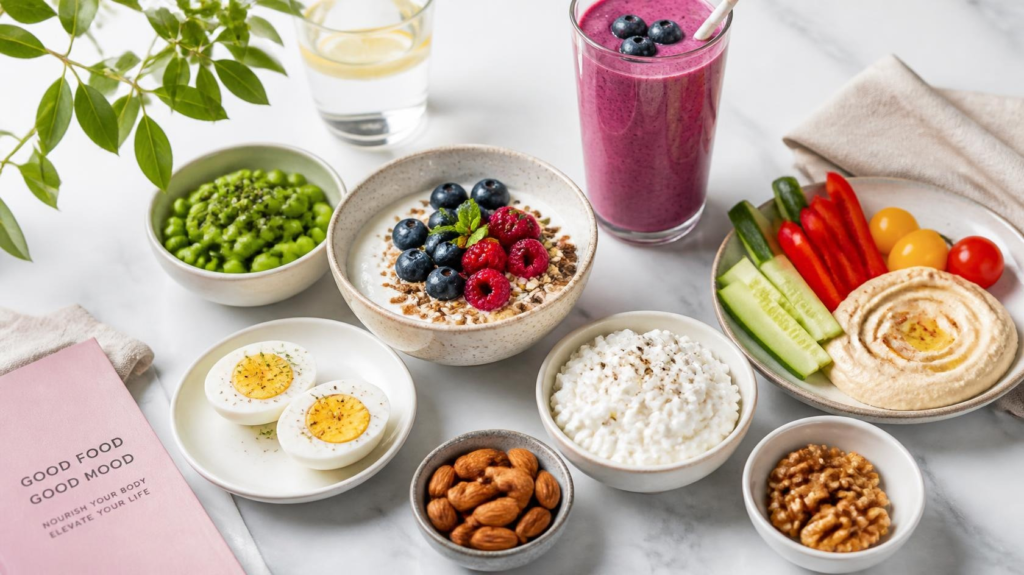
Healthy snacks can help manage hunger between meals and reduce the temptation to choose highly processed foods.
Try these options:
- Plain Greek yogurt
- Cottage cheese
- Hard-boiled eggs
- Roasted chickpeas
- Steamed edamame
- Almonds
- Pumpkin seeds
- Turkey jerky (lower sodium)
- Apple with natural peanut butter
- Protein smoothie
- Hummus with vegetable sticks
- Tuna and whole-grain crackers
- Cheese with fresh fruit
- Homemade trail mix
- Skyr with berries
Aim for snacks that combine protein and fiber to help you stay satisfied.
Best High-Protein Lunches for Meal Prep
Preparing lunches in advance can save time and support healthy eating throughout the week.
Great meal-prep choices include:
- Grilled chicken and rice bowls
- Turkey chili
- Lentil soup
- Salmon with quinoa
- Tofu stir-fry
- Shrimp bowls
- Chickpea salads
- Egg salad made with Greek yogurt
- Bean and quinoa bowls
- Cottage cheese snack boxes
Store meals in airtight containers and refrigerate promptly for food safety.
Healthy Restaurant Choices
Eating out doesn’t have to derail your goals.
Look for menu items such as:
- Grilled chicken salads
- Grilled fish
- Turkey sandwiches on whole-grain bread
- Burrito bowls
- Stir-fried vegetables with tofu
- Grilled shrimp
- Bean-based soups
Whenever possible:
- Ask for dressings and sauces on the side.
- Choose grilled instead of fried foods.
- Replace fries with vegetables or a side salad.
- Drink water or unsweetened beverages.
Foods to Limit
Not every food marketed as “high protein” is a nutritious choice.
Limit foods that are high in:
- Added sugars
- Sodium
- Saturated fat
- Highly refined ingredients
Examples include:
- Deep-fried chicken
- Highly processed deli meats
- Sugary protein bars
- Sweetened protein drinks
- Fast-food burgers
- Processed snack foods
These foods can fit occasionally, but whole-food protein sources should make up most of your meals.
EEZYPOST Expert Meal-Building Formula
For a satisfying, protein-rich meal, remember this simple formula:
Protein + Vegetables + Whole Grains + Healthy Fat = Balanced Meal
For example:
- Chicken + broccoli + quinoa + olive oil
- Salmon + asparagus + brown rice + avocado
- Lentils + spinach + whole-grain bread + pumpkin seeds
- Tofu + mixed vegetables + brown rice + sesame seeds
This approach supports fullness, provides essential nutrients, and is easy to adapt for different dietary preferences.
Sample One-Day High-Protein Menu
| Meal | Example |
|---|---|
| Breakfast | Greek yogurt with berries and oats |
| Morning Snack | Hard-boiled egg and apple |
| Lunch | Grilled chicken salad with quinoa |
| Afternoon Snack | Cottage cheese with cucumber |
| Dinner | Baked salmon, broccoli, and sweet potato |
| Evening Snack (Optional) | Edamame or plain Skyr |
This sample menu demonstrates how protein can be included consistently throughout the day without relying heavily on supplements.
Key Takeaways
- Spread your protein intake across meals and snacks instead of eating most of it at one meal.
- Build lunches and dinners around lean proteins, vegetables, and whole grains.
- Pair protein with fiber-rich foods for better satisfaction.
- Meal prepping can make healthy eating more convenient and consistent.
- Whole-food protein sources should form the foundation of a balanced weight-loss plan, with protein supplements used only when appropriate.
7-Day High-Protein Weight Loss Meal Plan
Reading about protein is helpful, but putting that knowledge into practice is what creates lasting habits. This sample meal plan shows how you can include protein throughout the day while also eating vegetables, fruits, whole grains, and healthy fats.
Important: This meal plan is intended as a general example for healthy adults. Individual calorie and protein needs vary based on age, body size, activity level, health conditions, and personal goals.
Day 1
Breakfast
- Greek yogurt
- Mixed berries
- Rolled oats
- Chia seeds
Morning Snack
- Hard-boiled egg
- Apple
Lunch
- Grilled chicken salad
- Quinoa
- Olive oil and lemon dressing
Afternoon Snack
- Cottage cheese
- Cucumber slices
Dinner
- Baked salmon
- Roasted broccoli
- Sweet potato
Day 2
Breakfast
- Vegetable omelet
- Whole-grain toast
- Orange
Morning Snack
- Roasted chickpeas
Lunch
- Turkey wrap
- Mixed salad
Afternoon Snack
- Plain Greek yogurt
Dinner
- Turkey chili
- Brown rice
- Mixed vegetables
Day 3
Breakfast
- Overnight oats
- Greek yogurt
- Blueberries
Morning Snack
- Almonds
- Pear
Lunch
- Tuna salad
- Whole-grain crackers
Afternoon Snack
- Edamame
Dinner
- Grilled cod
- Quinoa
- Green beans
Day 4
Breakfast
- Cottage cheese
- Strawberries
- Walnuts
Morning Snack
- Banana with natural peanut butter
Lunch
- Lentil soup
- Whole-grain bread
Afternoon Snack
- Skyr
Dinner
- Chicken stir-fry
- Brown rice
- Mixed vegetables
Day 5
Breakfast
- Tofu scramble
- Whole-grain toast
Morning Snack
- Pumpkin seeds
Lunch
- Salmon grain bowl
Afternoon Snack
- Greek yogurt
Dinner
- Lean beef stir-fry
- Broccoli
- Brown rice
Day 6
Breakfast
- Protein smoothie
- Oats
Morning Snack
- Cottage cheese
- Pineapple
Lunch
- Chickpea salad
Afternoon Snack
- Hard-boiled eggs
Dinner
- Shrimp with roasted vegetables
- Quinoa
Day 7
Breakfast
- Egg and avocado toast
Morning Snack
- Mixed nuts
Lunch
- Tofu and vegetable bowl
Afternoon Snack
- Apple with peanut butter
Dinner
- Roast chicken
- Sweet potato
- Steamed vegetables
Weekly Grocery Shopping List
Planning ahead can save money, reduce food waste, and make healthy eating much easier.
Protein Foods
- Chicken breast
- Turkey breast
- Lean ground turkey
- Salmon
- Cod
- Tuna
- Shrimp
- Eggs
- Greek yogurt
- Cottage cheese
- Skyr
- Tofu
- Tempeh
- Lentils
- Chickpeas
- Black beans
- Kidney beans
- Edamame
Whole Grains
- Brown rice
- Quinoa
- Whole-grain bread
- Whole-grain tortillas
- Whole-wheat pasta
- Rolled oats
Vegetables
- Spinach
- Broccoli
- Bell peppers
- Tomatoes
- Cucumbers
- Mushrooms
- Carrots
- Green beans
- Lettuce
- Onions
- Sweet potatoes
- Mixed salad greens
Fruits
- Apples
- Bananas
- Blueberries
- Strawberries
- Oranges
- Pears
- Pineapple
Healthy Fats
- Avocados
- Olive oil
- Almonds
- Walnuts
- Chia seeds
- Pumpkin seeds
- Natural peanut butter
Cheap High-Protein Foods
Eating healthy doesn’t have to be expensive.
Some of the most affordable protein sources include:
| Food | Why It’s Budget Friendly |
|---|---|
| Eggs | Inexpensive and versatile |
| Lentils | Low cost and high in protein and fiber |
| Chickpeas | Affordable and filling |
| Black beans | Great for soups and meal prep |
| Oats | Nutritious and inexpensive |
| Peanut butter | Long shelf life |
| Canned tuna | Convenient and affordable |
| Frozen chicken | Often costs less than fresh |
| Cottage cheese | Protein-rich dairy option |
| Soybeans | Excellent plant protein |
Buying store brands, frozen produce, and dried beans can further reduce grocery costs without sacrificing nutrition.
Meal Prep Tips for Busy Weeks
Meal preparation doesn’t need to take hours.
Try these strategies:
- Cook chicken, rice, and vegetables in batches.
- Prepare overnight oats for several mornings.
- Boil eggs at the beginning of the week.
- Portion snacks into reusable containers.
- Freeze extra soups and chili.
- Wash and chop vegetables in advance.
- Keep canned beans and tuna on hand for quick meals.
Even one hour of meal prep each week can make healthy eating more convenient.
Smart Grocery Shopping Tips
Shopping with a plan helps you make healthier choices and avoid impulse purchases.
Before You Go
- Plan your meals.
- Check your pantry.
- Make a shopping list.
- Eat before shopping to reduce impulse buying.
At the Store
- Shop the produce section first.
- Compare nutrition labels.
- Choose lean cuts of meat.
- Select plain yogurt instead of sweetened varieties.
- Buy frozen vegetables if fresh options are expensive.
- Compare prices by unit cost instead of package size.
Pantry Staples for High-Protein Meals
Keeping these foods at home makes it easier to prepare balanced meals.
Shelf-Stable
- Canned tuna
- Canned salmon
- Beans
- Lentils
- Oats
- Brown rice
- Quinoa
- Whole-grain pasta
- Peanut butter
- Nuts and seeds
Refrigerator
- Eggs
- Greek yogurt
- Cottage cheese
- Milk or fortified soy milk
Freezer
- Chicken breast
- Fish fillets
- Shrimp
- Frozen vegetables
- Frozen berries
- Edamame
EEZYPOST Expert Budget Strategy
Healthy eating isn’t about buying the most expensive “superfoods.” It’s about choosing nutrient-dense staples you can afford and enjoy consistently.
Focus on these priorities:
- Buy protein foods in bulk when they’re on sale.
- Use frozen fruits and vegetables to reduce waste.
- Include affordable plant proteins such as beans and lentils several times each week.
- Prepare meals at home more often than eating out.
- Build meals around seasonal produce whenever possible.
Small savings each week can add up while still supporting a nutritious eating pattern.
Key Takeaways
- A weekly meal plan can simplify healthy eating and reduce decision fatigue.
- Meal prep saves time and supports consistency.
- Many excellent protein foods are affordable and widely available.
- Shopping with a list helps control your grocery budget.
- Consistent habits are more effective for long-term weight management than following restrictive diets for a short period.
Common High-Protein Diet Mistakes, Myths, and Safety Tips
A high-protein eating pattern can support healthy weight loss, but simply eating more protein isn’t enough. Overall diet quality, physical activity, sleep, and long-term consistency all play important roles.
This section addresses common misconceptions, highlights potential pitfalls, and explains how to follow a high-protein diet safely.
10 Common High-Protein Diet Mistakes
1. Eating Too Much Protein
Protein is important, but more isn’t always better.
Eating far beyond your body’s needs doesn’t automatically increase fat loss or muscle growth. Excess calories from any source, including protein, can contribute to weight gain over time.
Better approach: Focus on meeting your individual protein needs while maintaining a balanced calorie intake.
2. Ignoring Fruits and Vegetables
Some people become so focused on protein that they forget about other nutrient-rich foods.
Vegetables and fruits provide:
- Fiber
- Vitamins
- Minerals
- Antioxidants
A healthy plate should include plenty of colorful produce alongside protein foods.
3. Depending Only on Protein Shakes
Protein shakes can be convenient, but they shouldn’t replace most meals.
Whole foods provide nutrients that powders often lack, including fiber and a wider range of vitamins and minerals.
Protein supplements are best viewed as a convenient option when whole foods aren’t practical.
4. Forgetting Fiber
A diet that’s high in protein but low in fiber may contribute to digestive discomfort for some people.
Include foods such as:
- Beans
- Lentils
- Fruits
- Vegetables
- Whole grains
- Seeds
These foods support digestive health while helping you stay full.
5. Choosing Highly Processed Protein Foods
Not all high-protein products are equally nutritious.
Some protein bars, processed meats, and ready-to-drink shakes contain:
- Added sugars
- High sodium
- Saturated fat
- Artificial ingredients
Read nutrition labels and prioritize minimally processed foods whenever possible.
6. Drinking Too Little Water
Protein metabolism requires adequate hydration.
If you’re increasing protein intake, remember to drink enough water throughout the day, especially if you’re physically active.
7. Skipping Strength Training
Protein alone won’t build or preserve muscle.
Resistance exercises such as bodyweight training, resistance bands, or weight lifting work together with adequate protein to support muscle maintenance.
8. Expecting Fast Results
Healthy weight loss usually happens gradually.
Sustainable lifestyle changes generally produce better long-term results than restrictive diets promising rapid weight loss.
9. Ignoring Portion Sizes
Even nutritious foods contain calories.
Examples include:
- Nuts
- Seeds
- Peanut butter
- Cheese
- Avocados
These foods offer valuable nutrients but are best enjoyed in appropriate portions.
10. Following Social Media Instead of Evidence
Nutrition advice on social media can be misleading.
Base your decisions on guidance from qualified healthcare professionals and trusted health organizations rather than viral trends.
Protein Myths vs. Facts
| Myth | Fact |
|---|---|
| More protein always means faster weight loss. | Weight loss depends on overall calorie balance, diet quality, and lifestyle. |
| You must drink protein shakes every day. | Many people meet their protein needs through whole foods alone. |
| Plant proteins are ineffective. | Plant proteins can fully support a healthy diet when consumed in a varied eating pattern. |
| Carbohydrates should be eliminated. | Whole grains, fruits, and vegetables provide valuable nutrients and fiber. |
| Eggs are unhealthy for everyone. | Eggs can be part of a healthy dietary pattern for many people. |
| Protein burns fat directly. | Protein supports fullness and muscle maintenance but does not directly “burn” fat. |
| High-protein diets work without exercise. | Physical activity remains an important part of healthy weight management. |
Is a High-Protein Diet Safe?
For most healthy adults, a balanced high-protein eating pattern that emphasizes whole foods is generally considered safe.
However, certain medical conditions may require a different approach.
Always seek personalized medical advice if you have:
- Chronic kidney disease
- Advanced liver disease
- Certain inherited metabolic disorders
- Other conditions requiring specialized nutrition guidance
Never make major dietary changes without consulting your healthcare provider if you have ongoing medical concerns.
Do You Need Protein Powder?
Not necessarily.
Protein powder can be useful for some people, including:
- Athletes with higher protein needs
- Individuals with limited time for meal preparation
- People who struggle to meet protein needs through food
- Those recovering from intense training
However, most healthy adults can obtain enough protein from foods such as:
- Chicken
- Fish
- Eggs
- Greek yogurt
- Cottage cheese
- Beans
- Lentils
- Tofu
If you choose a protein powder, compare products carefully and look for options with minimal added sugar and ingredients.
Can Too Much Protein Harm Your Kidneys?
This is one of the most common questions about high-protein diets.
Current evidence indicates that higher protein intake does not appear to harm kidney function in healthy individuals.
However, people with existing kidney disease may need to limit protein intake based on their healthcare provider’s recommendations.
This is why individualized advice is so important.
Special Considerations
Older Adults
Maintaining muscle becomes increasingly important with age.
Older adults may benefit from:
- Including protein at every meal
- Staying physically active
- Performing strength exercises when appropriate
Athletes
Athletes often have higher protein requirements because of increased training demands.
Meeting these needs through balanced meals, with supplements used only when necessary, is generally recommended.
Vegetarians and Vegans
A plant-based diet can provide sufficient protein when it includes a variety of foods such as:
- Lentils
- Beans
- Soy foods
- Whole grains
- Nuts
- Seeds
Fortified foods or supplements may be needed for certain nutrients, such as vitamin B12, depending on the dietary pattern.
Pregnancy and Breastfeeding
Protein requirements increase during pregnancy and breastfeeding.
Nutritional needs vary by stage and individual circumstances, so personalized guidance from a healthcare provider or registered dietitian is recommended.
When Should You See a Healthcare Professional?
Speak with a healthcare provider if you:
- Have kidney or liver disease
- Experience unexplained weight loss
- Have difficulty meeting your nutritional needs
- Notice ongoing digestive problems
- Are pregnant or breastfeeding
- Have questions about medical nutrition therapy
Registered dietitians can also help create individualized meal plans based on your health goals and medical history.
EEZYPOST Expert Recommendations
After reviewing current nutrition guidance and evidence-based recommendations, these practical habits consistently stand out:
Focus on Whole Foods
Choose lean meats, fish, eggs, dairy, legumes, soy foods, nuts, and seeds as your primary protein sources.
Eat Protein Throughout the Day
Distributing protein across meals and snacks may help with fullness and muscle maintenance.
Don’t Forget Fiber
Pair protein with vegetables, fruits, beans, and whole grains to create balanced meals.
Stay Active
Regular exercise, especially strength training, complements a high-protein eating pattern and supports healthy body composition.
Be Consistent
Long-term habits matter far more than short-term perfection. Small, sustainable improvements are more likely to lead to lasting success than restrictive diets.
Key Takeaways
- A high-protein diet is most effective when combined with a balanced eating pattern and regular physical activity.
- Whole-food protein sources should be the foundation of your diet.
- Protein supplements are optional for most healthy adults.
- Myths about protein are common, so rely on trusted, evidence-based information.
- If you have a medical condition, seek personalized advice before significantly changing your protein intake.
Coming Up Next: Frequently Asked Questions
To finish this guide, we’ll answer the most common questions people ask about high-protein foods, weight loss, meal planning, protein intake, and healthy eating. These concise, evidence-based answers are designed to address popular search queries and improve the article’s usefulness for readers and AI-powered search systems.
Frequently Asked Questions About High-Protein Foods for Weight Loss
High-protein diets continue to be one of the most searched topics in nutrition and weight management. Below are answers to the most common questions people ask about protein, weight loss, meal planning, and healthy eating.
1. What are the best high-protein foods for weight loss?
The best high-protein foods for weight loss are nutrient-dense options that provide plenty of protein without excessive calories. Good choices include chicken breast, salmon, tuna, eggs, Greek yogurt, cottage cheese, turkey breast, shrimp, lentils, beans, tofu, tempeh, and edamame. The best choices depend on your calorie needs, dietary preferences, budget, and overall eating pattern.
2. How much protein should I eat per day to lose weight?
Protein needs vary depending on factors such as body weight, age, activity level, and health goals.
The general recommendation for healthy adults is at least the minimum amount needed to prevent deficiency, but many people aiming to lose weight and maintain muscle may benefit from a higher intake.
A healthcare professional or registered dietitian can help determine a personalized target.
3. Does protein help burn belly fat?
Protein does not specifically burn belly fat or target fat loss in one area of the body. However, protein can support overall weight management by increasing fullness, helping control appetite, and supporting lean muscle during calorie-controlled weight loss. Overall body-fat reduction occurs when you consistently maintain an appropriate energy deficit.
4. What protein is best for weight loss?
There is no single best protein for weight loss. Lean chicken, fish, eggs, Greek yogurt, cottage cheese, lentils, beans, tofu, tempeh, and other protein-rich foods can all fit into a healthy weight-loss diet. The best option is one that provides good nutrition and fits your calorie needs, preferences, budget, and lifestyle.
5. Are eggs good for weight loss?
Yes, eggs can be part of a healthy weight-loss diet for most people. Eggs provide high-quality protein along with several vitamins and minerals, and their protein content can help make meals more satisfying. Pairing eggs with vegetables, whole grains, or other nutrient-dense foods can create a balanced meal.
6. Is chicken better than beef for weight loss?
Chicken breast is often lower in calories and saturated fat than many cuts of beef, making it a convenient choice for calorie-conscious eating. However, lean beef can also fit into a healthy weight-loss diet and provides nutrients such as iron, zinc, and vitamin B12. Choosing lean cuts and appropriate portions is more important than completely avoiding either food.
7. What are the best high-protein snacks?
Good high-protein snacks include Greek yogurt, cottage cheese, hard-boiled eggs, edamame, roasted chickpeas, tuna, turkey, protein smoothies, and nuts or seeds. For better overall nutrition, combine protein with foods that provide fiber, vitamins, minerals, or healthy fats.
8. Can vegetarians get enough protein?
Yes, vegetarians can get enough protein by eating a varied diet that includes foods such as lentils, beans, chickpeas, tofu, tempeh, edamame, eggs, Greek yogurt, cottage cheese, nuts, and seeds. Eating a variety of protein sources throughout the day can help provide the amino acids and other nutrients needed for good health.
9. What are the highest-protein foods?
Some foods that are particularly rich in protein include chicken breast, turkey breast, tuna, shrimp, lean beef, tempeh, hemp seeds, eggs, Greek yogurt, and lentils. The exact protein amount varies according to the serving size, brand, cooking method, and whether the food is measured raw or cooked.
10. Can protein help you lose weight without exercise?
Protein can support weight loss even when exercise is limited because it can increase fullness and help preserve lean muscle during calorie restriction. However, regular physical activity provides additional benefits for fitness, muscle strength, cardiovascular health, and long-term weight management. A combination of balanced nutrition, movement, adequate sleep, and sustainable habits is generally a stronger approach.
11. What are high-protein foods with low calories?
High-protein foods that are relatively low in calories include skinless chicken breast, egg whites, tuna packed in water, shrimp, cod, turkey breast, nonfat Greek yogurt, and low-fat cottage cheese. These foods can provide substantial protein relative to their calorie content and can be useful when managing overall calorie intake.
12. Is Greek yogurt high in protein?
Yes, Greek yogurt is a convenient high-protein dairy food. The exact protein content varies by brand and product type, so checking the nutrition label is useful when comparing options. Plain Greek yogurt can also be paired with berries, fruit, oats, or seeds for a balanced breakfast or snack.
13. What foods are high in protein and fiber?
Foods that provide both protein and fiber include lentils, chickpeas, black beans, kidney beans, edamame, chia seeds, hemp seeds, and quinoa. Combining protein and fiber can make meals more filling while also contributing important nutrients to the overall diet.
14. Are protein shakes necessary for weight loss?
No, protein shakes are not necessary for weight loss. Many people can meet their protein needs through whole foods such as eggs, poultry, fish, dairy products, beans, lentils, tofu, and other protein-rich foods. Protein shakes can be convenient when someone has difficulty getting enough protein from regular meals or needs a quick option.
15. What is a good high-protein breakfast for weight loss?
Good high-protein breakfast options include Greek yogurt with berries and oats, eggs with vegetables, cottage cheese with fruit, protein oatmeal, tofu scramble, and a protein smoothie made with nutrient-dense ingredients. A balanced breakfast should provide protein along with other nutrients such as fiber, vitamins, and minerals.
16. Can too much protein be unhealthy?
For most healthy adults, a moderately higher-protein diet is generally considered safe.
However, people with certain medical conditions may need specific protein recommendations.
Consult a healthcare professional if you have kidney disease or another condition requiring dietary management.
17. Which fruits contain protein?
Most fruits are not considered high-protein foods, although some contain more protein than others. Guava, blackberries, raspberries, kiwi, and avocado provide some protein, but fruit is generally more valuable for its fiber, vitamins, minerals, antioxidants, and other plant compounds. For a high-protein snack, pair fruit with Greek yogurt, cottage cheese, nuts, or another protein-rich food.
18. Are beans good for weight loss?
Yes, beans can be an excellent addition to a weight-loss diet. They provide plant protein, fiber, complex carbohydrates, and important minerals, which can make meals more filling. Beans are also relatively affordable and can be added to salads, soups, bowls, wraps, and other meals.
19. What is a high-protein meal plan?
A high-protein meal plan includes protein-rich foods throughout the day while still providing vegetables, fruits, whole grains, healthy fats, and other essential nutrients. A simple example could include Greek yogurt with berries and oats for breakfast, a chicken and quinoa salad for lunch, cottage cheese and fruit as a snack, and salmon with vegetables and sweet potato for dinner.
20. Does protein increase metabolism?
Protein requires more energy to digest, absorb, and process than carbohydrates or fats, so it has a higher thermic effect of food. However, this effect alone is not enough to cause significant weight loss. Protein’s more practical benefits for weight management include helping with fullness, supporting lean muscle, and making a balanced eating pattern easier to maintain.
EEZYPOST Expert Final Verdict
The best high-protein diet is not the one with the most protein. It is the one you can consistently follow while providing your body with the nutrients it needs.
A successful weight-loss approach combines:
- Quality protein sources
- Plenty of vegetables and fruits
- High-fiber carbohydrates
- Healthy fats
- Regular movement
- Sustainable lifestyle habits
Whether your preferred protein comes from chicken, salmon, eggs, Greek yogurt, lentils, beans, tofu, or a combination of foods, the goal remains the same: create a balanced eating pattern that supports your health for the long term.
Protein is a powerful tool for weight management, but it works best as part of a complete nutrition strategy.
Final Summary: Best High-Protein Foods for Weight Loss
The top choices include:
Best Overall
Chicken breast
Best Seafood
Salmon and tuna
Best Dairy
Greek yogurt and cottage cheese
Best Plant Protein
Lentils, tofu, tempeh, and beans
Best Budget Options
Eggs, lentils, beans, and oats
Best Snacks
Greek yogurt, cottage cheese, edamame, and nuts
Best Meal Prep Options
Chicken, turkey, lentils, quinoa, and tofu
A balanced combination of these foods can help you increase protein intake while supporting healthy weight loss.
Leave a Reply